Table of Contents
- Step 1: Stop the Leak and Find the Water Source
- Step 2: Assess the Extent of Water-Damaged Drywall
- Step 3: Remove Standing Water and Wet Materials
- Step 4: Set Up Drying Equipment and Improve Airflow
- How Long Does It Take for Drywall to Dry?
- Using a Moisture Meter for Drywall to Monitor Drying
- Dry in Place or Cut Out? A Decision Guide for Wet Drywall
- How to Prevent Mold Growth 2026: Act Within 24 to 48 Hours
- Frequently Asked Questions
Last Updated: October 16, 2026
Step 1: Stop the Leak and Find the Water Source
You cannot dry wet drywall while water is still coming in. To dry wet drywall, stop the leak first, then find its source.
This is the step most people rush. The EPA’s guide to indoor water and moisture control makes the point plainly: fix the source before you dry anything.
Common water sources include:
- A roof leak that drips down inside the wall cavity
- A plumbing leak from a supply line or drain
- A failed appliance hose behind the wall
Shut off the water supply if a pipe burst, call a plumber for active leaks, and tarp roof leaks if safe.
If the water is near outlets, switches, or a breaker panel, do not touch anything. Shut off power to that area at the breaker first. Water and live electricity are a lethal mix.
Step 2: Assess the Extent of Water-Damaged Drywall
Water-damaged drywall rarely looks as bad as it is. Water travels sideways and downward inside the wall. The visible stain is often just the tip.
Start with a visual inspection. Look for:
- Soft or spongy spots when you press the surface
- Bubbling paint or peeling tape
- Brown or yellow stains on walls and ceilings
Then check the full height and width. Water wicking up from the floor can soak 12 to 24 inches of drywall before you notice. Ceiling damage above tells you water came from overhead.
Check for Hidden Moisture Behind Baseboards and in the Wall Cavity
Hidden moisture behind baseboards is where most mold problems start. Pull the baseboards along the wet wall and inspect the bottom edge of the drywall.
Look for these signs:
- Dark or discolored paper backing
- Crumbling or soft gypsum
- Visible water staining on the back of the baseboard
If the drywall crumbles when you poke it, that section needs removal. If it still feels firm, it may dry in place.
Step 3: Remove Standing Water and Wet Materials
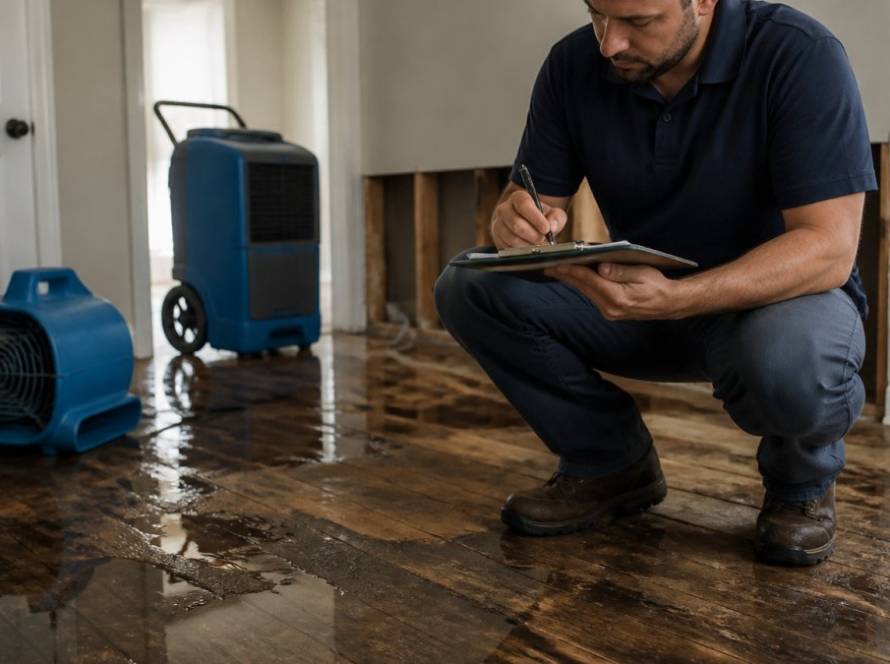
Standing water has to go before drying can work. Extraction always comes first.
Use a wet/dry shop vacuum for small pools; for larger areas, a water extraction unit moves far more water faster. Push water toward the extraction point rather than chasing it.
Then remove wet materials that block drying:
- Wet carpet and padding (padding almost never dries and should be discarded)
- Soaked insulation inside the wall cavity
- Wet cardboard, paper, or fabric
Pull up wet flooring if water sat underneath it, since trapped water keeps feeding moisture up into the drywall.
Water removal and drying are two separate jobs. Extraction takes hours. Drying takes days. Skip extraction and drying will never finish.
Step 4: Set Up Drying Equipment and Improve Airflow
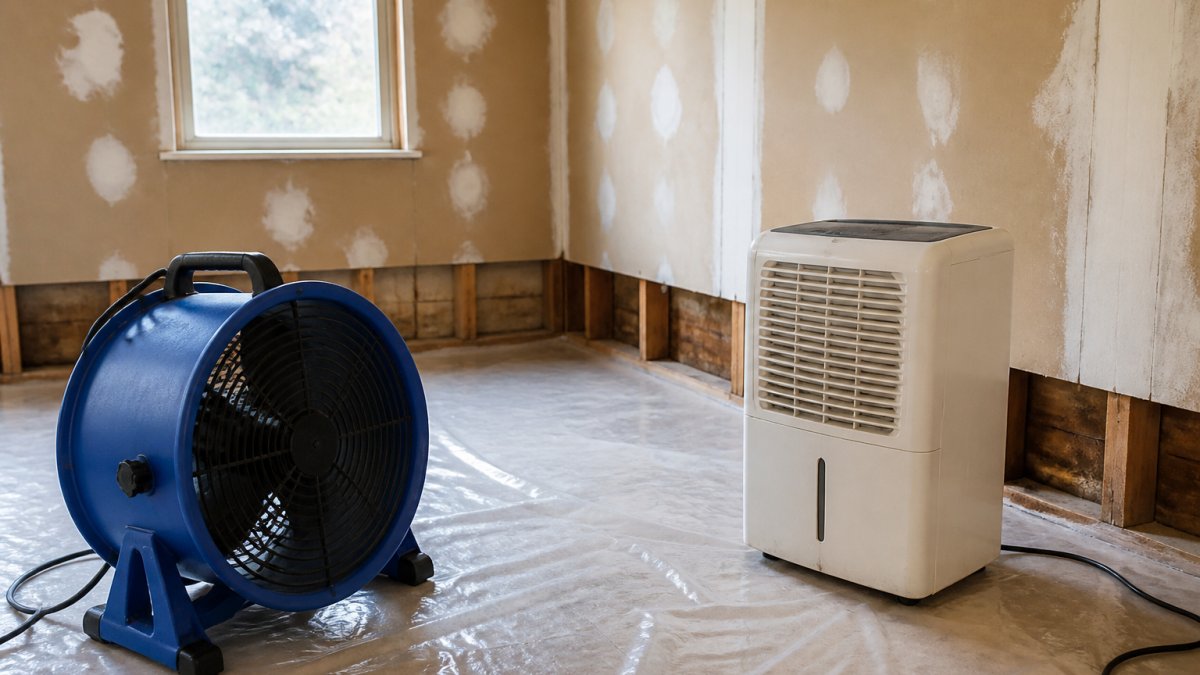
Drying equipment turns a wet room into a dry one, and setup matters more than the amount of gear. Most homeowners under-dry because air never reaches the wet surface, not because they lack a fan.
Room Setup Before You Turn Anything On
Clear the room so air can move. Drying fails in cluttered spaces because furniture blocks airflow and traps moisture against surfaces.
- Pull furniture at least 2 feet away from the wet wall
- Remove area rugs, cardboard, paper, and fabric from the room
- Take down curtains or blinds near the wet wall
If a closet sits against the wet wall, empty it and prop the door open; closets are where hidden moisture lingers longest.
Equipment Placement That Actually Works
Air must move across the wet surface, not at it. A fan pointed flat at a wall pushes air into the drywall and stalls, so angle airflow to sweep along the surface and carry moisture away.
- Place air movers or box fans 3 to 5 feet from the wet wall
- Tilt them up at roughly a 45-degree angle so air travels up the wall
- Aim the first fan along the base of the wall and the second higher up
A common pattern is one air mover per 10 to 15 linear feet of wet wall, plus a dehumidifier sized to the room. A small bedroom may need one fan and a 30-pint dehumidifier.
When Not to Use Heat
Heat feels like it should speed drying, but it causes problems.
- Do not use space heaters in a closed room with a dehumidifier; heat raises the air’s moisture capacity and can slow the dehumidifier’s work
- Do not use heat if mold is already present or suspected; warmth accelerates mold growth
- Do not use heat near wet electrical outlets, switches, or a breaker panel
If you want to warm the room, keep it mild and keep air moving. The goal is evaporation, not baking the wall.
Run Times and Emptying
Run the dehumidifier continuously, not on a timer, and empty the reservoir often or connect a hose drain so it can run unattended.
Check the setup twice a day. If the wall still feels damp after 48 hours of continuous airflow and dehumidification, the equipment is not reaching the wet area or a hidden water source remains.
Drying is a airflow problem, not a heat problem. Angle air along the wet surface, keep the room closed to the dehumidifier, and clear anything that blocks circulation.
How Long Does It Take for Drywall to Dry?
Most wet drywall dries in 3 to 5 days with proper airflow and dehumidification. Thick or heavily soaked drywall can take up to a week. If it is still wet after that, something is wrong.
Drying Timelines and Measurable Completion Criteria
Do not guess when drywall is dry. Measure it.
| Drying Stage | Typical Time | What to Check |
|---|---|---|
| Surface drying | 24-48 hours | Wall feels dry to touch |
| Deep drying | 3-5 days | Moisture meter reads normal |
| Full completion | 5-7 days | No moisture rise after 24 hours |
Completion criteria are simple. The wall is dry when:
- A moisture meter gives consistent normal readings
- Readings stay stable for 24 hours
- No musty smell remains
If readings climb back up, you have a hidden water source or trapped moisture.
Using a Moisture Meter for Drywall to Monitor Drying
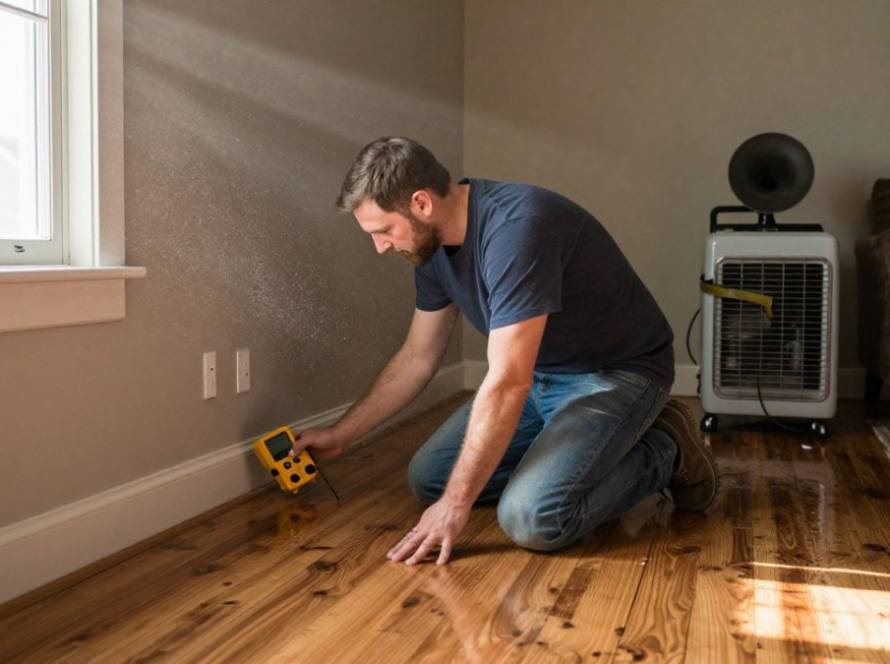
A moisture meter for drywall is the only reliable way to confirm drying. Your hand cannot feel moisture deep inside the wall.
Two types exist. Pin meters push probes into the drywall for a direct reading. Pinless meters scan the surface without damage.
How to use one:
- Pick several test spots along the wet wall
- Record readings at each spot daily
- Compare wet areas against a known dry section
- Track the trend, not a single number
A reading that drops daily means drying is working; one that holds steady means airflow or dehumidification is not reaching that spot.
Write your readings on tape and stick it to the wall. It sounds low-tech, but it shows you the drying trend at a glance and gives your insurance adjuster a clear record.
Dry in Place or Cut Out? A Decision Guide for Wet Drywall
Not all wet drywall needs to come out. The decision comes down to how wet it is, how long it has been wet, and whether it is contaminated. Most homeowners cut too early or dry too long, so use these thresholds.
The Three Questions That Decide It
Ask these in order. The first “no” or “yes” that applies usually settles the call.
- Is the drywall still structurally sound? Press it with your thumb. If it dents, crumbles, or feels spongy, it has lost strength and will not come back.
- How long has it been wet? Under 24 hours is a different situation than 3 days.
- What kind of water is it? Clean supply-line water is not the same as sewage or gray water.
Decision Table
| Situation | Action |
|---|---|
| Firm drywall, wet under 24 hours, clean water | Dry in place |
| Firm drywall, wet 24 to 48 hours, no odor | Dry in place with close monitoring |
| Soft, crumbling, or sagging drywall | Cut out and replace |
| Wet over 48 hours with musty odor | Cut out, inspect cavity for mold |
| Sewage, gray water, or floodwater contact | Cut out and discard |
| Wet insulation inside the cavity | Remove insulation, dry cavity, then decide on drywall |
| Recurring leak that has been wet for weeks | Cut out; assume hidden mold |
Warning Signs That Force Removal
Do not try to dry these. Remove the affected section.
- Drywall that crumbles when you poke it with a screwdriver
- Paper backing that peels away from the gypsum
- Sagging ceilings or bulging walls
How to Cut Out Drywall Correctly
If removal is the call, cut cleanly so the repair is simple.
- Mark a straight line 2 to 3 inches past the visible damage on all sides
- Use a utility knife or drywall saw to cut along the line
- Score the paper on the back side and snap the piece out
- Remove wet insulation behind the cut
- Inspect the cavity for mold, water staining, and the leak source
- Dry the cavity fully before installing new drywall
A clean cut lets air reach the wall cavity and stops mold before it starts. Cutting out drywall is not a failure. Leaving wet, contaminated drywall in place is.
When to Dry in Place
Dry in place only when all of these are true:
- The drywall is firm and does not crumble
- The water was clean and from a supply line or rain
- The wall has been wet less than 48 hours
Even then, monitor with a moisture meter daily. If readings do not drop within 48 hours, switch to removal.
If the leak was sewage, gray water, or floodwater, do not dry in place. Contaminated drywall must be removed and discarded. Wear gloves, eye protection, and a respirator when handling it.
The decision is not about how wet the wall looks. It is about structural strength, time wet, and water source. When in doubt, cut it out and dry the cavity.
How to Prevent Mold Growth 2026: Act Within 24 to 48 Hours
Mold can start growing on wet drywall within 24 to 48 hours. That window is your deadline. Miss it and the job shifts from drying to remediation.
To prevent mold growth, act fast:
- Start extraction within hours, not days
- Get airflow and dehumidification running the same day
- Keep indoor humidity low
The CDC’s guidance on mold and moisture is clear that controlling moisture is the key to controlling mold. Dry the space fully and mold has nothing to feed on.
What to Do If Mold Is Already Present
If you see or smell mold, stop and reassess. Small surface patches on a firm wall may clean up.
Signs mold is already there:
- A musty, earthy smell
- Dark spots or fuzzy patches
- Discolored drywall paper
Do not dry a moldy wall with fans. The IICRC standards for water damage restoration outline how professionals handle contaminated materials safely.
Our IICRC-certified team uses advanced moisture detection to find hidden water and stop mold before it spreads.
Frequently Asked Questions
Will a wet ceiling dry on its own?
A wet ceiling can dry on its own only if the leak has stopped and air can reach the wet surface. Ceiling drywall often holds water above the visible stain, so moisture may sit in the wall cavity or attic insulation. Without fans, a dehumidifier, and ventilation, the drywall can stay damp for days and become a mold risk. If the ceiling is sagging, soft, or stained across a large area, cut out the wet section and replace it rather than waiting for it to dry.
Will a dehumidifier pull moisture out of drywall?
Yes, a dehumidifier pulls moisture out of wet drywall, but it works slowly because water has to move from inside the drywall to the surface before the air can carry it away. Pair the dehumidifier with box fans or air movers pointed at the wet wall to speed evaporation. Keep windows and doors closed so the unit is not fighting humid outside air. Check moisture readings daily with a moisture meter until the drywall returns to its normal baseline.
How long does it take for wet drywall to grow mold?
Mold can begin growing on wet drywall in as little as 24 to 48 hours when moisture, warmth, and organic material are present. That window is why drying needs to start the same day you find the leak. If drywall stays damp for more than two days, mold growth becomes likely, especially in humid rooms like bathrooms and basements. If you see dark spots, smell a musty odor, or find mold behind baseboards, the affected section usually needs removal and treatment.
When should you replace wet drywall instead of drying it?
Replace wet drywall when it is sagging, crumbling, or swollen, when it has been wet for more than 48 hours, when it shows mold growth, or when it was soaked by contaminated water from a sewage backup or flood. Drywall that is only damp from a clean water leak, still firm, and caught within a day can usually be dried in place with fans and a dehumidifier. When in doubt, a moisture meter reading above the normal baseline after several days of drying signals it is time to cut it out.
Water damage gets worse with every hour you wait. Hidden moisture behind walls and baseboards can turn a simple dry-out into a full mold remediation job. Sentinel Restoration brings IICRC-certified technicians, advanced moisture detection technology, and decades of experience to restore your property to its pre-loss condition. We handle water damage and mold remediation under one roof, with a commitment to always doing the right thing. Contact us to get your drying started the right way.