Last Updated: November 17, 2026
Quick Summary
Choose a certified water damage contractor by verifying the crew chief’s IICRC certification number in the official directory, confirming an active state license, and getting insurance certificates sent directly from the insurer. Ask for a written estimate and scope of work before any extraction begins, and treat cash-only demands or on-the-spot work authorizations as red flags.
- Ask for the crew chief’s IICRC certification number, not just the company’s claim of certification.
- Request a certificate of insurance sent straight from the carrier, not a photocopy.
- Compare estimates item by item instead of comparing headline totals.
- Confirm whether any part of the job will be subcontracted and that subcontractors hold insurance.
- Ask for daily moisture readings and a final drying report as part of the deliverable.
Table of Contents
- Start With a Water Damage Contractor Checklist
- How to Verify IICRC Certification Step by Step
- Questions to Ask a Water Damage Restoration Company
- Reading a Water Damage Restoration Estimate and Scope of Work
- Licensing, Insurance, and Liability Protection
- Response Time, Equipment, and Objective Drying Criteria
- Local Track Record, References, and Subcontractor Supervision
- Booking a Certified Crew for Your Property
- Frequently Asked Questions
Start With a Water Damage Contractor Checklist
Water damage gets worse by the hour. Standing water wicks into drywall, warps subfloors, and starts mold growth inside wall cavities within a day or two. That urgency is exactly why choosing a certified water damage contractor matters so much. Panic makes people hire the first crew that answers the phone, and that is how homeowners end up with shoddy drying, inflated bills, and mold that comes back six months later.
A burst pipe at 2 a.m. often leads to a frantic search, several phone calls, and a signed work authorization before sunrise. Many homeowners never check a single credential.
Below, we break down exactly what to confirm before you sign anything, how to verify the credentials that matter, and the red flags that should send you looking elsewhere. For broader guidance, see our top tips for choosing a reliable contractor.
Credentials to Confirm Before You Call
Run through this list before you dial. It takes ten minutes and saves months of regret.
- IICRC certification number for the crew chief, not just the company
- State contractor license number you can look up yourself
- General liability insurance and workers’ comp, with a certificate sent directly from the insurer
- 24/7 emergency line with a real person answering
- Written estimate before work begins
- Local business address, not a PO box
- References from jobs similar to yours
Red Flags That Should End the Conversation
Some warning signs are obvious. Others are subtle, and those are the ones that cost people money.
- No written estimate. A crew that starts extracting water before quoting the job controls the price.
- Cash-only demands or large upfront payments. Legitimate restoration work is billed through documented invoices and often coordinated with your insurer.
- Out-of-state plates and no local address. Storm chasers follow weather events and disappear once the work gets hard.
- Pressure to sign a work authorization on the spot. You are allowed to read a contract. Anyone who says otherwise is hiding something.
- No certification number, or a refusal to provide one. A certified water damage contractor will hand over credentials without hesitation.
How to Verify IICRC Certification Step by Step
IICRC certification is a credential awarded by the Institute of Inspection, Cleaning and Restoration Certification to technicians who complete its training and exam. It is verifiable in minutes, but only if you verify the right things.
Here is the exact process:
- Ask for the certification number. It belongs to the individual technician, not the company.
- Search the IICRC’s certified firm and technician directory on the IICRC official directory website.
- Match the name and number exactly. Certifications expire and require renewal, so confirm the status is current rather than lapsed.
- Ask which certifications apply to your job. Water restoration, applied structural drying, and mold remediation are separate credentials, and the relevant one depends on the loss.
- Confirm the crew chief on your job holds the relevant one. A certified owner does not help if an untrained crew does the work.
What most guides miss is that a company can say “IICRC certified” while only one office employee holds a certificate. Ask who will actually be on site, and get names.
Match the certification category to the water category. A clean-water supply-line leak calls for water restoration and structural drying credentials.
Ask about the people, not just the firm. Request the names and certification numbers of the crew chief and the technician who will run the moisture meter. Then verify those individuals in the directory.
Ask about subcontractors. Many restoration companies send employees for the initial extraction but bring in subcontractors for mold remediation or reconstruction.
Keep a record. Save screenshots of the directory results, the certificate of insurance, and the license lookup. If a dispute arises later, documented verification is far stronger than a verbal assurance.
Verifying a contractor’s IICRC credential follows a short, specific sequence.
| Step | What to do |
|---|---|
| 1 | Ask for the certification number, which belongs to the technician |
| 2 | Search the IICRC certified firm and technician directory |
| 3 | Match the name and number exactly and confirm status is current |
| 4 | Ask which certifications apply to your job |
| 5 | Confirm the crew chief on your job holds the relevant one |
Questions to Ask a Water Damage Restoration Company
The right questions separate prepared professionals from smooth talkers. Ask these before anyone walks through your door.
- How soon can a crew arrive, and what is your average response time?
- Who supervises the job, and are they IICRC certified?
- Will you handle mold remediation if it turns up, or will I need another contractor?
- How do you document moisture readings and drying progress?
- Do you bill insurance directly, and will you walk me through the claim?
- Are your technicians employees or subcontractors?
- Can you provide references from similar projects nearby?
Write the answers down. Vague responses to specific questions tell you plenty.
Reading a Water Damage Restoration Estimate and Scope of Work
A restoration estimate should read like a plan, not a lump sum. The scope of work is the document that lists every task, material, and piece of equipment the job requires.
A complete estimate typically includes line items such as:
- Water extraction and disposal
- Removal of unsalvageable materials
- Drying equipment placement and daily monitoring
- Antimicrobial treatment where needed
- Mold remediation, if applicable
- Contents handling and storage
- Final moisture verification
Most guides stop there. The harder skill is comparing two or three estimates side by side when the headline prices differ by thousands of dollars. Do not compare totals. Compare the work plans item by item.
Match the scope to the loss. A category 1 supply-line leak in a single room should not carry the same demolition and antimicrobial line items as a category 3 sewage backup. If one bid includes tear-out and another does not, the lower number is not cheaper, it is a smaller job that will generate change orders later.
Compare drying goals, not drying days. Ask each contractor to state the target moisture content or dry standard for the affected materials and the number of monitoring visits included.
Read the exclusions. Estimates commonly exclude mold remediation discovered after demolition, contents packing and storage, reconstruction and drywall repair, and permit fees.
Check the change-order terms. A legitimate scope states how added work is authorized, who signs, and how the price is set, typically time and materials or a pre-agreed rate.
Confirm what the price includes for documentation. Daily moisture logs, photos, and a final drying report are part of the deliverable, not extras. If one bid charges separately for monitoring reports, factor that into the comparison.
For context on how insurers view these costs, see what insurance pays for water restoration, and use our restoration cost guide to judge whether a scope looks reasonable.
Licensing, Insurance, and Liability Protection
Licensing rules for contractors vary by state, so check your state licensing board’s public lookup tool and confirm the license is active and covers restoration work. Ask for the license number in writing.
Insurance matters just as much. Request a certificate of insurance sent straight from the carrier, not a photocopy. Confirm two things:
- General liability insurance covers damage the crew causes to your property.
- Workers’ compensation covers injuries on your job.
Without these, an accident on your property could become your financial problem. A certified water damage contractor will provide both without being pushed.
Response Time, Equipment, and Objective Drying Criteria
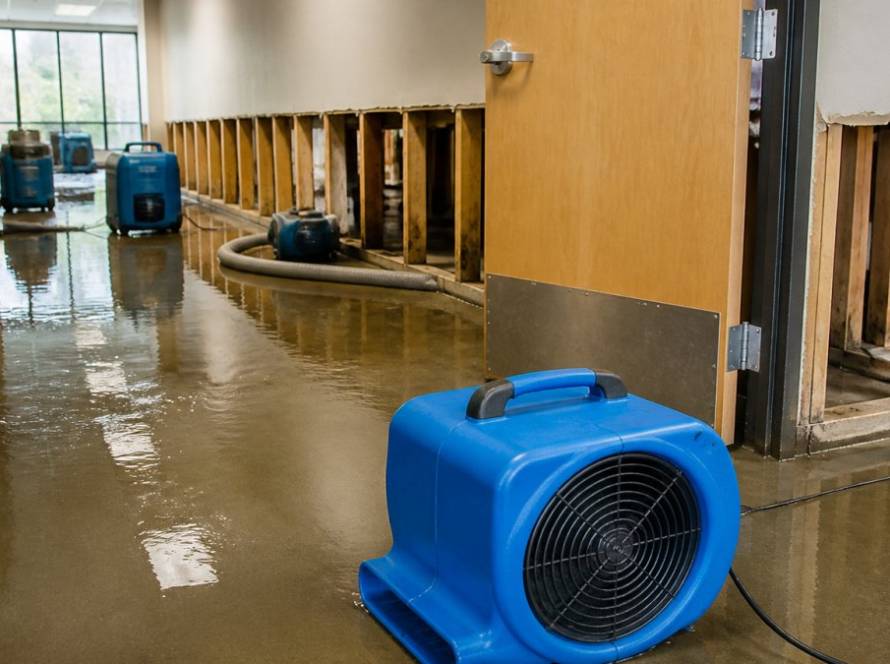
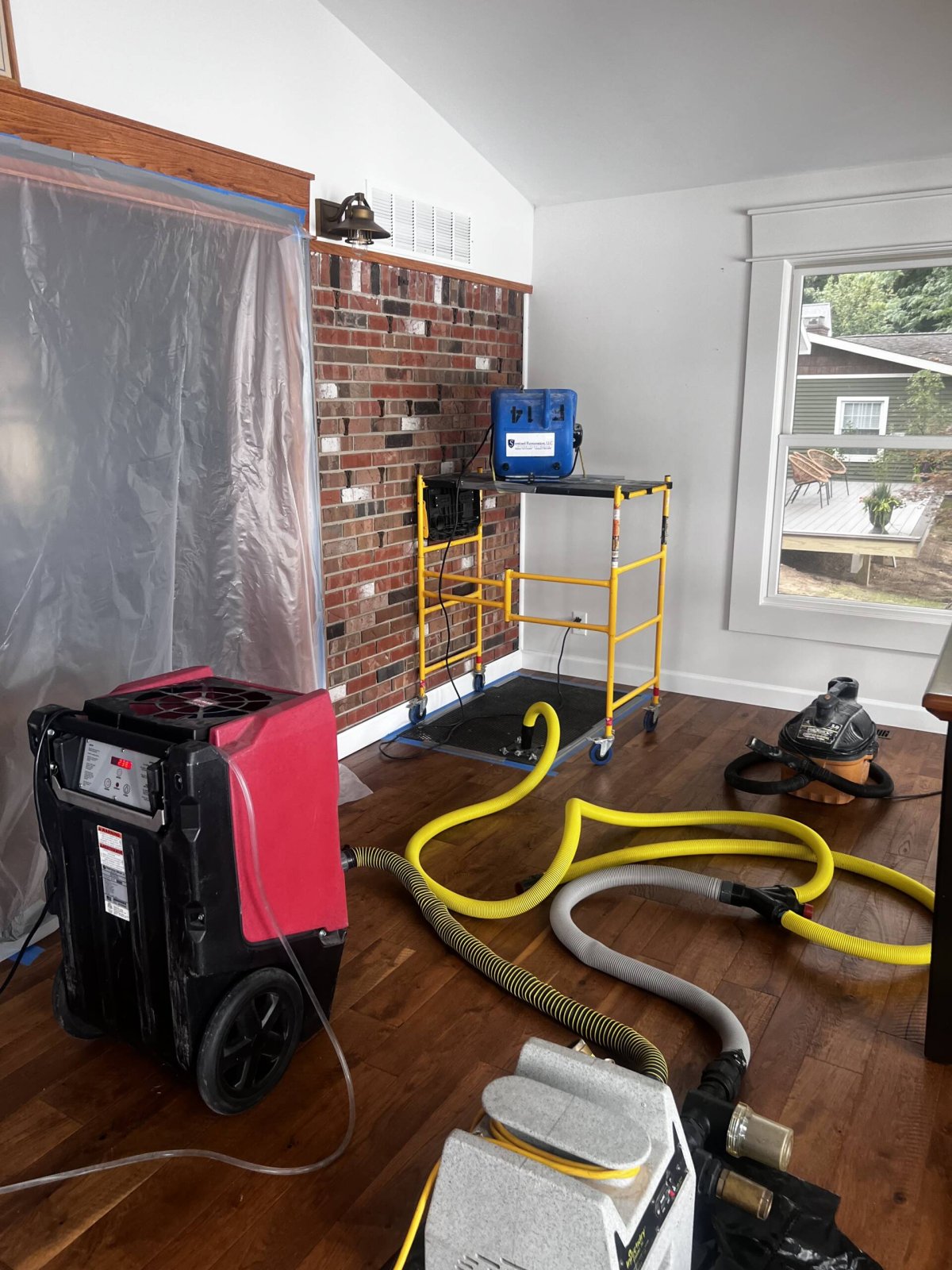
Fast response limits damage. Ask how quickly a crew can arrive and whether they are staffed around the clock. Then ask what equipment they bring. Professional drying requires air movers, dehumidifiers, and moisture meters, not just shop vacuums.
The bigger question is how they decide the job is done. Objective drying criteria means documented moisture readings compared against dry standards for your area and materials. Ask for daily readings and a final report showing your structure returned to dry conditions.
Our emergency restoration guide explains what a proper response looks like from the first hour.
Local Track Record, References, and Subcontractor Supervision
Experience with similar projects is a useful indicator of how a job will go. A slab leak in a finished basement is a different job than a toilet overflow on tile.
Ask for references from comparable losses and actually call them. Check online reviews for patterns, not single complaints. Local familiarity can matter too, since building stock and weather patterns vary by area.
One question most homeowners forget: who is supervising the crew? Ask whether technicians are employees or subcontractors, and who inspects the work daily. Supervision is what keeps a job on track.
Booking a Certified Crew for Your Property
Before the crew arrives, stop the water source if you safely can, move valuables clear, and photograph everything for your claim. Our guide on what to do after water damage covers the first steps in order.
Then book with confidence. Confirm the certification number, the license, the insurance certificate, and the written scope. A reputable water damage contractor should be willing to answer those questions.
When water is spreading through your home, the difference between a rushed hire and a verified one shows up months later. Sentinel Restoration is IICRC certified and licensed, with decades of experience and advanced moisture detection technology. We restore properties to pre-loss condition and handle the documentation your insurance claim needs. Get started with Sentinel Restoration and put a certified crew on your property today.
Frequently Asked Questions
What certifications should a water damage contractor have?
Look for IICRC certification, which is the industry standard for water damage restoration, applied structural drying, and mold remediation. Ask which specific certifications each technician holds, not just the company. A crew trained in water extraction and structural drying will set up moisture monitoring and drying equipment correctly and document the drying process. Confirm the certification is current, since technicians must renew it, and ask whether the people arriving at your property are employees or subcontractors.
How can I verify a water damage contractor’s certification and license?
Ask for the technician’s name and certification number, then confirm it through the IICRC’s online directory rather than relying on a logo on a truck. For licensing, check your state licensing board’s public lookup and match the business name and license number exactly. Request a certificate of insurance directly from the contractor’s insurer and call to confirm it is active. A certified water damage contractor will hand over these details without hesitation; resistance is a warning sign.
Should a water damage contractor be licensed and insured?
Yes. Ask for general liability insurance and workers’ compensation coverage, and verify both are active before work begins. Without liability coverage, damage caused during water extraction or drying could become your problem. Without workers’ comp, an injured crew member could pursue a claim against you as the property owner. Get the certificate of insurance from the insurer, not just a photocopy from the contractor, and confirm the policy covers the dates of your project.
How do I compare water damage restoration estimates?
Compare scopes of work, not just totals. A written estimate should list affected areas, water category, equipment to be used, drying days, moisture monitoring visits, and whether mold remediation is included. Ask whether the price covers extraction, structural drying, and reconstruction or stops at mitigation. Confirm how the contractor documents the job for your insurance claim and what happens if drying takes longer than estimated. Two estimates with the same total can cover very different work.