Table of Contents
- Immediate Safety Checks Before Entering a Flooded Basement
- Basement Water Extraction: Methods and Equipment
- Basement Flood Cleanup Steps: A Clear Response Sequence
- How Long to Dry a Flooded Basement: Timeline and Factors
- Water Categories and Contamination Levels
- Flooded Basement Cleanup Checklist and Mold Prevention
- Insurance Documentation and Professional Assessment
- When to Call Professional Emergency Water Removal Services
- Frequently Asked Questions
Last Updated: October 11, 2026
Immediate Safety Checks Before Entering a Flooded Basement
Before you step into standing water, stop. Floodwater carries hidden hazards that can cause serious injury or death. Your first priority is personal safety, not salvage.
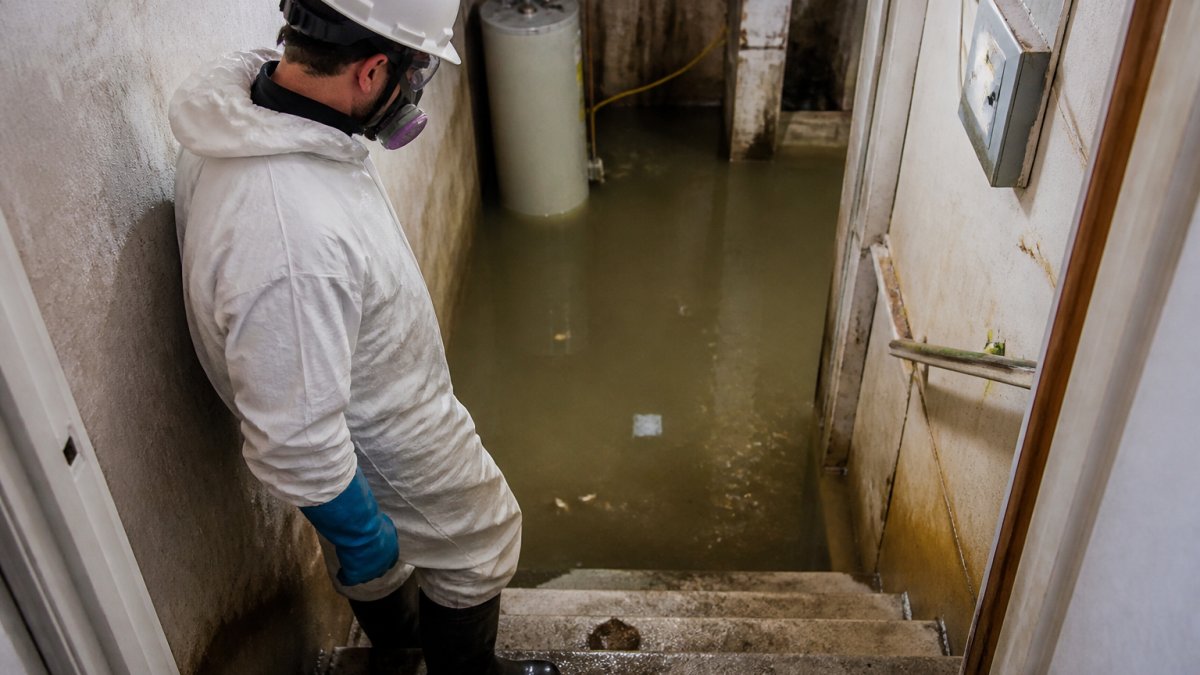
Check for electrical hazards. If your electrical panel is submerged or water is actively touching outlets or wiring, do not enter.
Look for structural damage. Cracks in walls, bowing foundations, or sagging ceilings signal instability. If you see these, evacuate and call a professional. Water weakens concrete and drywall rapidly.
Test water depth and current. Never assume floodwater is shallow or still. Use a stick or pole to check depth before wading.
Wear protective equipment. Put on rubber boots, heavy-duty gloves, a respirator or N95 mask, and eye protection. Floodwater contains sewage, chemicals, and bacteria. Assume it’s contaminated.
Watch for gas leaks. If you smell gas, leave immediately and call your gas company from outside. Do not use electrical switches or create sparks.
Document damage from above if possible. Take photos and videos from the top of the stairs before entering. This protects your insurance claim and keeps you safer.
Basement Water Extraction: Methods and Equipment
Emergency water removal from flooded basement requires the right equipment and technique.
For small amounts of standing water (under 2 inches across a small area), a wet vacuum can work.
Submersible pumps handle larger volumes faster. These electric pumps sit directly in water and push it out through a hose.
Sump pumps work if your basement has a sump pit. Position the pump in the pit and run the discharge hose away from your foundation.
For basement flood cleanup, the water extraction phase is just the start. After removing standing water, you must address moisture trapped in materials.
Dehumidifiers pull moisture from the air. Portable dehumidifiers work for small spaces but struggle in large basements. Industrial dehumidifiers are available. Rental costs vary.
Air movers (fans) circulate air and speed evaporation. Position them to push air across wet surfaces and out of the basement.
Moisture meters measure water content in materials. These tools show whether drywall, wood, or concrete is actually dry.
Professional water extraction services use truck-mounted extraction equipment that removes water faster and more completely than portable pumps.
Basement Flood Cleanup Steps: A Clear Response Sequence
The first hours after flooding determine your outcome. Follow this sequence to protect your property and health.
Step 1: Stop the Water Source
Identify why water entered. Is it from a burst pipe, sump pump failure, foundation crack, or external flooding? Shut off the water main if a pipe burst. If the source is external (heavy rain, river overflow), wait for water levels to drop before entering.
Check your sump pump. If it failed, water backed up into your basement. If you have a backup battery system, activate it. If not, this is a common failure point during emergencies.
Step 2: Document and Photograph Damage
Take photos and videos of all water damage before you remove anything. Photograph the water line on walls, damaged items, and the overall scene. This documentation is critical for your insurance claim.
Write down the date and time of the flood. Note what caused it. Record the estimated water depth. Your insurance adjuster will need this information.
Step 3: Remove Standing Water
Use the extraction method appropriate to your water volume. Start with pumping or vacuuming. Move water away from your foundation, not toward it. Pump water to the street storm drain if local codes allow, or to a low spot on your property away from the house.
Once standing water is gone, mop and squeegee remaining moisture. Remove wet items and place them outside to dry if weather permits.
Step 4: Begin Drying and Dehumidification
Position air movers and dehumidifiers immediately after water removal. Open basement windows if humidity outside is lower than inside. Close them if outdoor humidity is high.
Remove wet drywall up to 12 inches above the water line. Drywall absorbs water and becomes a vector for mold. Cut and remove it. Leave the studs exposed so they can dry.
Pull up wet carpet and padding. These materials trap moisture and support mold growth. Discard them unless they’re valuable antiques. Most carpet cannot be salvaged after flooding.
How Long to Dry a Flooded Basement: Timeline and Factors
Drying time depends on water volume, humidity, temperature, and ventilation. A small flood with good airflow might dry in 5 to 7 days. A large basement flood with poor ventilation can take 2 to 3 weeks or longer.
Concrete typically dries slowly. Even after standing water is removed, concrete holds moisture deep in its pores. Expect concrete to take 2 to 4 weeks to dry completely. Use moisture meters to verify dryness before finishing.
Wood framing dries faster than concrete but slower than you’d expect. Studs and joists exposed to air dry in 1 to 2 weeks if dehumidifiers and air movers run continuously.
Temperature and humidity control the drying speed. Warm air holds more moisture, so higher temperatures speed evaporation. Humidity below 50 percent is ideal for drying. If outdoor humidity is high, keep windows closed and rely on dehumidifiers.
Running dehumidifiers and air movers 24 hours per day cuts drying time significantly. Stopping equipment at night or when you leave the house extends the timeline.
Moisture meters are your verification tool. Do not assume materials are dry based on appearance. Wood and concrete can feel dry on the surface while remaining wet inside. Test multiple spots before you consider the basement truly dry.
Water Categories and Contamination Levels
Not all floodwater is the same. The contamination level determines health risks and cleanup requirements.
Category 1 water is clean water from a broken supply line, melting snow, or rain. It poses minimal health risk if contacted briefly. You can handle Category 1 cleanup with basic precautions.
Category 2 water is gray water from appliances, toilets with minimal contact, or seepage. It contains some bacteria and pathogens. Wear gloves and a mask. Avoid ingesting or inhaling it.
Category 3 water is black water from sewage backups, river flooding, or contaminated sources. It contains dangerous pathogens, chemicals, and toxins. Do not touch it without full protective equipment. Professional remediation is mandatory for Category 3 contamination.
Most basement floods are Category 2 or 3 because they involve sewage backup or ground contamination. Assume your floodwater is contaminated. Wear protective gear even if it looks clean.
Contaminated materials must be discarded or professionally treated. Drywall, insulation, carpet, and padding exposed to Category 2 or 3 water should be removed and replaced. These materials cannot be safely cleaned.
Flooded Basement Cleanup Checklist and Mold Prevention
Mold begins growing within 24 to 48 hours of water exposure (the CDC). Prevention is easier than remediation. Follow this checklist to stop mold before it starts.
- Remove all wet porous materials (drywall, carpet, insulation, padding)
- Dry all hard surfaces (concrete, wood framing) within 48 hours
- Run dehumidifiers continuously until moisture meter readings are below 17 percent
- Position air movers to circulate air across all wet surfaces
- Clean all hard surfaces with a solution of one cup bleach per gallon of water
- Inspect walls and ceilings for hidden moisture using a moisture meter
- Check behind walls and under flooring for trapped water
- Open walls if moisture readings suggest water inside cavities
- Discard materials that cannot be fully dried
- Do not paint, seal, or finish surfaces until they’re completely dry
Mold prevention depends on speed and thoroughness. The faster you remove water and begin drying, the lower your mold risk. Incomplete drying is the primary cause of mold growth after flooding.
If mold appears during drying, stop and call a professional. Mold remediation requires containment to prevent spore spread. DIY mold cleanup often makes the problem worse by releasing spores into the air.
Insurance Documentation and Professional Assessment
Your insurance company will send an adjuster to inspect the damage. Prepare documentation before they arrive. Photos taken immediately after the flood are your strongest evidence.
Create a list of damaged items with estimated values. Note the water line on walls. Document the date, time, and cause of the flood. Include weather reports or utility company notifications that support your claim.
Keep receipts for all cleanup and restoration expenses. Photograph work in progress. Your insurer may reimburse professional water extraction, drying, and restoration costs if the flood was covered under your policy.
Some policies exclude flood damage. Standard homeowners insurance does not cover flooding from external sources. You need separate flood insurance. If you don’t have it, you’re responsible for all costs.
A professional assessment from a restoration contractor provides credibility. Contractors licensed by the IICRC (Institute of Inspection, Cleaning and Restoration Certification) follow industry standards for water damage assessment. Their reports document moisture levels, affected materials, and recommended remediation. Insurance adjusters respect IICRC-certified assessments.
IICRC standards for water damage restoration
When to Call Professional Emergency Water Removal Services
You can handle small floods yourself. But most basement floods benefit from professional response. Call a professional if:
Water volume exceeds what you can pump out in a few hours. Professionals have truck-mounted extraction equipment that moves thousands of gallons per hour.
The flood involves sewage or contaminated water. Category 2 and 3 water cleanup requires protective equipment and disposal protocols. Professionals are trained and equipped for this.
Your basement has finished spaces, valuable items, or sensitive equipment. Rapid professional extraction minimizes damage to flooring, cabinetry, and electronics.
You need documentation for your insurance claim. Professional contractors provide detailed damage assessments and moisture testing reports that insurers require.
Mold appears during drying. Professional mold remediation includes containment and proper disposal. DIY mold cleanup spreads spores.
You’re unsure about structural safety. Professionals assess foundation damage and wall stability. Water weakens concrete and can cause collapse if not properly evaluated.
Professional emergency water removal from flooded basement services respond within hours, not days. Sentinel Restoration provides rapid response in Southeast Michigan.
Flooded basements demand immediate action. Sentinel Restoration combines IICRC-certified expertise with advanced moisture detection technology to restore your basement safely and completely. IICRC certification requirements ensures our team follows industry standards for water damage assessment and remediation.
Frequently Asked Questions
What should I do first when my basement floods?
First, ensure electrical safety: turn off the main breaker if you can reach it safely, and do not enter water if electrical hazards are present. If the water level is rising, evacuate immediately and call emergency services. Once safe, document damage with photographs for insurance, then contact a professional emergency water removal service. Do not attempt large-scale water removal yourself if the water is contaminated or the situation is severe.
How long does it take to dry out a flooded basement?
Drying time depends on water volume, basement size, humidity, temperature, and air circulation. Most flooded basements take 5 to 7 days to dry completely with professional equipment like dehumidifiers and air movers running continuously. Structural drying of walls and subfloors can extend to 2 to 3 weeks. Moisture assessment with professional equipment confirms when drying is complete; premature closure of equipment risks mold growth and hidden moisture damage.
Can I use a wet/dry vacuum to remove basement floodwater?
Wet/dry vacuums are useful for small amounts of standing water, but they have significant limits. They cannot handle large volumes efficiently, and continuous use risks motor burnout. More importantly, they cannot extract water from structural materials like drywall, subfloors, or insulation. For flooded basements with substantial water, professional water extraction equipment and pump-out services are necessary to prevent structural damage and mold growth.
How do I know when a flooded basement is safe to enter?
Wait until electrical hazards are confirmed clear by a professional or licensed electrician. Check that standing water has been removed and the space has been inspected for structural damage, gas leaks, or contamination. Never enter if water is still rising, if you smell gas, or if the basement was flooded with sewage or contaminated water. When in doubt, contact a professional emergency response team before entry.
What is the difference between water categories, and why does it matter?
Category 1 (clean water) poses minimal health risk and comes from broken pipes or rain. Category 2 (gray water) contains some contamination from appliances or toilets and requires protective equipment. Category 3 (black water) is heavily contaminated sewage and poses serious health hazards. The category determines cleanup protocols, personal protective equipment needs, and whether professional remediation is mandatory. Misidentifying water category can result in health risks and incomplete restoration.