Table of Contents
- What Water Damage Is Covered by Homeowners Insurance
- What Insurance Won’t Cover: Flooding, Seepage, and Neglect
- Does Insurance Pay for Water Restoration and Mitigation Services?
- How to File a Water Damage Insurance Claim
- What to Say to an Insurance Adjuster About Water Damage
- Water Damage Insurance Claim Timeline: What to Expect
- When a Claim Is Denied or Underpaid: Your Next Steps
- Step 1: Get the Denial in Writing
- Step 2: Request a Re-Inspection
- Step 3: Submit a Written Rebuttal With Evidence
- Step 4: Use the Appraisal Clause if the Dispute Is About Value
- Step 5: Escalate to Your State Insurance Department
- Step 6: Consider a Public Adjuster or Attorney
- Why Underpayments Happen
- Frequently Asked Questions
Last Updated: October 12, 2026
What Water Damage Is Covered by Homeowners Insurance
Does insurance pay for water restoration? In most cases, yes, but only when the damage comes from a sudden, accidental event. A standard homeowners policy covers unexpected bursts and overflows, not slow leaks you could have caught earlier.
A burst pipe that floods your kitchen is covered; a pipe dripping behind the wall for eight months is not. That difference drives most approvals and denials.
Sudden and Accidental Damage vs. Gradual Damage
Gradual damage builds over weeks or months, a slow leak under the sink, or a roof leak that stains the ceiling a little more each rainstorm.
The practical test is simple:
- Did the damage happen all at once? Likely covered.
- Did it build up over time? Likely denied.
- Could regular maintenance have caught it? The insurer will argue yes.
Insurers often cite wear and tear or neglect to deny a claim even when the final failure was sudden. If a pipe was corroded for years before it burst, expect questions.
Common Covered Causes: Burst Pipes, Appliance Leaks, and Toilet Overflows
Several everyday events usually fall under covered perils. These are common claims that are often approved:
- Burst pipe from freezing or pressure
- Appliance leak from a washing machine, refrigerator, or water heater
- Dishwasher supply line failure
The key is the water source and how it failed: a washing machine hose that bursts is sudden, while the same hose seeping for a month is gradual. Document the source early, the adjuster will ask first.
What Insurance Won’t Cover: Flooding, Seepage, and Neglect
Standard home insurance draws a hard line at water that comes from outside or builds up slowly. Three exclusions cause the most denied claims:
- Flood damage from rising water, storm surge, or overflowing rivers
- Groundwater seepage pushing through a foundation
- Neglect and lack of maintenance
A policy exclusion is written into the contract, not a gray area. If your basement floods because the water table rose after a storm, your standard policy likely will not pay, no matter how sudden it felt.
Flood Insurance and Other Separate Coverage
Flood insurance is a separate policy, usually purchased through the National Flood Insurance Program or a private insurer. According to FEMA’s flood insurance guidance, standard homeowners policies do not cover flooding, which is why a dedicated policy exists.
If you live in a low-lying area or near water, this coverage is worth the cost. It is the only reliable protection against rising water and storm surge.
Sewer Backup, Drain Backup, and Mold Sublimits
Two more gaps catch homeowners off guard. Sewer backup and drain backup are usually excluded unless you add an endorsement, a cheap add-on that covers the mess when waste water backs into your home.
Mold damage is often capped by a sublimit, a set dollar amount for remediation, then nothing. Because mold grows fast after any water event, that limit can be reached quickly.
Does Insurance Pay for Water Restoration and Mitigation Services?
Does insurance pay for water restoration? Yes, when the loss is covered, most policies pay for the professional work to dry out and repair your home, not just the damaged carpet, but the labor and equipment to stop the damage from spreading.
What’s Covered: Mitigation, Restoration, and the Source Repair
Coverage usually splits into three parts, and they are not the same thing:
| Service | What It Covers | Usually Paid? |
|---|---|---|
| Water mitigation | Water extraction, drying, dehumidifying | Yes, if loss is covered |
| Water restoration | Repairs to drywall, flooring, paint | Yes, up to policy limits |
| Source repair | Fixing the failed pipe or appliance | Often limited or excluded |
Water mitigation stops the damage from getting worse; water restoration returns your home to its pre-loss condition.
The failed appliance or pipe is often the smallest part of the claim, the real cost is extraction, drying, and rebuild. Do not let a dispute over a $200 hose distract from the thousands in covered restoration work.
How to File a Water Damage Insurance Claim
A clean claim starts the moment you find the water. These steps keep your insurance claim on track, in the sequence most adjusters expect.
- Stop the water. Shut off the supply valve or the main line. If you cannot find the valve, call a plumber before you call anyone else.
- Prevent further damage. Move belongings off wet flooring, block furniture legs with foil or plastic, and start drying. Your policy requires reasonable steps to mitigate, and failing to do so can reduce the payout.
- Document everything before you clean. Photograph the water source, the standing water line on walls, and every affected room. Shoot wide shots and close-ups. Video a slow pan of each room.
- Call your insurer. Report the loss and open the claim. Ask for the claim number and the name and direct line of your assigned adjuster.
- Call a restoration contractor. Start mitigation fast to limit mold. Extraction and drying should begin the same day in most cases.
- Keep every receipt. Save hotel, meals, laundry, and any repair costs. These may fall under additional living expenses if the home is uninhabitable.
- Meet the adjuster. Walk the property together and point out every area you documented. Hand over your photo set.
- Submit proof of loss. Provide the itemized damage list and supporting documents by the deadline in your policy.
What to Document and How to Store It
Adjusters decide sudden versus gradual based on evidence, so your documentation is the claim:
- Photos: 20 to 50 images is normal for a mid-size loss. Include the source, the water line, and each affected material.
- Video: A 60- to 90-second walkthrough narrated with dates and room names.
- Moisture readings: Ask your contractor for a moisture map showing affected versus dry areas. This is the single most useful document when an adjuster disputes scope.
Notice and Proof-of-Loss Deadlines
Policies require prompt notice of a loss, and many set a proof-of-loss window, often 60 days from the insurer’s request. Missing it is one of the few ways to lose a claim you would otherwise win. Read the “Duties After Loss” section and calendar the dates when you open the claim.
Working With a Restoration Contractor During the Claim
You are not required to use an insurer-preferred vendor. You may choose your own licensed contractor, and the insurer must pay reasonable, customary costs for covered work:
- Get a written scope and estimate before work begins, broken into mitigation and rebuild.
- Ask about assignment of benefits. Signing an AOB transfers your claim rights to the contractor, which can speed payment but also removes your control over the claim. Understand what you are signing.
- Authorize in stages. Approve emergency mitigation first, then rebuild once the scope is agreed.
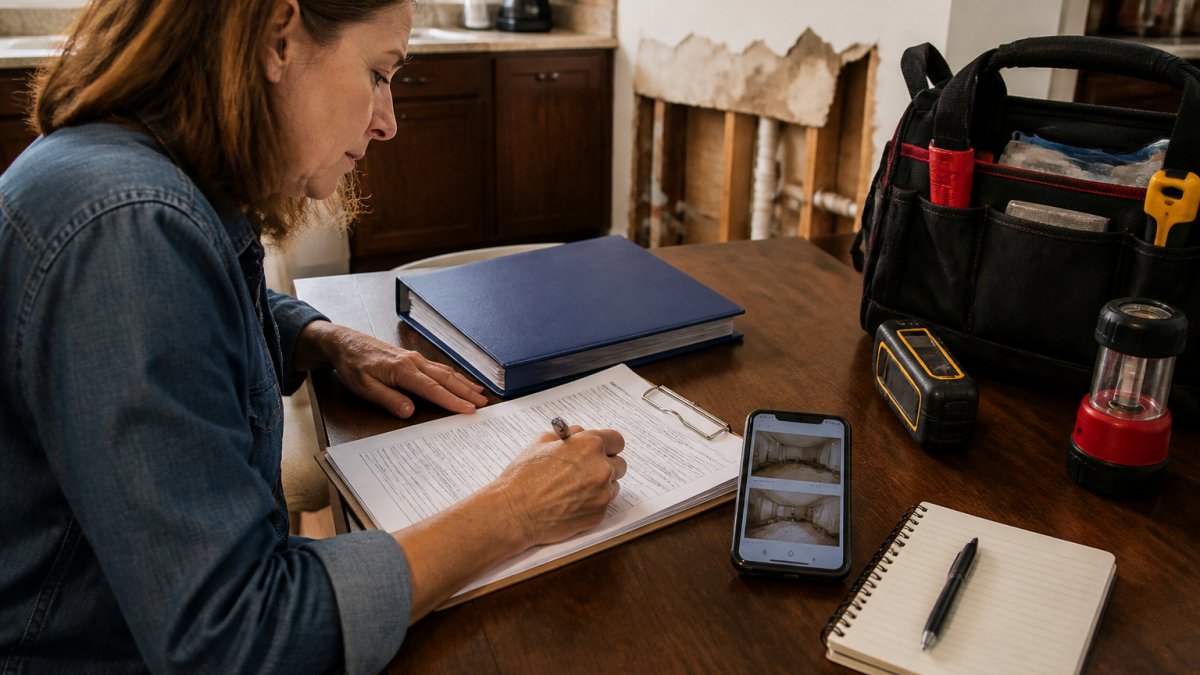
The most common mistake is waiting. Mold can start growing within a day or two of a leak.
Photograph the water source before you touch anything. Adjusters decide sudden versus gradual based on evidence, and a clear photo of a split pipe beats a verbal explanation every time.
What to Say to an Insurance Adjuster About Water Damage
Keep your answers short, factual, and consistent. Everything you say goes into the file, so stick to what you saw and when.
- State the date and time you discovered the water.
- Describe the source in plain terms.
- Confirm what you did to stop the damage.
That last phrase can turn a covered claim into a denial. If you are unsure how long a leak ran, say so honestly rather than guessing, an adjuster who hears “gradual” will look for an exclusion to apply.
Never tell an adjuster the damage is “old” or “probably been leaking for months.” That single phrase can convert a sudden-loss claim into a gradual-damage denial, leaving you to pay for the entire restoration yourself.
Water Damage Insurance Claim Timeline: What to Expect
Most claims move through a predictable set of stages. The water damage insurance claim timeline varies by insurer and claim size, but the sequence rarely changes.
| Stage | Typical Time | What Happens |
|---|---|---|
| Report the loss | Same day | You open the claim |
| Adjuster inspection | A few days | Damage is assessed |
| Mitigation | Starts within days | Drying and extraction |
| Proof of loss | Within weeks | You submit the itemized list |
| Payout and repair | Weeks to months | Repairs are completed |
Mitigation should not wait for the payout. Delaying drying to “see what insurance says” is how a small leak becomes a mold problem. Start mitigation immediately, document it, and let the claim catch up.
When a Claim Is Denied or Underpaid: Your Next Steps
A denial is not always final. Many homeowners accept the first answer when they have grounds to push back. If your claim is denied or the claim payout falls short, work through the following in order.
Step 1: Get the Denial in Writing
Ask the insurer to state the specific policy language relied on. A denial letter should cite the exclusion or condition, not just say “not covered.” If it is vague, request clarification in writing, this creates a record and often reveals whether the insurer applied the right provision.
Step 2: Request a Re-Inspection
If the adjuster missed damage, ask for a re-inspection and attend it with your moisture map, photos, and contractor. Water travels into subfloor, insulation, and wall cavities a quick walkthrough will not reveal, and moisture detection can document what the first inspection missed.
Step 3: Submit a Written Rebuttal With Evidence
A short, factual letter works better than an emotional one. Include:
- The claim number and date of loss.
- The specific point you dispute.
- The evidence: photos, moisture readings, contractor estimate, and any expert opinion.
Step 4: Use the Appraisal Clause if the Dispute Is About Value
Many homeowners policies include an appraisal provision for disputes over the amount of loss, as opposed to whether the loss is covered. Each side hires an appraiser, and the two pick an umpire if they cannot agree. Appraisal can resolve a lowball estimate without litigation, but it does not decide coverage questions.
Step 5: Escalate to Your State Insurance Department
Every state has an insurance regulator that accepts consumer complaints. Filing a complaint is free and often prompts a faster internal review. Have your denial letter, correspondence, and evidence organized before you file.
Step 6: Consider a Public Adjuster or Attorney
A licensed public adjuster represents you, not the insurer, and typically charges a percentage of the settlement. An attorney makes sense when coverage itself is disputed or the amount is large. Both are options of last resort after the steps above.
Why Underpayments Happen
An underpaid claim often comes down to a repair cost estimate that missed hidden damage or used a scope that stops at the visible surface. Common gaps include:
- Baseboards and drywall cut-outs not included.
- Subfloor or underlayment replacement omitted.
- Antimicrobial treatment and equipment days undercounted.
A line-item estimate from a licensed contractor, paired with moisture documentation, is the most effective tool for closing those gaps.
This is where a certified team earns its keep. Our IICRC-certified technicians use advanced moisture detection to find water an untrained eye overlooks, and we help homeowners navigate the claim from first call to final repair.
The single biggest factor in whether insurance pays for water restoration is how the damage started. Sudden and accidental events get covered. Gradual damage, flooding, and seepage usually do not. Document the source fast, start mitigation immediately, and keep every record.
Frequently Asked Questions
Does home insurance cover water restoration?
Home insurance typically covers water restoration when the damage comes from a sudden and accidental event, like a burst pipe or appliance leak. The policy pays for water extraction, drying, and repairs to your home, up to your coverage limit. Flooding, groundwater seepage, and gradual leaks are usually excluded and require separate flood insurance or an endorsement.
What kind of water damage is not covered by insurance?
Standard homeowners insurance excludes flood damage, groundwater seepage, and damage from neglected maintenance. Gradual leaks that develop over weeks or months are also typically denied because they’re considered preventable. Sewer backup and mold damage often need separate endorsements or sublimits. If your water damage came from any of these sources, review your policy or ask your agent about additional coverage.
What should you avoid saying to an insurance adjuster about water damage?
Avoid saying the damage was gradual, that you noticed it weeks ago, or that you skipped maintenance. Don’t speculate about the cause or admit fault. Stick to facts: when you discovered the damage, what you saw, and what you did to prevent further damage. Keep a written log of everything you tell the adjuster and get all communication in writing.
How long after water damage can you claim on insurance?
Most policies require you to report water damage promptly, often within 30 to 60 days of discovery. Waiting too long can give the insurer grounds to deny your claim. File as soon as you notice the damage, even if you’re still assessing the full extent. Document everything with photos and receipts, and keep a copy of your claim submission.