Last Updated: October 25, 2026
Quick Summary
Emergency fire damage restoration is the immediate, coordinated work of securing a fire-damaged property, removing soot, smoke, ash, and firefighting water, and returning the structure to a safe, pre-loss condition. It starts the moment the fire is out, not when the insurance check arrives, and it addresses fire, water, and air quality as three emergencies running at once.
- Wait for the fire department to declare the structure safe before you re-enter the property.
- Do not turn on HVAC systems, ceiling fans, or space heaters after a fire.
- Emergency board-up services secure the property before cleanup begins, covering broken windows, doors, and roof openings.
- The cleanup process runs in three overlapping layers: water removal and drying, soot and ash removal, and smoke odor neutralization.
- Ask for the scope of loss in writing before you authorize any emergency work.
Table of Contents
- What Emergency Fire Damage Restoration Actually Covers
- Your Fire Damage Cleanup Checklist for the First 24 Hours
- Why Emergency Board-Up Services Come Before Cleanup
- Soot, Smoke, and Water: The Three-Layer Cleanup Process
- A Realistic Fire Restoration Timeline, Stage by Stage
- How Your Fire Damage Insurance Claim Shapes the Work
- Where DIY Fire Cleanup Stops and Professionals Start
- Calling Sentinel Restoration for Emergency Fire Response
- Frequently Asked Questions
What Emergency Fire Damage Restoration Actually Covers
Emergency fire damage restoration is the immediate, coordinated work of securing a fire-damaged property, removing soot, smoke, ash, and firefighting water, and returning the structure to a safe, pre-loss condition.
Most homeowners assume the fire itself is the whole disaster. It isn’t.
Below, we’ll show you exactly what happens in a professional response, what you should do yourself, and where the line sits between a shop-vac afternoon and a certified crew.
Your Fire Damage Cleanup Checklist for the First 24 Hours
A fire damage cleanup checklist for the first 24 hours is about safety and documentation, not scrubbing. Do too much too early and you can spread soot, inhale toxins, or damage evidence your insurance claim depends on. The unique angle here is the order of operations: what to confirm before you step inside, what to photograph before anything moves, and what to leave untouched so the adjuster sees the loss as it happened.
Before You Re-Enter the Property
- Wait for the fire department to declare the structure safe to enter, do not rely on a neighbor’s assurance or a landlord’s text
- Confirm the gas and electricity are shut off at the meter or main panel, and that the utility has tagged the service
- Wear an N95 mask, gloves, and long sleeves; add eye protection if ceilings or insulation are disturbed
If the roof, ceiling, or floor structure is compromised, stay out. No possession is worth a collapse injury. A common pattern is for homeowners to re-enter through a garage or side door that the fire department did not inspect; use only the entry the incident commander cleared.
Do not turn on HVAC systems, ceiling fans, or space heaters after a fire. Smoke and soot can be pulled through ductwork and redistributed into rooms that were previously clean, and energized equipment can ignite if wiring was damaged.
What to Document and What to Leave Alone
Photograph and video everything: damaged rooms, ruined furniture, receipts if you can find them. Then stop. Leave charred debris, soot-covered surfaces, and anything wet in place for the adjuster and the restoration team.
A practical documentation sequence that most adjusters find useful:
- Wide shots first. Stand in each doorway and capture the whole room before moving anything.
- Close-ups second. Photograph serial-number plates on appliances, labels on damaged furniture, and any receipts or policy documents you can see without moving debris.
- Inventory notes third. Write down what was in each room from memory while it is fresh, brand names, approximate age, and purchase location help the adjuster value contents.
- Receipts and records. Keep receipts for emergency supplies, temporary lodging, and meals if your policy includes loss-of-use coverage; those are claimable in many policies but only with documentation.
Leave these alone until the adjuster or restoration team arrives: charred structural members, anything covered in soot on porous surfaces, standing water, and damaged electrical outlets or panels.
Keep a single folder, physical or digital, for photos, receipts, and your claim number. When you call your insurer, ask for the claim number and the adjuster’s direct contact in the same call, and write both down. That one habit prevents most of the back-and-forth that slows claims.
Why Emergency Board-Up Services Come Before Cleanup
Emergency board-up services secure the property before cleanup begins, and the order is deliberate. An open, fire-damaged home invites theft, weather intrusion, and further structural decay, all of which add to the loss.
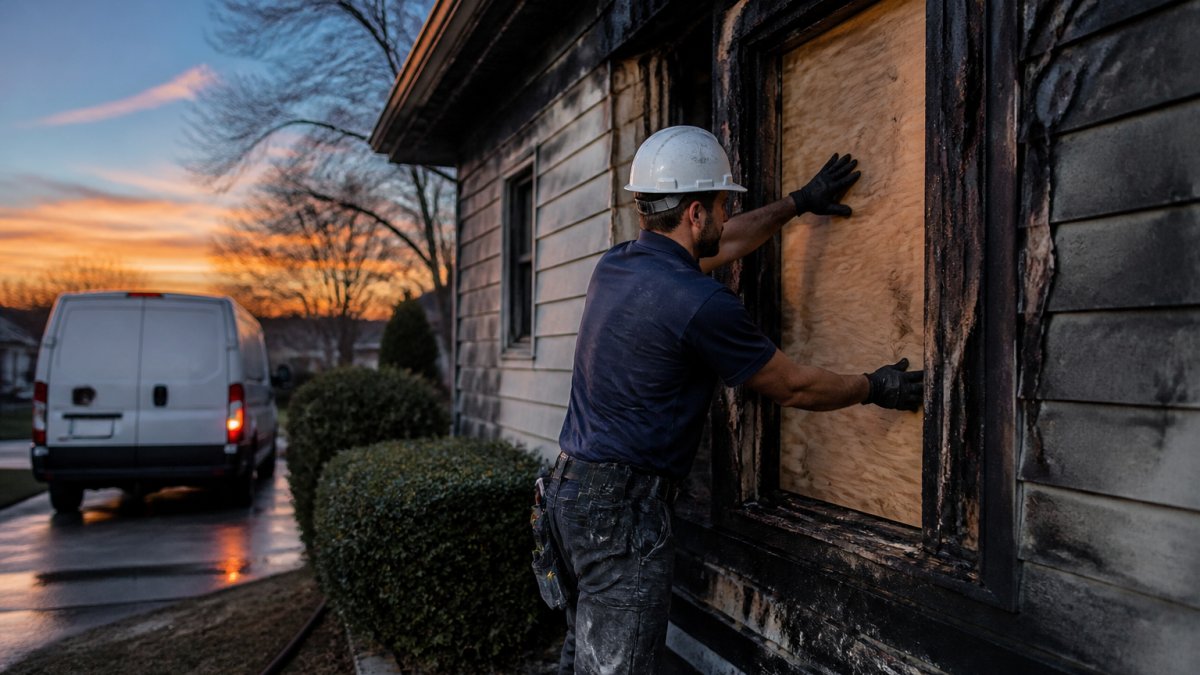
Board-up typically covers broken windows, doors, and roof openings with plywood or tarps. It also includes temporary roof tarping when the fire punched through. This step protects the home and preserves the claim.
Soot, Smoke, and Water: The Three-Layer Cleanup Process
The cleanup process runs in three overlapping layers: water removal and drying, soot and ash removal, and smoke odor neutralization. Skipping or reordering them is why odors return months later.
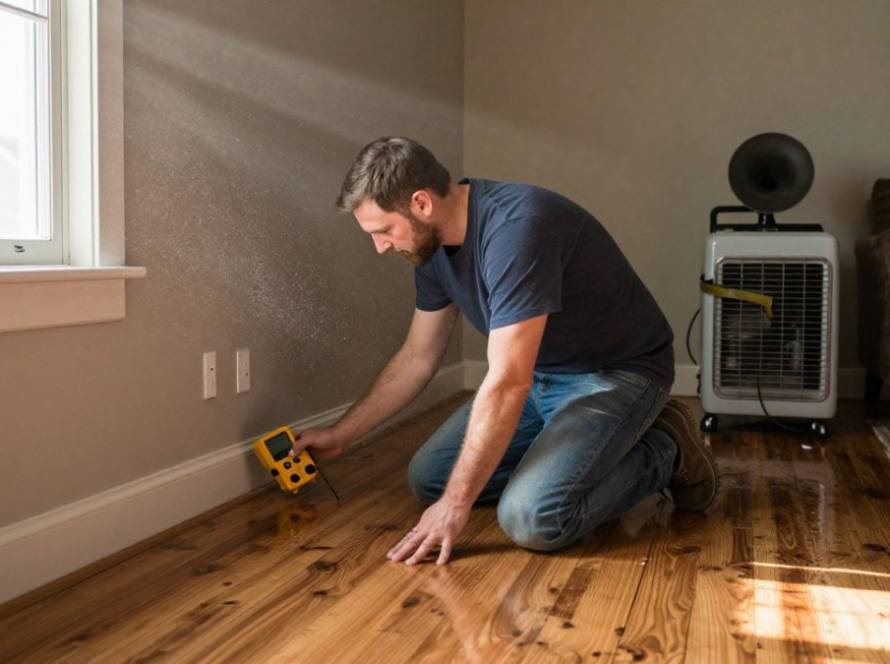
Water removal comes first because firefighting water soaks into drywall, subfloor, and framing. Crews extract standing water, then use industrial air movers and dehumidifiers to dry the structure.
Soot and ash removal follows. Protein and synthetic residues are acidic and etch surfaces if left sitting. Technicians use specialized sponges, HEPA vacuums, and cleaning agents matched to each surface.
Smoke odor removal is the final layer, and the hardest.
A Realistic Fire Restoration Timeline, Stage by Stage
A fire restoration timeline depends on the size of the fire, how much water was used, and how far smoke traveled, but the stages follow a predictable order.
| Stage | What Happens | Typical Timing |
|---|---|---|
| Emergency response | Board-up, safety inspection, damage assessment | Same day |
| Water extraction and drying | Remove firefighting water, dry structure | First few days |
| Soot and smoke cleanup | Surface cleaning, contents cleaning, odor control | Days to a week |
| Structural repairs | Framing, drywall, roofing, reconstruction | Weeks |
| Final walkthrough | Inspection and sign-off | After repairs |
Small, contained fires may wrap in a couple of weeks. A fire that reached the attic or required extensive reconstruction can run into months. The biggest variable is often the insurance claim, not the labor.
What Actually Changes the Timeline
Four factors move the schedule more than any other:
- Fire severity and spread. A room-and-contents fire is a different project from one that entered the attic or wall cavities. Hidden char in framing is often found only after opening walls, which adds discovery time.
- Water volume from suppression. A single hose line leaves far less water than a master stream. Wet insulation and subfloor dry slowly and can delay soot cleaning until moisture is under control.
- Smoke travel. Smoke follows air currents through ductwork, gaps, and upper floors. A fire in one room can leave odor in rooms that never saw flame, which expands the cleaning scope.
What Drives the Cost of Emergency Service
Most restoration companies price emergency work from a scope of loss rather than a flat rate, and the scope is built from the same evidence the adjuster uses. The factors that move the estimate most are the size of the affected area, the number of layers of material that must be removed (drywall, insulation, subfloor), whether contents cleaning is included, and whether reconstruction is part of the job or handled by a separate contractor.
Ask for the scope in writing before you authorize work. A written scope should list what will be removed, what will be cleaned, what will be dried, and what is excluded. If a company cannot produce one, that is a signal to slow down.
Questions to Ask Before You Authorize Emergency Work
- Who pays, and how? Ask whether the company bills your insurer directly or expects payment from you, and get that in writing. Many policies cover emergency mitigation, but coverage decisions belong to your insurer, not the contractor.
- What is the emergency portion versus the rebuild? Emergency mitigation (board-up, water extraction, drying) is often authorized quickly; reconstruction may require a separate estimate and adjuster approval.
- What is the drying plan and how is it verified? Ask for moisture readings before and after drying, and whether the company provides daily monitoring records.
- Who handles the permit? Confirm whether the restoration company pulls the permit or whether you need a separate licensed contractor for structural work.
A realistic timeline is not a promise; it is a plan with checkpoints. Ask for the checkpoints, assessment complete, drying verified, cleaning signed off, reconstruction scheduled, and you will know whether the job is on track long before the final walkthrough.
How Your Fire Damage Insurance Claim Shapes the Work
Your fire damage insurance claim drives the scope, pace, and cost of restoration, so documentation and communication matter as much as the cleanup itself. Adjusters work from evidence: photos, moisture readings, and itemized scope reports.
This is where many homeowners feel stuck. If you’re still working through what your policy covers and how the process works, our guide on whether insurance pays for water restoration explains how coverage decisions affect the work.
A restoration team should document each stage for the adjuster, separate fire damage from secondary water damage, and flag anything the initial estimate missed. You are not expected to translate the paperwork alone.
Where DIY Fire Cleanup Stops and Professionals Start
DIY fire cleanup works for a small, contained mess on hard surfaces. It stops the moment soot has settled into porous materials, water is standing, or the fire reached the structure.
The honest dividing line:
- Safe to handle yourself: wiping a light ash film off sealed countertops, airing out a room, discarding ruined food
- Time to call a professional: smoke odor that lingers, charred framing, wet insulation, contents that need sanitizing, or any doubt about structural safety
Health risks tip the scale. Soot and smoke contain fine particles and residues that irritate lungs and skin, and standard household cleaning rarely reaches them.
If you’re weighing whether to hire out, our guidance on choosing a reliable contractor covers what to verify before you sign anything.
Calling Sentinel Restoration for Emergency Fire Response
When the fire is out and you’re standing in the doorway, speed and expertise are what protect your home and your claim. You can get a quote to start the emergency response process.
Our team uses advanced moisture detection to find hidden water and documents every stage for your insurance adjuster. You can contact us for immediate emergency help. To see the full range of what we handle, review our services.
Frequently Asked Questions
How soon should fire damage restoration begin after a fire?
Restoration should start within 24 to 48 hours of the fire being extinguished. Ash and soot are acidic and begin etching surfaces, corroding metal fixtures, and settling into upholstery within days. Water from firefighting hoses also creates ideal conditions for mold, which can appear in 24 to 72 hours. Calling a restoration team immediately after the fire department clears the property limits secondary damage and usually reduces the overall scope of repairs.
What does emergency fire damage restoration include?
Emergency fire damage restoration typically covers six stages: rapid response and damage assessment, property securing with board-up services, water removal and structural drying, soot and ash removal, smoke odor control with specialized cleaning, and reconstruction of damaged materials. A certified team also documents the loss for your insurance claim and sanitizes affected contents. The exact scope depends on how far smoke traveled through the home’s HVAC system and how much water the firefighting effort introduced.
Does homeowners insurance cover fire damage restoration?
Most standard homeowners policies cover fire damage restoration, including cleanup, structural repairs, and temporary housing, up to your policy limits. The key is documentation: photograph every affected room before cleanup begins, keep a written inventory of damaged items, and save all receipts for emergency expenses. Ask your adjuster whether the policy pays replacement cost or actual cash value, since that difference affects your payout. A restoration team can provide itemized scope-of-loss reports that support your fire damage insurance claim.
Can I clean up fire damage myself?
Small, contained fires may allow limited DIY cleanup, but most fires leave hazards that require professional handling. Soot contains carcinogenic particles, charred drywall can hide structural weakening, and standing water from hoses creates slip and electrical risks. Disturbing ash with a household vacuum can spread contaminants through the home. Leave structural assessment, soot removal, odor treatment, and water extraction to an IICRC-certified team, and handle only personal items the restoration crew has cleared as safe.
A house fire leaves you with two jobs at once: protecting your family and protecting your property. You don’t have to manage either alone. Sentinel Restoration brings IICRC-certified expertise, advanced moisture detection, and a meticulous, documentation-first approach to every fire loss, so your home gets back to pre-loss condition and your claim stays on solid ground. Get started with Sentinel Restoration and take the first step toward a safe, fully restored property.