Table of Contents
- What to Do First: Safe Steps Before Professional Help Arrives
- Emergency Water Removal and Extraction
- The Water Damage Restoration Process: Drying, Cleanup, and Reconstruction
- Water Damage Restoration Timeline: What to Expect
- Initial Response and Water Removal (Hours 0-48)
- Drying and Dehumidification (Days 2-14+)
- Measuring Drying Progress: Moisture Readings and Completion Criteria
- Cleanup and Decontamination (Days 3-7, concurrent with drying)
- Reconstruction and Restoration (Weeks 2-8+)
- Total Timeline Summary
- Communication and Progress Tracking
- Water Damage Restoration Cost and Pricing Factors
- Filing Your Water Damage Insurance Claim
- When to Call a Professional vs. DIY Assessment
- Preventing Mold and Future Water Damage
- Frequently Asked Questions
Last Updated: October 10, 2026
What to Do First: Safe Steps Before Professional Help Arrives
The first hours after water damage occurs are critical. Your immediate actions can prevent further destruction and protect your family’s safety.
Ensure everyone is safe. If water is rising, electrical hazards exist, or structural damage is visible, evacuate immediately. Turn off the main electrical breaker if you can do so safely.
Stop the water source if possible. Close the main water valve for burst pipes, place buckets under roof leaks, or focus on containment for external flooding.
Move furniture, electronics, and documents to dry areas. Take photos and videos of all damage for your insurance claim. Open windows and doors to increase air circulation if weather permits.
Do not attempt to clean contaminated water yourself. Water from sewage, rivers, or storm drains contains harmful bacteria and pathogens. Professional water damage restoration teams have proper protective equipment and decontamination protocols.
Emergency Water Removal and Extraction
Water extraction is the foundation of successful emergency water damage restoration. Standing water must be removed quickly to prevent mold growth and structural deterioration.
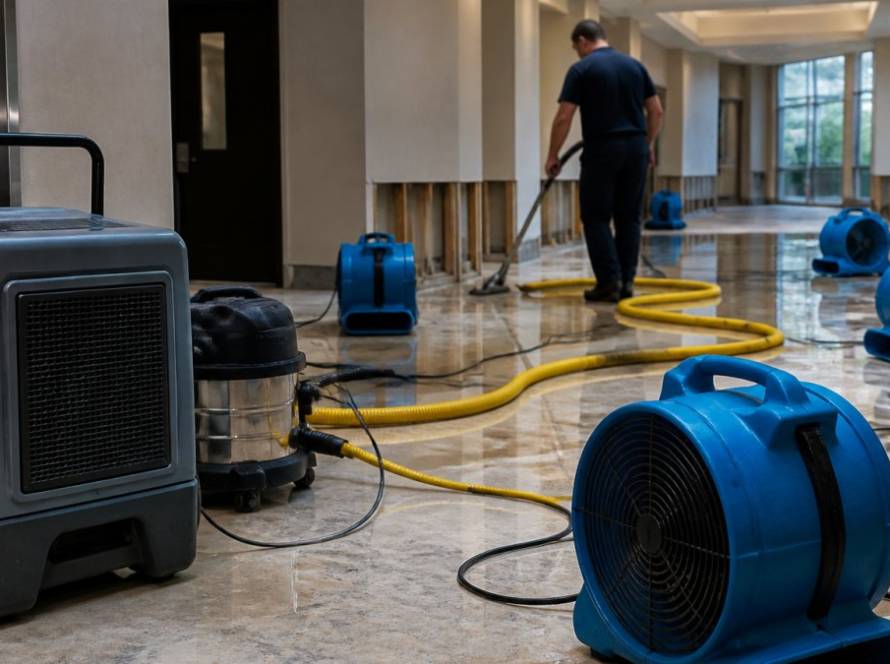
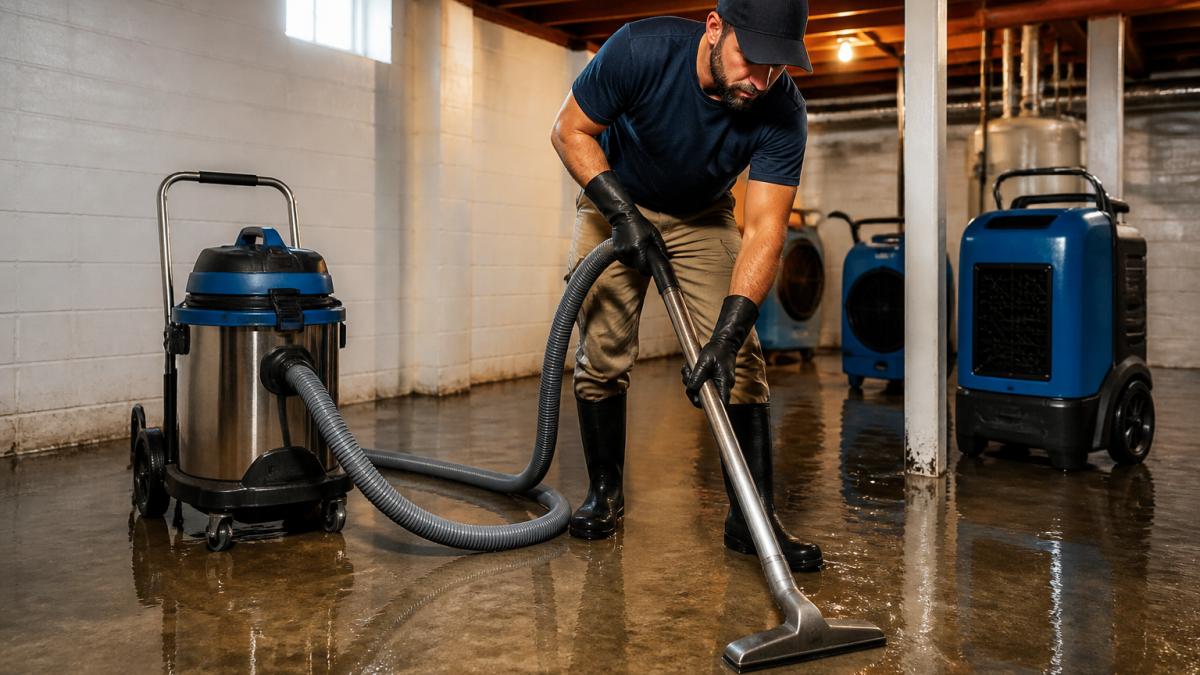
Professional teams use submersible pumps for large volumes, wet vacuums for carpets and furniture, and portable extractors for confined areas.
Speed matters significantly. Water damages materials within hours, drywall loses integrity, wood warps, and mold begins growing in carpets and insulation.
Equipment runs continuously for 24 to 72 hours depending on water volume and affected area size. Technicians monitor moisture levels with specialized tools to ensure complete removal.
If you have a wet basement or crawlspace, do not wait for visible water. Even damp conditions can trigger mold growth within 24 to 48 hours. Early intervention prevents costly secondary damage.
The Water Damage Restoration Process: Drying, Cleanup, and Reconstruction
Inspection and Damage Assessment
Every water damage restoration project begins with a thorough inspection. Certified technicians assess damage extent, identify water categories, and create a restoration plan.
Water falls into three categories: Category 1 (clean sources like broken supply lines), Category 2 (minor contamination from appliances), and Category 3 (heavily contaminated from sewage). The category determines cleanup protocols and safety measures.
Inspectors use thermal imaging and moisture meters to identify hidden water behind walls and under flooring, preventing incomplete drying that leads to mold problems.
Water Extraction and Drying
Water removal begins immediately. Industrial air movers create airflow across wet surfaces to accelerate evaporation, while dehumidifiers pull moisture from the air.
Drying times vary by material: concrete (3-7 days), drywall (7-14 days), wood subfloors (2-4 weeks). Insulation often requires replacement. Teams monitor moisture daily and adjust equipment to optimize drying.
The difference between adequate drying and complete drying often determines whether mold returns. Moisture readings must reach acceptable levels for the specific material type, not just “dry to the touch.”
Cleanup, Decontamination, and Mold Prevention
Once dry, contaminated materials like drywall, insulation, and carpet are removed. Hard surfaces are cleaned with antimicrobial solutions to eliminate bacteria and prevent mold.
Mold prevention is integral to water damage restoration. Professional teams apply mold inhibitors and clean HVAC systems to remove moisture and contaminants.
Reconstruction restores the property to its pre-loss condition through new drywall, flooring replacement, painting, and structural repairs as needed.
Water Damage Restoration Timeline: What to Expect
Timeline depends on severity, materials affected, environmental conditions, and extraction speed. Minor incidents take 1-2 weeks; extensive damage takes weeks or months.
Initial Response and Water Removal (Hours 0-48)
Professional teams typically arrive within 2-4 hours. Standing water removal continues 24-72 hours depending on volume. Technicians place air movers and dehumidifiers to begin drying immediately.
Drying and Dehumidification (Days 2-14+)
After standing water is removed, the drying phase begins. Duration depends on:
Material type: Concrete (3-7 days), drywall (7-14 days), wood subfloors (2-4 weeks). Insulation and carpet padding typically require replacement.
Depth of penetration: Water in walls, under flooring, or structural cavities takes 3-4 weeks to dry.
Environmental conditions: Warmer temperatures (70-80°F) accelerate drying; high humidity slows it by up to 50%.
Equipment placement: Optimal positioning accelerates drying; teams adjust daily based on moisture readings.
Measuring Drying Progress: Moisture Readings and Completion Criteria
Professional teams use moisture meters to measure water content and determine when drying is complete, not visual inspection.
Moisture meters measure water content as a percentage. Acceptable levels vary: concrete (3-4%), drywall (12-14%), wood subfloors (12-16%), hardwood flooring (6-9%).
Technicians take daily moisture readings and document them on a drying log. When levels stabilize at acceptable ranges for 24-48 hours, drying is complete.
Cleanup and Decontamination (Days 3-7, concurrent with drying)
Cleanup and decontamination occur concurrently with drying. Contaminated materials are removed and hard surfaces cleaned with antimicrobial solutions (3-7 days for moderate losses).
Reconstruction and Restoration (Weeks 2-8+)
Reconstruction begins once materials are dry. Single-room projects take 1-2 weeks; extensive damage takes 4-8 weeks or longer.
Total Timeline Summary
Moderate loss (one room, clean water): 2-3 weeks total. Severe loss (multiple rooms, contaminated water, structural damage): 6-8 weeks or longer.
Communication and Progress Tracking
Ask your restoration company for daily updates, moisture readings, and a written drying log. This transparency verifies progress and helps you plan your return.
If drying stalls, ask why. Possible causes include inadequate airflow, hidden moisture, or environmental conditions. Your company should adjust equipment or extend the timeline.
Drying is complete when moisture readings reach acceptable levels for the specific material type and remain stable for 24-48 hours, not when materials feel dry or look dry. Premature declaration of completion often leads to mold growth within weeks. Insist on moisture meter documentation before signing off on drying completion.
Water Damage Restoration Cost and Pricing Factors
Costs vary based on water volume, affected materials, contamination level, and reconstruction needs. Minor damage costs hundreds; extensive damage can reach tens of thousands.
Contaminated water, structural damage, and mold remediation increase costs. Quick response and early mitigation efforts reduce costs.
Contact Sentinel Restoration for a professional assessment and transparent quotes.
Homeowners and business owners who want clear pricing before committing to restoration services. Professional assessments prevent surprises and ensure you understand what work is necessary.
Filing Your Water Damage Insurance Claim
Most policies cover water damage from sudden, accidental causes like burst pipes, appliance failures, or storms. Damage from poor maintenance or gradual leaks usually does not qualify. Review your policy’s exclusions before filing.
Documentation: What to Photograph and Preserve
Document damage immediately with photos and videos from multiple angles, showing water lines, flooring damage, structural issues, and affected items.
Create a written inventory of damaged items with description, age, purchase price, and condition. Keep receipts for mitigation supplies and professional services.
Preserve damaged materials for adjuster inspection. If removal is necessary, photograph first and document the reason.
Notifying Your Insurer and Working with Adjusters
Contact your insurer within 24-48 hours. Provide the damage date, cause, and affected areas. Ask for the claims timeline, required documentation, and adjuster name.
Walk through with the adjuster and point out all damage. Ask for written documentation of covered damage, exclusions, and a copy of their report.
If the estimate seems low, ask why items aren’t covered and request an itemized breakdown. You can obtain a second opinion from a public adjuster or independent restoration company.
Coordinating with Restoration Professionals
Many restoration companies work with insurance adjusters and can streamline the claims process. Ask if they have experience with your insurer and can provide detailed scope-of-work documentation.
Provide your restoration company with insurance information and adjuster details. Ask them to communicate about scope, timeline, and any changes. They can facilitate pre-approval if needed.
Keep copies of all correspondence with your insurer, adjuster, and restoration company. Document dates, names, phone numbers, and summaries of conversations. If disputes arise about coverage or scope, this paper trail protects your interests.
Common Claim Challenges and How to Address Them
Insurers sometimes deny or reduce claims based on policy exclusions or depreciation. If your claim is denied, review the denial letter carefully. It must cite the specific policy language that excludes your loss.
Depreciation is another common issue. Insurers may reduce payouts for older items, calculating replacement cost minus depreciation. Ask your adjuster how depreciation is calculated and whether your policy covers replacement cost (full replacement) or actual cash value (replacement cost minus depreciation).
If water damage triggers mold remediation, confirm that mold removal is covered under your policy. Some policies cover mold only if it results from a covered water loss; others exclude mold entirely. Clarify this with your adjuster before mold remediation work begins, as mold removal costs can be substantial.
Document the restoration process with photos and receipts. If your insurer disputes any charges, you have visual proof of the work performed and materials used. This documentation also protects you if you need to file a complaint with your state’s insurance commissioner.
When to Call a Professional vs. DIY Assessment
Small water damage affecting a limited area might be manageable with DIY efforts.
However, most water damage situations require professional intervention. Hidden water behind walls, contaminated water, extensive damage, and situations affecting structural materials demand professional expertise. DIY attempts often miss moisture in concealed spaces, leading to mold problems weeks or months later.
Professional water damage restoration teams have specialized equipment, trained technicians, and industry certifications. They understand moisture behavior in different materials and climates. They know how to prevent secondary damage and ensure complete drying.
When in doubt, call a professional. The cost of professional mitigation is far less than the cost of fixing mold damage, structural repairs, or health problems caused by improper restoration.
Preventing Mold and Future Water Damage
After restoration is complete, prevention protects your property from future incidents. Regular maintenance reduces water damage risk.
Monitor areas prone to moisture. Basements, crawlspaces, and bathrooms require attention. Install sump pumps in basements if groundwater is a concern. Ensure bathroom exhaust fans vent outside, not into attics.
Consider water detection systems for added protection. Moisture sensors can alert you to leaks before they cause extensive damage.
After professional water damage restoration, maintain proper humidity levels in your home. Keep humidity between 30 and 50 percent to prevent mold growth. Use dehumidifiers in naturally damp areas.
Water damage requires swift action and professional expertise to restore your property properly. The first hours determine whether damage remains contained or spreads to hidden areas.
Frequently Asked Questions
What should I do immediately after discovering water damage in my home?
Stop the water source if safe (shut off the main water valve for leaks). Turn off electricity to affected areas to prevent shock hazards. Remove important documents and valuables to higher ground. Open windows and doors to increase air circulation. Document the damage with photos and video for your insurance claim. Avoid walking through contaminated water, and do not attempt cleanup if water appears to come from sewage or floodwaters. Call a professional emergency water damage restoration company within the first few hours, early response prevents mold growth and structural deterioration.
How long does water damage restoration typically take?
Most residential water damage restoration takes 3-7 days for initial extraction and drying, though timelines vary based on water category, affected area size, and structural materials. Inspection and damage assessment happen first (same day or next day). Water extraction and dehumidification follow immediately and usually complete within 24-48 hours. Full structural drying can take 3-5 additional days depending on humidity levels and building materials. Cleanup, mold remediation, and reconstruction are separate phases that extend the overall timeline. Your restoration company will provide measurable drying criteria (moisture readings) to confirm completion before moving to repair stages.
Does homeowners insurance cover emergency water damage restoration?
Coverage depends on the water source. Sudden, accidental water damage from burst pipes, appliance failures, or roof leaks is typically covered by standard homeowners insurance. Flooding from heavy rain, storms, or rising water is usually not covered and requires separate flood insurance. Damage from poor maintenance (slow leaks you ignored) or sewage backups may be excluded. Review your policy details and contact your insurer immediately after water damage occurs. Document all damage with photos and keep records of restoration expenses. A professional restoration company can help you understand what your insurance should cover and provide detailed estimates for your claim.
What factors determine the cost of water damage restoration?
Restoration costs depend on water category (clean water, gray water, or contaminated water requiring decontamination), affected area size, water depth, building materials involved, and whether structural repairs are needed. Drying equipment rental, labor hours, mold remediation, and reconstruction all factor into the final cost. Standing water extraction is typically faster and less expensive than deep structural drying. Insurance coverage, deductibles, and your policy limits also affect your out-of-pocket expenses. Contact a restoration company for a detailed estimate, pricing varies based on your specific situation, so avoid assuming typical costs.