Table of Contents
- How Water Damages Hardwood Floors and Starts the Clock
- How Long Does It Take to Dry Out Water Damage?
- How to Dry Hardwood Floors After Water Damage: Step by Step
- Why Gradual Drying Matters More Than Speed
- Signs of Water Damage on Hardwood Floors: When to Dry and When to Replace
- DIY Drying vs. Professional Water Damage Restoration
- Frequently Asked Questions
Last Updated: October 19, 2026
How Water Damages Hardwood Floors and Starts the Clock
Water damage drying time for hardwood floors depends on how fast you act. Wood is porous. When water reaches the boards, it wicks into the grain within minutes and keeps spreading. The clock starts the moment water touches the floor, not when you notice it.
Treat the first hour as the most important one. Here is why.
How Quickly Hardwood Absorbs Moisture
Hardwood soaks up surface moisture almost immediately. Standing water pushes into seams and edges first, because those are the weakest points.
From there, moisture moves deeper into the boards and down toward the subfloor. A common mistake is wiping the surface and calling it done. The top can look dry while the core stays wet for days.
- Minutes: surface water enters seams and end grain
- Hours: moisture spreads through the board and into the subfloor
- Days: swelling, cupping, and buckling begin to show
How Long Does It Take to Dry Out Water Damage?
Most hardwood floors take about 3 to 7 days to dry with proper equipment and steady monitoring. Light surface spills dry faster. Deep saturation or long exposure can push the timeline to several weeks.
That range is a guide, not a promise. The real answer depends on your floor, the water source, and how quickly extraction begins.
Realistic Drying Time by Damage Severity
| Damage Level | Typical Drying Time | What It Looks Like |
|---|---|---|
| Light (surface spill) | 2-4 days | Damp surface, no standing water |
| Moderate (leak or small flood) | 4-7 days | Water in seams, mild cupping |
| Severe (standing water, long exposure) | 1-3 weeks | Warping, buckling, subfloor saturation |
How to Dry Hardwood Floors After Water Damage: Step by Step
The steps below work for clean water from a burst pipe, supply line, or appliance. Dirty water changes the plan, and we will cover that later.
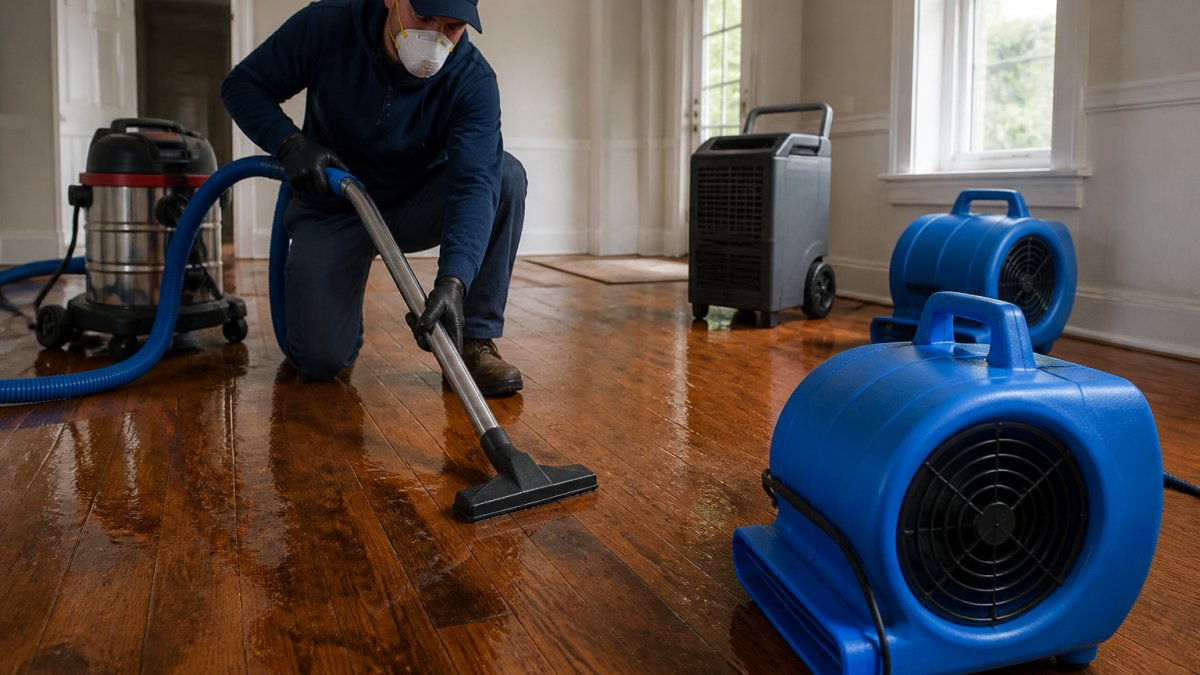
Step 1: Stop the Water and Extract Standing Water
Shut off the source first. Then remove standing water fast, because every hour counts.
- Use a wet vacuum or towels to pull up surface water
- Pull up rugs and move furniture off the floor
- Lift baseboards if water ran along the walls
The EPA’s guidance on indoor water and moisture explains why fast removal limits mold risk.
Step 2: Set Up Air Movement and a Dehumidifier After a Water Leak
Air movers push moist air off the floor. A dehumidifier after a water leak pulls that moisture out of the room. You need both working together.
- Point air movers across the boards, not straight down
- Run the dehumidifier continuously and empty it often
- Keep windows closed so humid outdoor air stays out
Step 3: Monitor Moisture Readings and Dry in Intervals
A moisture meter tells you what your eyes cannot. Check readings every day and write them down.
- Test a dry area of the same floor as your baseline
- Compare wet readings to that baseline each morning
- Run equipment in intervals and recheck before stopping
Take a photo of your moisture meter screen each day. It gives you a clear record for your insurance claim and shows exactly when the floor reached dry standard.
A Day-by-Day Drying and Monitoring Plan
A qualified timeline is more useful than a single number. Use this schedule as a working plan, and adjust it to what your meter reads.
Day 0 (first 24 hours): extract and stabilize. Remove standing water, pull wet rugs, and block furniture off the floor. Set air movers and a dehumidifier running.
Days 1-2: watch the curve, not the clock. Re-read the same spots each morning. The goal is a steady downward trend, not a dramatic overnight drop.
Days 3-5: adjust equipment, do not just add more. If the surface boards are near baseline but the subfloor reading stays high, the problem is below the floor. That usually means specialty drying equipment or a professional assessment, not another household fan.
Days 5-7: confirm dry standard before stopping. Do not shut equipment off because the floor looks normal. Compare wet-area readings to the dry baseline in the same room.
Clearance criteria. The floor is dry enough to stop when: wet-area readings match the dry baseline, the subfloor reading is stable, there is no musty odor, and no new cupping has appeared in 24 hours. Visual appearance alone cannot confirm this.
Why Moisture Measurement Beats Guesswork
A pin-type meter reads at the surface; a pinless meter scans a wider area. Most practitioners use both: the pinless meter to map the wet zone, the pin meter to confirm depth. Compare every reading to unaffected wood in the same room, because wood equilibrates to the indoor humidity, not to a fixed number. If you do not own a meter, a restoration technician can take readings and give you a written dry standard to work toward.
Why Gradual Drying Matters More Than Speed
Rapid drying can do more harm than slow drying. Wood shrinks as it releases moisture. Force it too fast and boards can split, gap, or warp.
Gradual drying lets the wood release moisture at a steady rate. That protects the grain and keeps the floor flat. It also gives you time to catch problems early.
This is the part most guides skip. Speed feels productive. Control is what actually saves the floor.
Signs of Water Damage on Hardwood Floors: When to Dry and When to Replace
Knowing the signs of water damage on hardwood floors tells you whether to dry or replace. Cupping, where board edges rise above the center, usually means the floor can still be saved if drying starts soon.
Watch for these signals:
- Cupping: edges higher than the center, often reversible
- Buckling: boards lifting off the subfloor, often a replace case
- Warping or splitting: permanent damage in most cases
- Dark stains or musty smell: possible mold, call a pro
The FEMA guidance on flood-damaged wood floors notes that salvageability depends on exposure time and water type.
Waiting more than 48 hours with wet hardwood raises mold risk sharply. Mold can grow under the floor where you cannot see it, and that turns a drying job into a full remediation.
DIY Drying vs. Professional Water Damage Restoration
DIY drying works for small, clean spills caught early. Professional water damage restoration makes sense when water is deep, dirty, or has been sitting. The difference is not effort. It is equipment, measurement, and the ability to dry the subfloor, not just the surface.
Decision Points: When DIY Is Reasonable
Household fans and a dehumidifier can help when all of these are true:
- The water is clean (a supply line, a clean appliance leak, or a spilled container)
- The wet area is small and you can see the edges of the moisture
- You started extraction within a few hours
- The floor shows no cupping, buckling, or dark staining
- You can take moisture readings and compare them to a dry baseline
If any of those fail, the job has moved past what household equipment can reliably finish.
Decision Points: When to Call a Professional
Call a restoration professional when any of these apply:
- Contaminated water. Water from a toilet overflow, sewer backup, or outdoor flooding is not a drying job. It is a cleanup and disinfection job, and porous flooring may need removal rather than drying.
- Subfloor saturation. Household fans move air across the surface. They do not dry the cavity under the boards. Specialty drying systems and injected air movement are often needed.
- Long exposure. Water that has been sitting for more than 48 hours raises mold risk sharply, and mold under the floor changes the scope from drying to remediation.
- Visible structural movement. Buckling, board lift, or gaps that widen day by day usually mean the floor is past the point where drying alone will restore it.
- Insurance involvement. Most policies expect mitigation to start quickly and to be documented. Professional readings and daily logs support the claim.
What Professional Equipment Actually Does
A wet vacuum and a box fan are not the same tools a restoration crew uses. Professional drying typically combines high-velocity air movers, low-grain refrigerant or desiccant dehumidifiers, and moisture meters that read both surface and subfloor. The point is not more air. It is controlled air with measured moisture removal, so the wood releases water at a rate that does not split or gap the boards.
At Sentinel Restoration, our IICRC-certified team uses advanced moisture detection to find water you cannot see. We dry to a measured standard, not a guess. If you are unsure whether your floor is salvageable, the IICRC’s certified firm directory can help you confirm credentials before you hire anyone.
Do not use space heaters or open flames to speed drying. Heat can drive moisture deeper into the wood and warp boards faster than gradual drying would. If you are waiting for a professional, keep the room cool and ventilated and keep equipment running.
What to Do While You Wait
If you have called a professional but the crew has not arrived, a prioritized checklist protects the floor and the people in the home:
- Stop the leak at the source if it is safe to do so.
- Photograph and video the damage before moving anything.
- Move furniture and rugs off the wet floor.
- Block off the wet area so no one slips or tracks water into dry rooms.
- Keep air movers and a dehumidifier running if you have them.
- Do not pull up boards or baseboards yourself unless a professional tells you to.
DIY is a race against the first few hours. Professional restoration is what you call when the water is dirty, the subfloor is wet, or the floor has already started to move. The fastest path to a saved floor is fast extraction, steady gradual drying, and daily moisture readings. Guesswork is what turns a repairable floor into a replacement.
Frequently Asked Questions
Can hardwood floors be dried after water damage, or do they always need replacement?
Many hardwood floors can be dried and saved if water is removed within 24 to 48 hours and drying starts immediately. Solid hardwood has a better chance than engineered wood, which can delaminate. Floors with severe cupping, buckling, or standing water for days often need replacement. A moisture meter reading compared to a dry baseline helps decide salvageability. Professional restoration teams use moisture readings and drying intervals to confirm when the floor is dry.
How long should you run a dehumidifier after a water leak on hardwood floors?
Run a dehumidifier continuously until moisture readings return to normal, which typically takes 3 to 7 days for moderate water damage. Keep windows closed and the space sealed so the dehumidifier can pull moisture from the wood and subfloor. Check the unit’s water tank or drain line daily. Do not stop just because the surface feels dry, since moisture trapped in the subfloor and wood grain can cause cupping or mold weeks later.
What are the first signs of water damage on hardwood floors?
Watch for dark stains, cupping at board edges, buckling, warping, splitting, and a musty smell. Surface moisture may dry quickly while the subfloor stays wet. Small bubbles or finish lifting also signal water intrusion. Take moisture readings in several spots and compare them to an unaffected area. If cupping or buckling appears within 24 hours, start water extraction and drying immediately to limit permanent damage.
How long does it take to dry out water damage if the floor is only lightly wet?
Light surface moisture from a small clean water loss often dries in 24 to 72 hours with air movers and a dehumidifier. Heavier water intrusion that reaches the subfloor can take 5 to 10 days or more. Exposure duration, water category, humidity, and temperature all change the timeline. Use a moisture meter daily and keep drying equipment running until readings match dry standards.
Water on hardwood is a race against absorption, and the wrong call in the first day can cost you the whole floor. If you are facing a leak, flood, or storm intrusion, Sentinel Restoration brings IICRC-certified crews, advanced moisture detection, and a meticulous dry-down plan to protect your property. We restore floors to pre-loss condition and help you navigate the insurance side along the way. Contact us to get a clear assessment and a drying plan you can trust.