Last Updated: October 28, 2026
Quick Summary
Commercial flood restoration services in Brighton, MI handle water extraction, structural drying, and sanitization after a flood, but the first hour belongs to you: cut the power, stop the water source, and call for help. Choosing a provider comes down to verifiable credentials like licensing, IICRC certification, and a written scope of work.
- Shut the breaker and close the main valve before anyone enters standing water.
- Photograph wet surfaces, water lines, and damaged inventory before cleanup starts.
- Ask for an itemized estimate that separates mitigation from reconstruction.
- Get a stated on-site response window in writing before you sign.
- Request a written phase schedule with daily drying goals for coordination.
Table of Contents
- What to Do in the First Hour of a Commercial Flood
- How Commercial Water Extraction Clears Standing Water Fast
- Structural Drying, Dehumidification, and Mold Prevention
- Commercial Flood Cleanup, Sanitization, and Debris Removal
- A Realistic Commercial Water Damage Restoration Timeline
- Building Your Commercial Flood Damage Insurance Claim
- How to Choose Commercial Flood Restoration Services in Brighton, MI
- Get a Commercial Flood Assessment Before the Next Storm
- Frequently Asked Questions
What to Do in the First Hour of a Commercial Flood
Water on a commercial floor spreads faster than most owners expect, and every minute it sits raises the cost and complexity of recovery. Commercial flood restoration services in Brighton, MI exist for exactly this moment, but the first hour belongs to you.
Start with three moves: cut the power to affected areas at the breaker, shut off the water source if it is safe to reach, and call for help. For the full playbook, see this commercial water damage cleanup guide.
Make the Building Safe and Stop the Water
Safety comes before salvage. Do not wade into standing water near outlets, panels, or equipment. Shut the breaker first, then stop the source.
If the water is still flowing, close the main valve. For roof or window leaks, move people and electronics away and place buckets under the drip. If you need quick steps to slow the spread before help arrives, read how to stop water damage from spreading fast. Then keep everyone out of wet areas until a professional confirms the space is safe.
Document Everything Before Anything Gets Moved
Photograph and video every wet surface, damaged item, and water line before cleanup starts. Your insurance adjuster will ask for this, and it is far easier to capture now than to reconstruct later.
- Wide shots of each affected room
- Close-ups of water lines on walls
- Photos of damaged inventory, furniture, and equipment
- Serial numbers and receipts where available
- Notes on when the water appeared and its likely source
Do not throw anything out yet. Piles of ruined stock are evidence until your claim is filed.
How Commercial Water Extraction Clears Standing Water Fast
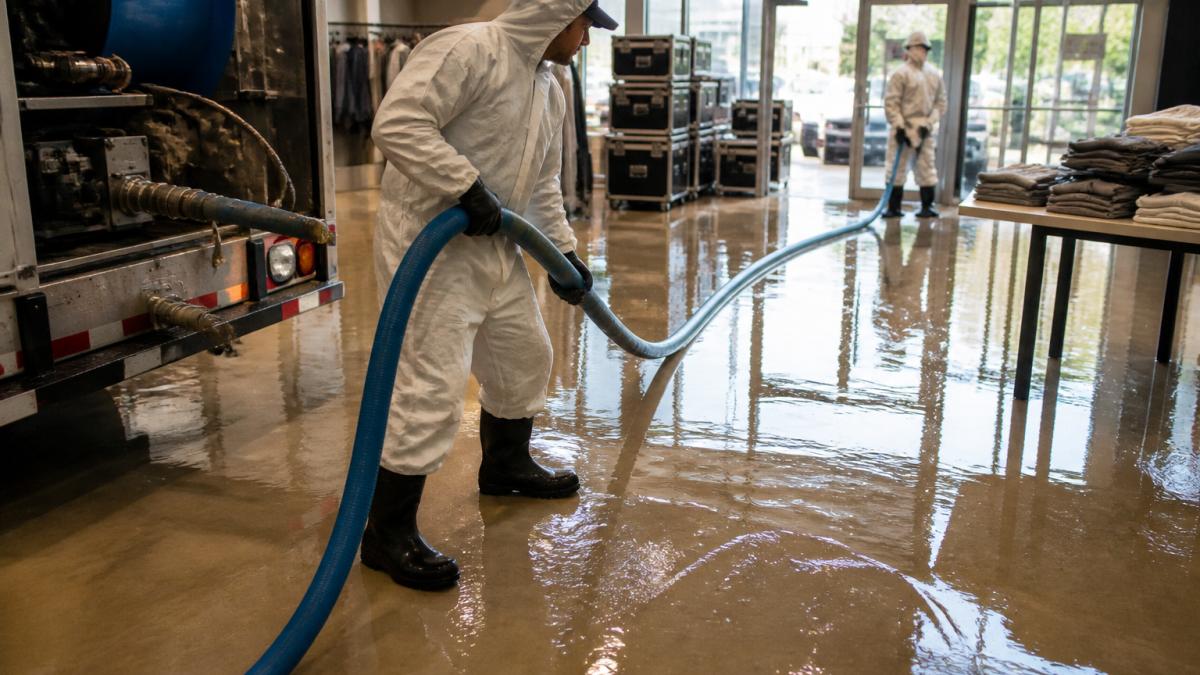
Commercial water extraction removes standing water from affected areas.
Structural Drying, Dehumidification, and Mold Prevention
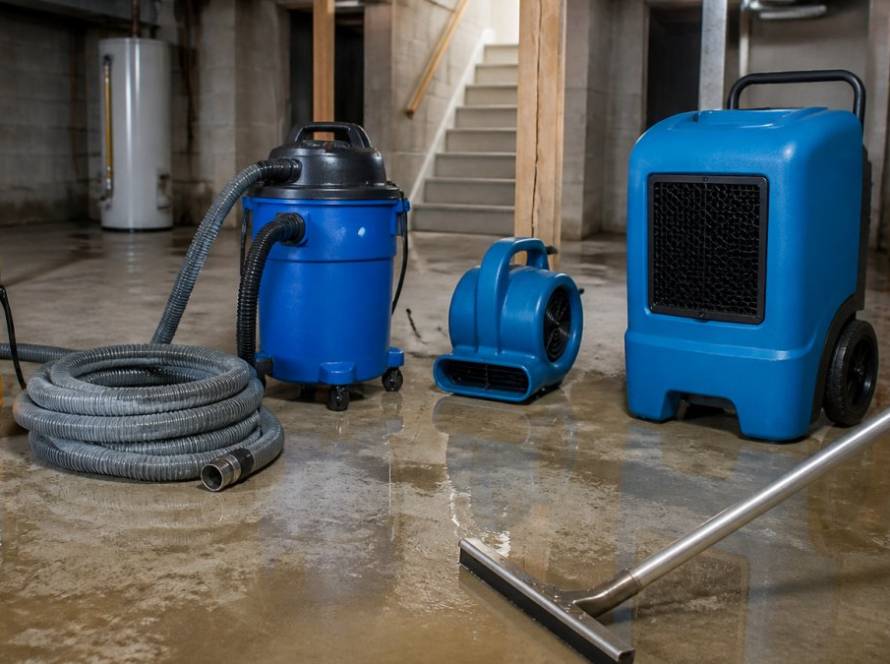
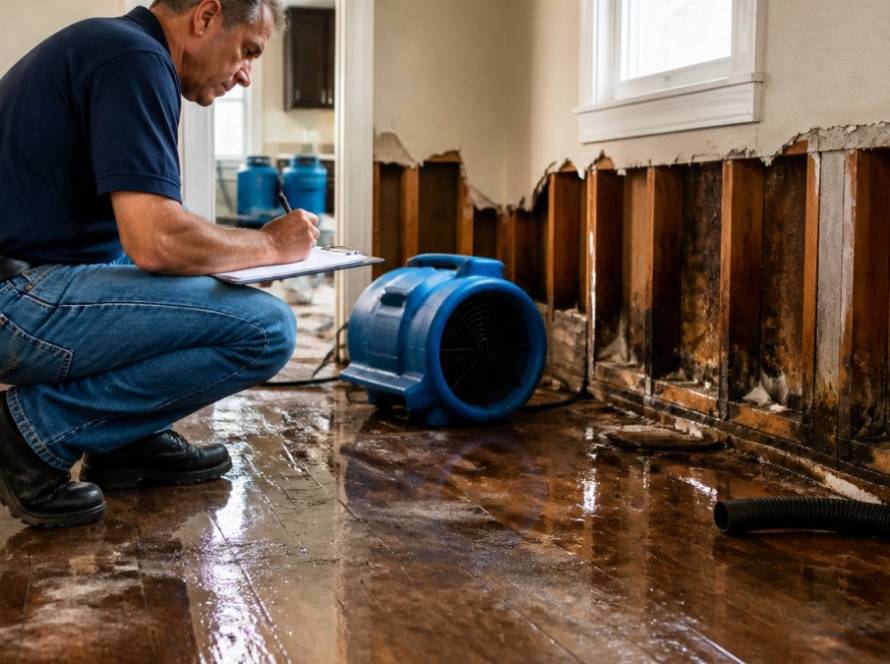
Structural drying is the removal of moisture from building materials after extraction.
Our IICRC-certified team uses advanced moisture detection technologies.
Commercial Flood Cleanup, Sanitization, and Debris Removal
Cleanup goes beyond mopping.
- Removing soaked drywall, insulation, and flooring that cannot be saved
- Hauling out damaged inventory, furniture, and debris
- Cleaning and disinfecting structural surfaces
- Treating areas prone to mold with antimicrobial products
- Final inspection before reconstruction begins
A Realistic Commercial Water Damage Restoration Timeline
A commercial water damage restoration timeline depends on the size of the space, the water category, and how long the water sat.
| Phase | Typical Duration | What Happens |
|---|---|---|
| Emergency response | Same day | Water stopped, safety check, assessment |
| Water extraction | Hours | Standing water removed |
| Structural drying | Several days | Air movers, dehumidifiers, monitoring |
| Cleanup and sanitization | Days | Debris removal, disinfection |
| Repairs and restoration | Varies | Drywall, flooring, reconstruction |
Ask your restoration team for a written phase schedule with daily drying goals. A crew that can tell you which areas will be dry by which day is easier to coordinate with staff, tenants, and your insurer.
For a clearer picture of what recovery may involve, see this guide to water damage restoration cost after a leak to plan your budget and compare quotes.
Building Your Commercial Flood Damage Insurance Claim
If you are unsure whether your policy covers restoration work, this guide on whether insurance pays for water restoration explains how the process works.
How to Choose Commercial Flood Restoration Services in Brighton, MI
Choosing commercial flood restoration services in Brighton, MI comes down to verifiable credentials.
Verify before you sign:
- Licensing and insurance. Ask for the license number and a certificate of insurance showing general liability and workers’ compensation.
- Certifications. IICRC certification for water damage restoration and applied structural drying is the common industry standard. Ask which specific certifications the technicians on your job hold, not just the company.
- Equipment and capacity. For a commercial space, ask how many extraction units and dehumidifiers they can bring on site and whether they have truck-mounted equipment. A crew sized for residential work will struggle with a warehouse or multi-unit building.
- Written scope of work. Require an itemized estimate that separates mitigation (extraction, drying, monitoring) from reconstruction. Blended quotes make it hard to compare bids or file a clean claim.
- Documentation practices. Ask how they record moisture readings, daily drying logs, and photo evidence. This documentation is what your adjuster will rely on.
- Response time commitment. Get a stated on-site window in writing, and ask whether after-hours calls reach a live dispatcher or a voicemail.
If you are unsure whether your policy covers restoration work, this guide on whether insurance pays for water restoration explains how the process works.
Sentinel Restoration is IICRC-certified and licensed, and our team handles water damage, mold remediation, and storm recovery. If you have questions before booking, our frequently asked questions cover what local property owners ask most.
Get a Commercial Flood Assessment Before the Next Storm
Flooding rarely announces itself.
Sentinel Restoration brings decades of industry expertise and advanced moisture detection technology. Our IICRC-certified team restores properties to pre-loss condition. We believe in doing the right thing, even when no one is watching.
Get started with Sentinel Restoration.
Frequently Asked Questions
What should a business do first after a flood?
Shut off power to affected areas only if it is safe to reach the panel without wading through water. Photograph every room, damaged item, and water line before anything is moved. Keep staff and customers out of wet areas.
Can a business stay open during commercial flood restoration?
Often, yes, in stages. If the damage is confined to one wing or floor, restoration specialists can set up containment barriers, negative air pressure, and dedicated drying equipment so the rest of the building stays operational. Businesses with open floor plans or damage near electrical panels may need to close temporarily. Ask your provider for a phased plan that prioritizes the areas that generate revenue, and expect commercial water extraction and drying equipment to run continuously for several days.
How long does commercial water damage restoration take?
Extraction typically finishes within 24 to 48 hours of arrival. Structural drying with air movers and dehumidifiers usually runs three to five days, depending on materials and how long the water sat. Moisture monitoring confirms when framing and subfloors hit dry standard. Full reconstruction after a major flood can stretch weeks. A commercial water damage restoration timeline should be written down after the damage assessment, not guessed over the phone.
How do I verify a restoration company is actually certified?
Ask for the firm’s IICRC certification number and check it through the IICRC’s online locator, and confirm the state contractor license and insurance certificates. Certification matters because it means technicians trained in drying science and mold remediation are running the equipment, not just hauling it in. Also ask whether the same crew handles water extraction, drying, and mold prevention, so you are not coordinating multiple contractors while your building sits wet.