Table of Contents
- What to Do Immediately After Water Damage: The First 15 Minutes
- Find and Use the Water Shut-Off Valve for Leaks
- Contain the Spread: Keep Water Out of Unaffected Areas
- Remove Standing Water and Start Drying
- How to Dry Out a Water-Damaged House
- The Water Damage Restoration Timeline: What Happens When
- Preventing Water Intrusion: Maintenance That Stops the Next Leak
- Conclusion: Act Fast, Document Everything, Call for Help
- Frequently Asked Questions
Last Updated: October 6, 2026
What to Do Immediately After Water Damage: The First 15 Minutes
The first 15 minutes after you find water in your home decide how much you save. Acting fast is the only way to stop water damage from spreading, and every minute counts because water wicks into drywall, insulation, and flooring far faster than most people expect. This guide shows you exactly what to do, in order, before help arrives.
Water damage is the process of water intruding into a building and soaking materials like wood, drywall, and insulation. The longer it sits, the more it spreads and the more likely mold becomes.
Here is the order that matters most:
- Safety first, always
- Stop the water at its source
- Contain what has already spread
- Remove standing water
- Start drying within hours, not days
Electrical and Structural Safety First
Never walk into standing water before you cut the power. Water and live electricity are a deadly mix. If you can reach your breaker panel while standing on a dry surface, shut off power to the flooded area. If the panel itself is wet or you must stand in water to reach it, stop and call an electrician.
Watch for these hazards:
- Sagging ceilings or bulging walls, which can collapse
- Soft or spongy floors
- A gas smell, which means leave and call your utility
Your Timed Response Plan
A clock changes how you should act. Use this timeline to prioritize:
| Time | Action | Why It Matters |
|---|---|---|
| 0-5 min | Shut off power, check for gas | Prevents injury |
| 5-15 min | Stop the water source | Limits new water |
| 15-60 min | Contain and extract | Reduces spread |
| 24-48 hrs | Dry and ventilate | Blocks mold growth |
| 48+ hrs | Call a pro for hidden moisture | Finds what you missed |
The CDC guidance on floodwater safety reminds homeowners that contaminated water carries health risks, so wear gloves and boots.
Find and Use the Water Shut-Off Valve for Leaks
Your main water shut-off valve is the single most important tool in a water emergency. Find it before you need it. In most homes it sits near the water meter, in a basement, or in a utility closet.
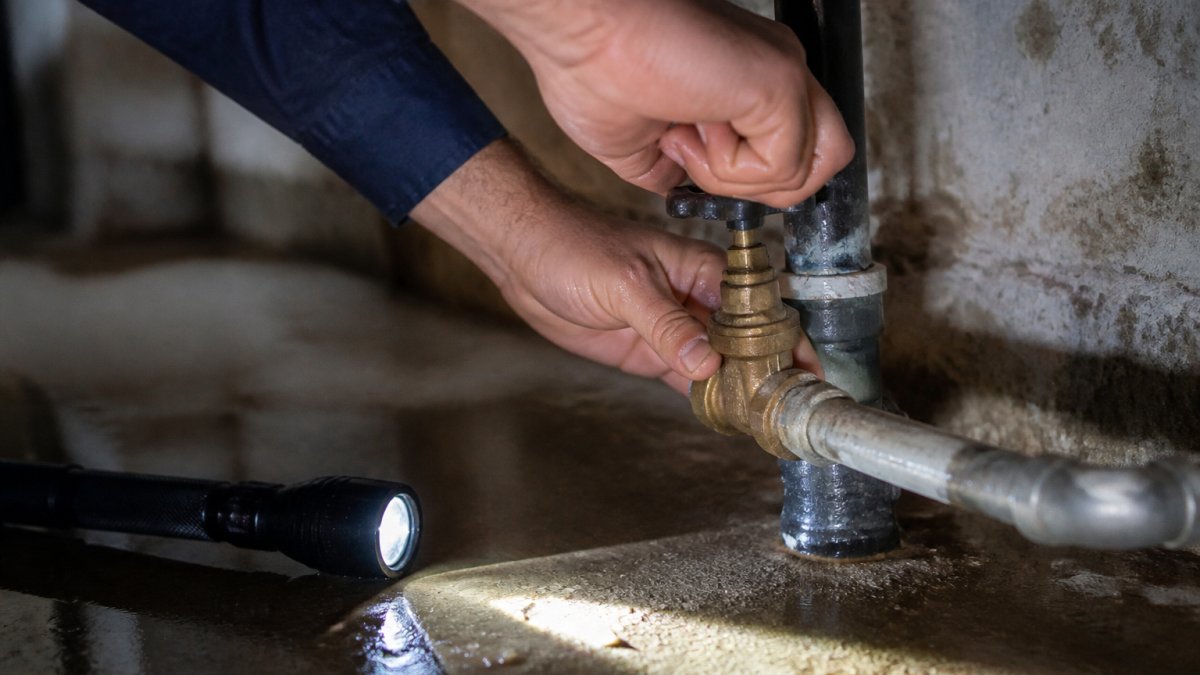
Turn the valve clockwise until it stops. For a single fixture, like a toilet or sink, use the smaller valve under or behind it instead. If a supply line or appliance hose is the culprit, shut that line down first.
A common mistake is forcing a stuck valve. If it will not budge, call a plumber rather than risk breaking it and making the leak worse.
Water Categories and Contamination
Not all water is equal, and the category changes how you handle it. Clean water from a supply line is category 1. Gray water from a washing machine or dishwasher is category 2. Black water from sewage or outdoor flooding is category 3 and requires professional cleanup.
Treat category 3 water as a health hazard. Do not touch it without protective gear.
Contain the Spread: Keep Water Out of Unaffected Areas
Stopping the spread means blocking water from reaching dry rooms. Use towels, rolled-up rugs, or a water barrier to dam the flow at doorways. For larger intrusions, sandbags can redirect water away from the home.
Focus your effort on protecting unaffected areas. Every dry room you save is one less room to repair. Move furniture, electronics, and rugs off wet carpet right away. Prop up wet furniture legs on foil or blocks so they do not stain or warp.
If you are in a multi-unit residential building, tell your neighbors and the property manager. Water travels down and sideways, and their units may be wet before they know it.
Remove Standing Water and Start Drying
Standing water must come out fast. Use a wet/dry vacuum for small pools. For deeper water, a sump pump or buckets work in a pinch. The goal is to get water off the floor so drying can begin.
A wet/dry vacuum is a shop vacuum designed to pull up water as well as debris. It handles shallow standing water well but is not built for deep flooding.
Speed matters here. The EPA mold guidance notes that mold can begin growing within 24 to 48 hours on wet materials.
Never use a standard household vacuum to remove water. It can short out and shock you. Only use a wet/dry model.
How to Dry Out a Water-Damaged House
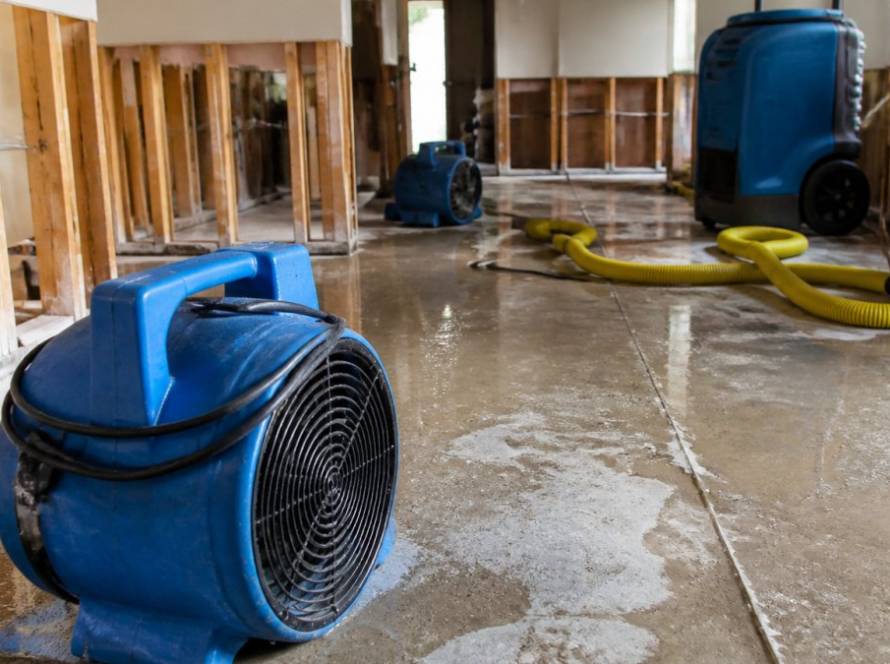
Drying a water-damaged house means moving air and pulling moisture out of the air, not just wiping surfaces. Open doors and windows when the weather allows. Run fans and a dehumidifier to speed evaporation.
Follow these steps:
- Open windows and interior doors for cross-ventilation
- Place fans to blow across wet surfaces
- Run a dehumidifier to pull moisture from the air
- Remove wet drywall and insulation that cannot dry
- Pull up soaked carpet and padding
Wet drywall and wet insulation often trap water behind the surface. When in doubt, tear out the soaked section. It dries faster and prevents hidden mold.
Find Hidden Moisture Before It Becomes Mold
Hidden moisture is the reason mold comes back months later. Water hides behind baseboards, under floors, and inside wall cavities. A moisture meter finds it when your eyes cannot.
Our IICRC-certified team uses advanced moisture detection to map exactly where water traveled. IICRC certification means a technician has passed industry-standard training in water damage and mold work.
Check these spots yourself:
- Behind baseboards and trim
- Under vinyl and hardwood floors
- Inside ceiling cavities below a leak
- Around the waterline of appliances
Press the back of your hand against a wall. If it feels cool and damp compared to a dry wall, moisture is likely trapped behind it.
The Water Damage Restoration Timeline: What Happens When
A professional restoration timeline moves in phases, and knowing them helps you plan. Most projects follow a clear sequence from extraction to final repair.
- Emergency response: water stops and extraction begins
- Drying: air movers and dehumidifiers run for several days
- Monitoring: moisture readings confirm materials are dry
- Repairs: drywall, flooring, and paint go back in
- Final check: the space is verified dry before closing up
The FEMA flood recovery resources advises homeowners to document damage before repairs and to keep receipts for insurance.
Document everything with photographs before you move or throw away anything. Your claim depends on it.
Preventing Water Intrusion: Maintenance That Stops the Next Leak
Prevention is cheaper than cleanup. A few seasonal habits stop most water intrusion before it starts.
- Clean clogged gutters and check downspouts
- Inspect the roof for missing or damaged shingles
- Replace old appliance hoses every few years
- Check outdoor taps and garden hoses for leaks
- Test your automatic water shutoff system if you have one
- Insulate pipes in cold areas to prevent freezing
An automatic water shutoff system detects a leak and cuts the supply on its own. It is one of the best upgrades for a home with older plumbing. Handle these tasks each season, and you will prevent most water backup and plumbing leak surprises.
Conclusion: Act Fast, Document Everything, Call for Help
Water spreads faster than most people can react, and the first hour decides how much you keep. You can stop the source, contain the spread, and start drying on your own, but hidden moisture and mold need a trained eye. Sentinel Restoration brings IICRC-certified technicians and advanced moisture detection to restore your property to its pre-loss condition. We also help you document damage and work through your insurance claim. Contact us today to get expert help fast.
Frequently Asked Questions
Will water damage go away on its own?
No. Water damage does not resolve by itself. Even a small plumbing leak can soak into drywall, insulation, and subflooring, and mold can begin growing within 24 to 48 hours. Standing water also weakens materials and can cause structural problems. If you do nothing, the damage typically gets worse and more expensive to fix. The sooner you shut off the water source and start drying, the better your chances of saving floors, walls, and belongings.
How quickly should you dry a water-damaged area?
Start drying within the first 24 hours. Mold can begin to grow on wet materials in as little as 24 to 48 hours, and the longer moisture sits, the deeper it wicks into walls and floors. Use fans, a dehumidifier, and open doors and windows to improve ventilation. If the area is still damp after 48 hours, or if you find wet insulation or wet drywall, call a restoration professional. They use moisture meters and thermal imaging to confirm the space is actually dry.
When should you call a water damage restoration professional?
Call a professional when the water covers more than a small area, when it came from a contaminated source like a sewer backup, when you find wet drywall or wet insulation, or when the space is still damp after 48 hours. You should also call if you see mold, smell a musty odor, or cannot find the source of the leak. Restoration teams have extraction equipment, drying systems, and moisture detection tools that go beyond what a shop vac and box fans can do.
What should you avoid doing after water damage?
Do not enter a room if water is near electrical outlets, appliances, or a breaker panel, and never touch a wet electrical panel. Do not use a standard vacuum to remove water; it can cause shock or damage the unit. Avoid walking on sagging ceilings or floors. Do not delay drying to wait for an insurance adjuster, and do not throw away damaged items before you photograph them. Finally, avoid disturbing mold growth without proper protection, since that can release spores into the air.