Last Updated: October 30, 2026
Quick Summary
To prevent mold, control moisture: keep indoor relative humidity between 30% and 50%, dry wet materials within 24 to 48 hours, and fix leaks at their source. Mold needs moisture, organic material, and the right temperature, so removing water stops growth.
- Mold can start on wet materials in as little as 24 to 48 hours.
- Run the bathroom exhaust fan during showers and for 20 minutes after.
- Basements and crawl spaces often run 10 to 15 points higher in humidity.
- Keep windows closed when the outdoor dew point is above roughly 60°F.
- Check the roof, gutters, grading, and foundation seasonally for water entry.
Table of Contents
- Why Mold Grows Indoors and What It Needs
- How to Prevent Mold After Water Damage
- The Indoor Humidity Level to Prevent Mold
- Bathroom Mold Prevention That Actually Works
- Your Room-by-Room Mold Prevention Checklist
- Hidden Moisture and Building-Envelope Checks
- Seasonal Plans and When to Call a Professional
- Book a Moisture Inspection with Sentinel Restoration
- Frequently Asked Questions
Why Mold Grows Indoors and What It Needs
Mold needs three things to grow: moisture, organic material, and the right temperature. Remove any one of them and growth stops. That is the whole game, and it is why learning how to prevent mold growth in 2026 comes down to moisture control, not chemical sprays.
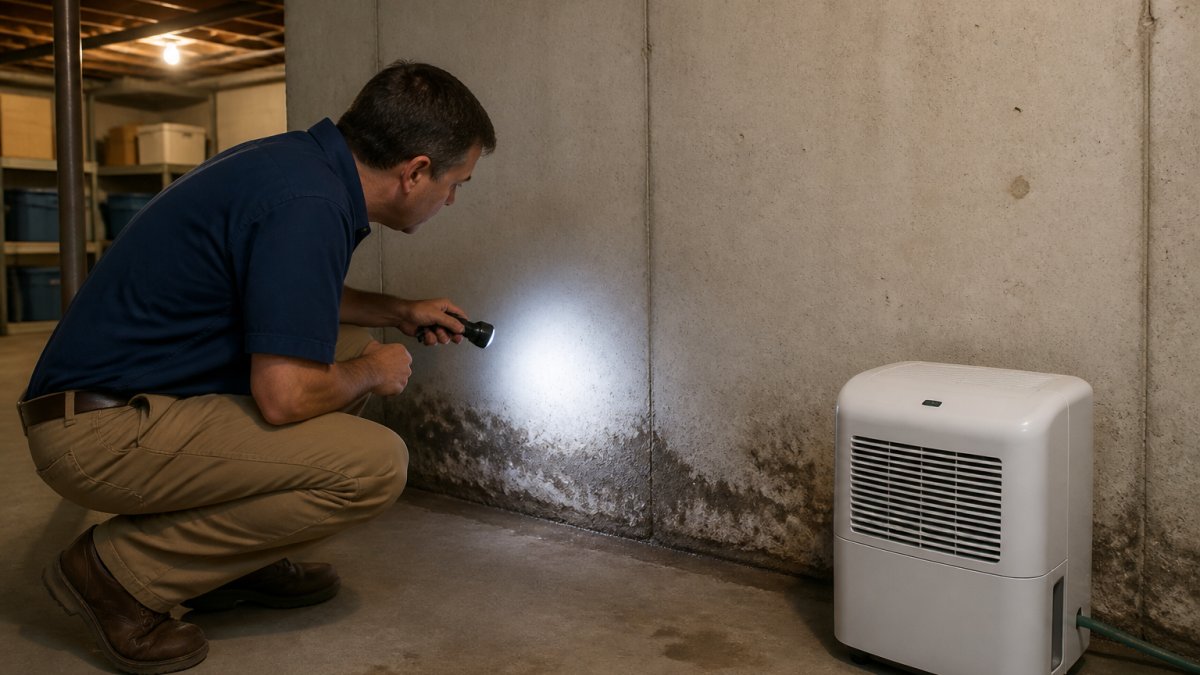
A slow leak or damp basement can go unnoticed for weeks, then dark spots appear on drywall.
Mold growth is the spread of microscopic fungi across damp surfaces, and it can start on wet materials in as little as 24 to 48 hours.
The common mistake is treating visible mold without finding the moisture source. The mold comes back because the water never left.
The core idea: you are not fighting mold, you are managing moisture. Do that well and mold rarely gets a foothold.
How to Prevent Mold After Water Damage
Act fast. The first 24 to 48 hours after water damage decide whether mold takes hold, so drying wet materials quickly matters more than anything else you do.
Follow these steps:
- Stop the water at its source if you safely can.
- Remove standing water with a wet vacuum or towels.
- Pull up wet carpet and padding where possible.
- Move furniture off damp floors.
- Run fans and a dehumidifier to dry the space.
- Open interior doors to improve air circulation.
- Check hidden spots like wall cavities and under cabinets.
Watch out: sealing up a wet room to “contain the smell” traps moisture and speeds up mold growth. Ventilate instead.
For the full emergency playbook, see our guide on emergency water damage restoration. If you are mid-cleanup right now, our step-by-step walkthrough on what to do after water damage covers the immediate actions, and this piece on how to stop water damage from spreading explains how to keep water out of more materials.
The Indoor Humidity Level to Prevent Mold
Keeping indoor humidity below 50% is a commonly cited target for preventing mold. The number only helps if you know where and how to measure it, and what to do when it drifts.
Relative humidity is the water vapor in the air compared with what the air can hold at a given temperature. Warm air holds more moisture than cool air, so the same absolute vapor produces higher relative humidity in a cool basement than a warm living room.
The target range, and why it is a range
Aim for 30% to 50% relative humidity indoors. Below 30% you dry out wood framing, caulk, and occupants; above 50% you feed mold and dust mites. The EPA recommends below 60% and ideally 30% to 50%, and most building scientists treat 50% as the practical ceiling. Some sources cite 55% or 60%, but the lower you hold the ceiling, the more margin you have in humid weather and cold snaps.
How to measure it correctly
A basic hygrometer is enough for most homes. Place units in each zone rather than relying on one central reading:
- Basement and crawl space: the highest-risk zone; measure near the floor and exterior walls.
- Bathroom: measure after a shower to see how fast humidity recovers.
- Kitchen: measure during and after cooking.
Avoid placing a hygrometer next to a humidifier, dryer vent, or exterior door, you will read the source, not the room. Give each unit 30 to 60 minutes to stabilize after moving it.
Log readings once a week for a month. A single high reading is noise; a pattern, basement at 62% every morning, bathroom at 70% an hour after showers, tells you exactly where to spend money and effort.
When to adjust
- Outdoor dew point above roughly 60°F: keep windows closed and rely on air conditioning or a dehumidifier; open-window ventilation on a humid day adds moisture.
- Cold snaps: exterior walls and window frames get colder, so the same indoor humidity condenses at a lower relative humidity. Drop the target toward 30% to 40%.
- Basements and crawl spaces: these stay cool year-round and often run 10 to 15 points higher than the rest of the house. A standalone dehumidifier rated for the square footage is usually the fix; a small unit in a large, open basement will run constantly and still miss the target.
A simple plan
- Aim for 30% to 50% relative humidity indoors, treating 50% as the working ceiling.
- Use a hygrometer in each zone, not just one central location.
- Run a dehumidifier in basements and crawl spaces sized to the square footage.
Basements and crawl spaces are the usual trouble spots. They stay cool and damp, and moisture settles there first. If your readings stay above 60% in any zone despite a running dehumidifier, treat that as a signal to inspect for a hidden water source rather than simply buying a bigger unit.
Bathroom Mold Prevention That Actually Works
Bathroom mold prevention starts with ventilation (the EPA). Run the exhaust fan every time someone showers or takes a bath, and let it run for 20 minutes after.
Bathrooms are mold-prone by design: steam settles on tiles, grout, and walls, and stays there when the air does not move.
What works:
- Run the exhaust fan during and after every shower.
- Wipe down walls and tiles after bathing.
- Squeegee glass shower doors.
The thing most people miss: a fan that vents into the attic instead of outdoors just moves moisture somewhere else. Check where yours exhausts.
Your Room-by-Room Mold Prevention Checklist
Use this checklist to cover the whole house, not just the obvious wet rooms. A mold prevention checklist works best when you run it seasonally and after any leak or flooding.
| Room | What to Check | How Often |
|---|---|---|
| Bathroom | Exhaust fan, caulk, grout, shower curtain | Weekly |
| Kitchen | Under-sink pipes, dishwasher seal, backsplash | Monthly |
| Basement | Humidity level, wall stains, floor dampness | Weekly |
| Laundry | Washing machine hoses, dryer vent, floor | Monthly |
| Attic | Roof leaks, insulation dampness, ventilation | Seasonally |
| Bedrooms | Window condensation, closet dampness | Monthly |
Tackle the list in order of risk. Basements, bathrooms, and laundry areas are common sources of water damage.
Hidden Moisture and Building-Envelope Checks
The moisture you cannot see causes the most damage, inside walls, under floors, and behind appliances, often undetected until mold is already spreading. A room-by-room checklist catches the obvious; a building-envelope check catches the rest.
The building envelope is the outer shell of your home, walls, roof, windows, doors, and foundation, that keeps weather out and conditioned air in. When it fails, water intrusion follows, and mold follows the water.
Work from the outside in
Start where water enters, then trace it inward. This sequence catches the most common failures in the order they occur:
- Roof and flashing. Look for lifted or missing shingles, cracked flashing around chimneys and vents, and granules in gutters. From the attic, look for staining on the roof deck and damp insulation.
- Gutters and downspouts. Overflow or dumping next to the foundation is a common cause of basement dampness; downspouts should discharge several feet from the wall.
- Grading and foundation. Soil should slope away from the house. Look for foundation cracks, efflorescence, and damp stains at the base of basement walls.
- Windows and doors. Check seals, caulk, and weatherstripping. Condensation between panes means a failed seal; interior trim staining means the exterior seal has failed.
- Exterior walls and penetrations. Look for cracked siding, failed caulk around hose bibs and utility penetrations, and gaps where materials meet.
- Attic and roof ventilation. Poor ventilation traps moisture that condenses on the cold roof deck. Look for rusted nails, dark sheathing stains, and damp insulation.
Then check the interior trouble spots
- Under every sink, around the supply lines and the drain trap.
- Behind the refrigerator, dishwasher, and washing machine.
- Around the base of toilets and behind the shower surround.
A musty smell with no visible mold is a strong signal. Trust your nose and inspect further, odor usually means active moisture, not old damage. Do not seal or paint over a damp patch before you find the source; you will trap the moisture and the mold will return.
Tools that make hidden moisture visible
You do not need a full restoration toolkit, but a few inexpensive tools change what you can find:
- Moisture meter (pin or pinless): Pin meters read surface moisture on drywall and wood; pinless meters scan through tile and behind walls. Compare against a known-dry area of the same material.
- Flashlight and mirror: raking light shows staining and bubbling that straight-on light hides.
- Infrared thermometer: Cool spots on a warm wall often indicate damp insulation or a hidden leak.
How to interpret what you find
- Damp patch with a clear source (a dripping supply line, a failed window seal): fix the source, dry the area, and recheck with a moisture meter after 48 hours.
- Damp patch with no clear source: widen the search. Water travels along framing and can surface far from the entry point.
- Recurring dampness in the same spot after repair: the repair missed part of the path, or a second source is feeding it.
A musty smell with no visible mold is a strong signal. Trust your nose and inspect further. The earlier you find hidden moisture, the smaller the repair, and the less likely you are to be treating mold instead of preventing it.
Seasonal Plans and When to Call a Professional
Mold prevention changes with the seasons: humid summers raise indoor humidity and condensation, while winter brings ice dams and roof leaks.
A seasonal plan:
- Spring: check the roof and gutters after storms.
- Summer: run air conditioning and dehumidifiers to control humidity.
- Fall: clear gutters and seal gaps before rain.
Call a professional when water damage covers a large area, when mold covers more than a small patch, or when you smell mold but cannot find it. If you are weighing the cost of hiring help, our guide on water damage restoration cost after a leak breaks down what to expect.
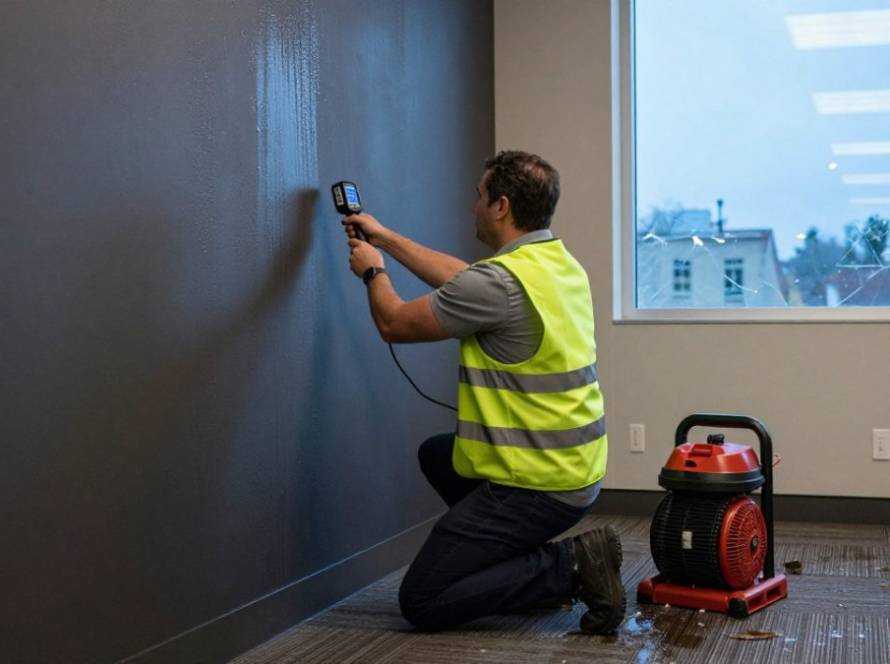
Sentinel Restoration handles both water damage and mold remediation with one IICRC-certified team. Our technicians use advanced moisture detection tools to find water you cannot see.
Book a Moisture Inspection with Sentinel Restoration
You can do a lot of mold prevention yourself. But hidden moisture is hard to find without the right tools, and that is where a professional inspection earns its keep.
A moisture inspection maps the water in your home before mold can spread. Our IICRC-certified team uses advanced moisture detection technology to check walls, floors, and crawl spaces.
Learn more about our quality inspection service and what a professional check covers.
Frequently Asked Questions
What humidity level helps prevent mold growth?
Keep indoor relative humidity below 50% and never let it stay above 60% for long. Mold needs damp surfaces to take hold, and air that stays at 60% or higher gives it that opening. A cheap hygrometer in each level of the home shows where you stand. Run a dehumidifier in basements and crawl spaces, and use air conditioning in humid weather to pull moisture out of the air.
How quickly can mold grow after water damage?
Mold can start colonizing wet materials in 24 to 48 hours, so the first two days decide the outcome. Extract standing water, pull up soaked carpet, and get air moving across wet surfaces right away. Dry water-damaged materials within that window, and throw out porous items like drywall and insulation that stayed wet too long. If the area is larger than you can dry with fans alone, call a professional.
How do you prevent mold in a bathroom?
Run the exhaust fan during every shower and for 20 to 30 minutes after, and leave the door open when you finish. Wipe down walls, tiles, and the shower curtain so water does not sit on surfaces. Fix dripping faucets and re-caulk joints that have cracked. Wash bath mats and towels weekly, and check under the sink for slow leaks that keep the cabinet damp.
When should you call a professional for a mold problem?
Call a professional when mold covers more than about 10 square feet, when it keeps returning after you clean it, or when you cannot find the moisture source feeding it. The same applies after flooding or a roof leak that soaked walls or ceilings. An IICRC-certified team can find hidden moisture with detection equipment, dry the structure correctly, and stop the problem from coming back.
Mold prevention is really moisture management, and the homes that stay mold-free are the ones where someone checks the quiet spots. If you are unsure whether your home is dry, do not guess. Get started with Sentinel Restoration and book a moisture inspection that finds the problem before mold does.