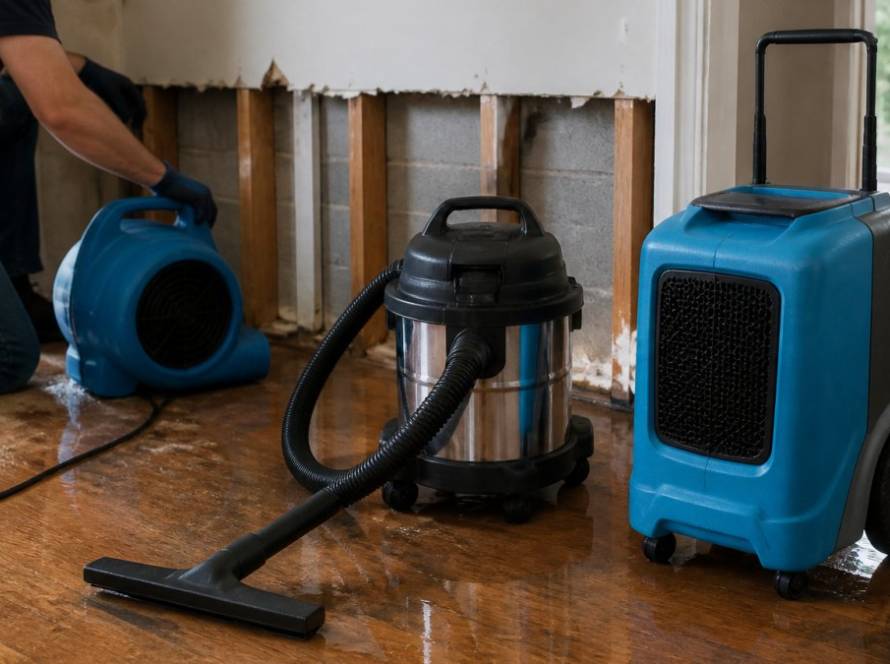
Last Updated: November 1, 2026
Quick Summary
Fair pricing for water damage restoration is an itemized, measurable estimate tied to the conditions found on site, not a single lump sum. Compare quotes by matching scope line by line, since two quotes with the same total but different scopes are not equal. A complete estimate should explain water category, class, and affected square footage.
- Four variables explain most of the spread between estimates: water category, water class and spread, time before extraction, and access and contents.
- A complete estimate covers inspection and moisture mapping, extraction, a drying plan, demolition, cleaning, contents handling, monitoring visits, and clear scope boundaries.
- Ask each contractor to break the job into the same categories before you look at a single number.
- Water damage repair cost per square foot is a useful sanity check, not a shopping tool, because it ignores category, class, and contents.
- The most expensive quote is rarely the obvious one; it’s the low estimate with a short exclusion list that grows through change orders.
Table of Contents
- Why Water Damage Restoration Pricing Varies So Much
- What a Fair Water Damage Restoration Estimate Should Include
- How to Run a Water Damage Restoration Quote Comparison
- Water Damage Repair Cost per Square Foot and How to Read It
- How Water Damage Insurance Coverage Shapes What You Pay
- Red Flags That Signal an Inflated or Incomplete Quote
- Requesting a Written Estimate from Sentinel Restoration
- Frequently Asked Questions
Why Water Damage Restoration Pricing Varies So Much
Fair pricing for water damage restoration starts with understanding that no two losses are identical. The same burst pipe can cost one homeowner far less than their neighbor because of how long the water ran, what materials it soaked into, and how quickly someone arrived. Two homes of the same size can receive very different estimates, and both can be legitimate. For concrete figures and examples, see this guide to water damage restoration cost after a leak.
That variability frustrates homeowners, and it should. You deserve to know what you’re paying for.
What Actually Drives the Number Up or Down
Four variables explain most of the spread between estimates.
- Water category. Clean water from a supply line is the simplest to handle. Gray water from appliances and black water from sewage or flooding require protective measures and disposal, which adds labor and equipment.
- Water class and spread. A small area of wet carpet is a different job than water that wicked up drywall and soaked into subfloor. The further moisture traveled, the more material gets removed and dried.
- Time before extraction. The longer water sits, the more secondary damage accumulates. Mold can begin establishing itself quickly in warm, humid conditions, which is why the EPA’s mold guidance treats prompt drying as the priority.
- Access and contents. A finished basement packed with furniture and stored boxes takes longer to dry than an empty room. Moving and resetting contents is real labor.
The IICRC’s restoration standards categorize water losses along these lines, which is why a professional estimate should reference them. If an estimate doesn’t explain category, class, or affected square footage, you can’t compare it to anything.
What a Fair Water Damage Restoration Estimate Should Include
A fair water damage restoration estimate is itemized, measurable, and tied to the conditions found on site. It should never be a single lump sum with a signature line.
Here is what a complete estimate covers:
- Inspection and moisture mapping, the assessment that justifies everything downstream
- Water extraction, equipment type and expected duration
- Drying plan, number of air movers and dehumidifiers, plus projected days
- Demolition, exactly which materials get removed and why
- Cleaning and antimicrobial treatment, affected surfaces listed
- Contents handling, what gets moved, cleaned, or stored
- Monitoring visits, how often moisture readings are taken
- Clear scope boundaries, what the price does not include
That last item matters most. A quote that doesn’t state its limits isn’t a fixed price; it’s an opening bid.
How to Run a Water Damage Restoration Quote Comparison
A water damage restoration quote comparison only works when you compare like with like. Most homeowners compare totals. That’s the mistake. Compare scope, then compare price against scope.

Ask each contractor to break the job into the same categories before you look at a single number. If one estimate bundles drying equipment into “mitigation” and another lists it separately, you’re not comparing anything yet. Request a revised, itemized version.
Line Items to Match Side by Side
| Line Item | What to Check | Why It Matters |
|---|---|---|
| Affected square footage | Same measurement on both quotes | Drives equipment count and labor |
| Drying days projected | Realistic timeline stated | Short timelines hide extra billing |
| Equipment quantity | Air movers and dehumidifiers listed | Fewer units means slower drying |
| Demolition scope | Materials named specifically | Vague scope invites change orders |
| Antimicrobial treatment | Surfaces and method stated | Skipping it risks mold return |
| Monitoring frequency | Visits scheduled in writing | Confirms drying is verified, not assumed |
| Exclusions | Clearly written | Reveals the real final cost |
Two quotes with the same total but different scopes are not equal. The cheaper one usually has a wider exclusion list.
Water Damage Repair Cost per Square Foot and How to Read It
Water damage repair cost per square foot is a useful sanity check, not a shopping tool. It gives you a rough sense of whether an estimate is in a reasonable band, but it cannot tell you if a specific quote is fair.
The reason is simple: square footage pricing ignores category, class, and contents. A per-square-foot figure for drying an open, unfinished basement tells you nothing about a finished basement with soaked drywall and furniture. Contractors who quote per square foot alone are usually estimating, not assessing.
Use the figure this way instead:
- Ask what the per-square-foot rate includes and what it excludes
- Confirm whether demolition and rebuild are inside or outside that rate
- Compare rates only between jobs of the same category and class
- Treat any per-square-foot quote given before an on-site inspection as provisional
How Water Damage Insurance Coverage Shapes What You Pay
Water damage insurance coverage determines your out-of-pocket number more than any contractor’s rate does. For a deeper look at whether insurance pays for water restoration and how claims affect your cost, see our full guide. Most policies distinguish sharply between sudden, accidental discharge and long-term seepage or maintenance neglect. The first is typically covered; the second frequently is not.
That distinction is where most claim disputes begin. Your adjuster’s estimate reflects the policy’s covered scope, which may be narrower than the scope a contractor recommends. The gap between those two documents is what you’re actually negotiating.
Two practical steps protect you here:
- Get the scope documented before work begins. Moisture readings, photos, and affected materials should be recorded and shared with your adjuster.
- Ask the contractor to write the estimate in insurance-friendly line items. Estimates organized to match adjuster categories get approved faster than lump sums.
Homeowners can work to reconcile an adjuster’s scope with what the property actually needs, and documentation is the strongest support for that conversation.
Red Flags That Signal an Inflated or Incomplete Quote
Watch out: the most expensive quote is rarely the obvious one. It’s the low estimate with a short exclusion list that grows through change orders after demolition starts.
Here are the signals that should stop you:
- No on-site inspection. A firm price without moisture readings is a guess wearing a number.
- No drying timeline. Without projected days, equipment billing is open-ended.
- Verbal scope promises. If it isn’t written, it isn’t in the price.
- Pressure to sign same-day. Urgency is legitimate after a loss; pressure to skip comparison is not.
- No mention of category or class. These terms signal a trained assessor.
- Cost plus materials with no cap. Open-ended billing shifts all risk to you.
- Missing certification details. Ask for IICRC credentials and verify them directly.
Before you commit to any quote, make sure you understand what to do after water damage in your home. The steps you take in the first day affect both the scope and the final price.
Requesting a Written Estimate from Sentinel Restoration
An accurate estimate begins with an inspection, not a phone call. Our IICRC-certified team assesses moisture, documents affected materials, and writes a scope you can hold next to any other quote and compare line by line.
Pricing depends on the scope of each job, so for current pricing or a quote, contact us through our website. You can review our pricing before requesting an estimate. That transparency is the standard we hold ourselves to.
Frequently Asked Questions
How much should water damage restoration cost?
There is no single fair number, because the total depends on how much water entered, what materials it reached, how long it sat, and whether mold has started. A small area dried within a day costs far less than a flooded basement with saturated drywall and flooring. Instead of shopping for a headline price, ask each contractor for an itemized estimate covering extraction, drying equipment, demolition, materials, and labor. That breakdown is what lets you compare bids honestly.
How can I tell if a water damage restoration estimate is fair?
A fair estimate is specific and itemized. It should list the affected square footage, the number of drying units and days planned, moisture readings, any demolition, and material allowances. Vague lump sums, prices far below the others, or quotes written without an on-site inspection are the usual warning signs. Get at least two or three written estimates on the same scope, then compare line by line rather than comparing totals.
Should I get multiple water damage restoration quotes?
Yes, when the situation is not an emergency. Two or three written estimates give you a real basis for a water damage restoration quote comparison. Make sure every contractor inspects the same areas and documents moisture readings, so the scopes match. If one bid is dramatically lower, check whether it omits equipment days, drywall removal, or antimicrobial treatment. A low number that leaves work out is not a bargain.
Does homeowners insurance cover water damage restoration?
Most standard homeowners policies cover sudden and accidental water damage, such as a burst pipe or appliance failure, but exclude gradual leaks, poor maintenance, and often surface water flooding. Water damage insurance coverage also varies on mold limits and whether the policy pays replacement cost or actual cash value. Ask your adjuster for the coverage position in writing, and have your contractor document the cause and extent so the claim rests on evidence rather than opinion.
Water damage gets more expensive the longer it sits, and the estimate you accept shapes everything that follows. Sentinel Restoration brings IICRC-certified technicians, advanced moisture detection, and a written scope you can compare against any other quote. Get started with Sentinel Restoration and get an estimate built on documented conditions rather than guesswork.