Last Updated: November 15, 2026
Quick Summary
The best fire damage restoration company in 2026 is the one you can verify before you sign: active IICRC certification, state licensing, liability insurance, a written line-item scope of work, and a documented process for insurance coordination. Score every candidate on the same five criteria and compare scope, not just the total.
- Verify IICRC certification numbers, liability insurance, and state licensing before authorizing any fire damage restoration work.
- Ask for a line-item estimate that separates cleanup, drying, contents handling, and reconstruction so bids compare equally.
- Most residential fire losses are paid from homeowners insurance claim proceeds, though your deductible still applies per claim.
- Emergency response, board-up, and water extraction typically happen on day one, with reconstruction running four to ten weeks or more.
- A contractor demanding the full job total up front before any work is performed is a warning sign; progress payments are the norm.
Table of Contents
- What Separates the Best Fire Damage Restoration Companies in 2026
- Fire Restoration Company Credentials That Mean Something
- What Fire Damage Restoration Cost Really Depends On
- Fire Damage Restoration Timeline: What to Expect Week by Week
- Fire Damage Insurance Claim Assistance and Estimate Comparison
- National Network or Local Provider: The Trade-Offs That Matter
- Health, Safety, and the First 24 Hours After a Fire
- Requesting an Assessment from Sentinel Restoration
- Frequently Asked Questions
What Separates the Best Fire Damage Restoration Companies in 2026
Finding the best fire damage restoration company in 2026 starts with one hard truth: the company that answers the phone fastest is not always the one that finishes the job right. Fire damage restoration combines several trades under one roof.
The best fire damage restoration company in 2026 is the one you can verify before you sign anything: credentials, a written scope of work, and a clear explanation of insurance coordination.
Selection Criteria You Can Actually Compare
Score every candidate on the same five criteria:
- Credentials: Active IICRC certification, state licensing, and liability insurance you can verify.
- Response time: A stated window for arriving on site, not a vague promise.
- Scope transparency: A written estimate that separates cleanup, structural repairs, and reconstruction.
- Insurance experience: A documented process for working with adjusters and documenting losses.
- Local presence: A physical address and references from jobs in your area.
Ask each provider the same questions and write the answers down. If a company dodges the credentials question, that tells you more than any review score.
Fire Restoration Company Credentials That Mean Something
Fire restoration company credentials are the certifications and licenses that prove a provider is trained and accountable. IICRC certification is a recognized credential covering restoration work, and it means the crew has been trained to a published standard.
How to Verify a License and Certification
Verification takes about ten minutes and protects you from a costly mistake:
- Ask for the company’s certification number and check it against the certifying body’s public directory.
- Confirm the company carries general liability insurance and ask for a certificate of insurance.
- Check your state’s licensing database for the contractor doing structural repairs.
- Ask whether employees or subcontractors perform the work, and who supervises them.
A company that handles fire, smoke, and water damage under one roof saves you from coordinating three separate contractors. Sentinel Restoration uses IICRC-certified employees and contractors.
What Fire Damage Restoration Cost Really Depends On
There is no single price for fire damage restoration. Pricing depends on the size of the affected area, the severity of damage, and the scope of work; for current pricing or a quote, contact Sentinel Restoration directly. Cost depends on the size of the affected area, how far smoke traveled, whether firefighting water needs extraction, and how much structural repair is required.
What drives the number:
- Severity level: Surface soot cleanup versus full demolition and reconstruction. A contained kitchen fire may involve cleaning, sealing, and repainting; a fire that breached the attic or a load-bearing wall pulls in framing, roofing, and permits.
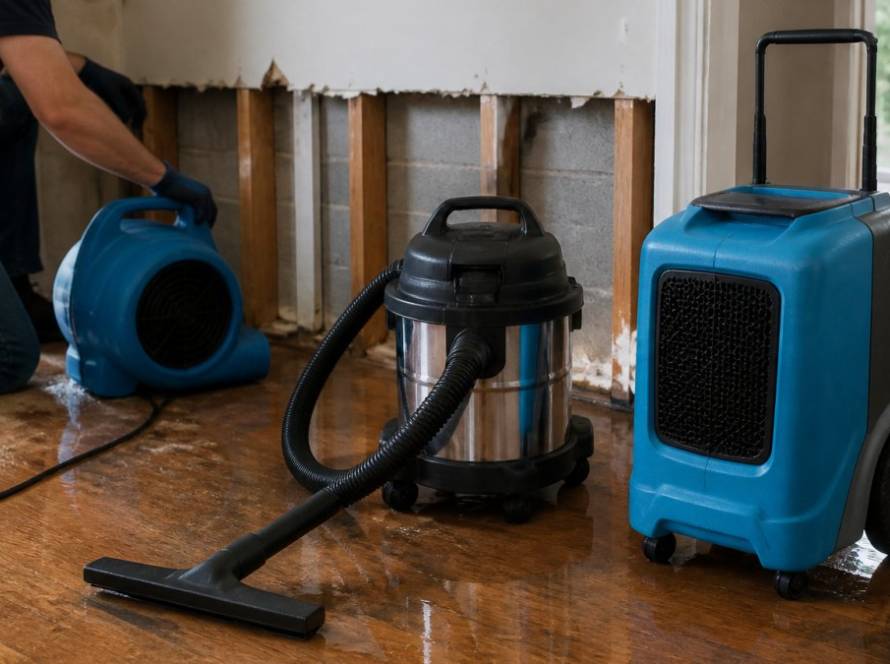
- Water damage: Firefighting water often causes more damage than the flames. Extraction, drying equipment, and days of continuous runtime add cost, and wet framing not dried quickly can lead to mold remediation later.
- Contents: Cleaning and salvage of furniture, documents, and valuables, often priced per item or per room; high-value electronics and artwork may need specialized handling.
- Materials: Modern synthetic furnishings produce heavier, stickier soot that requires specialized cleaning and sometimes sealing rather than simple washing.
- Access and containment: A property with a collapsed roof or blocked driveway needs different equipment and more labor hours than one with clear access.
How the Money Usually Flows
Most residential fire losses are paid through a homeowners insurance claim, and the restoration company is typically paid from claim proceeds rather than by the homeowner up front. That does not mean there is no out-of-pocket cost.
Ask each provider how they prepare scopes for an adjuster’s review, how they handle hidden damage found during work, and whether they will communicate directly with the adjuster.
Comparing Estimates on Equal Terms
Ask for a line-item estimate, not a lump sum. A fair estimate separates cleanup, debris removal, drying, contents handling, and reconstruction so you can compare bids on equal terms.
Questions to ask before you authorize work:
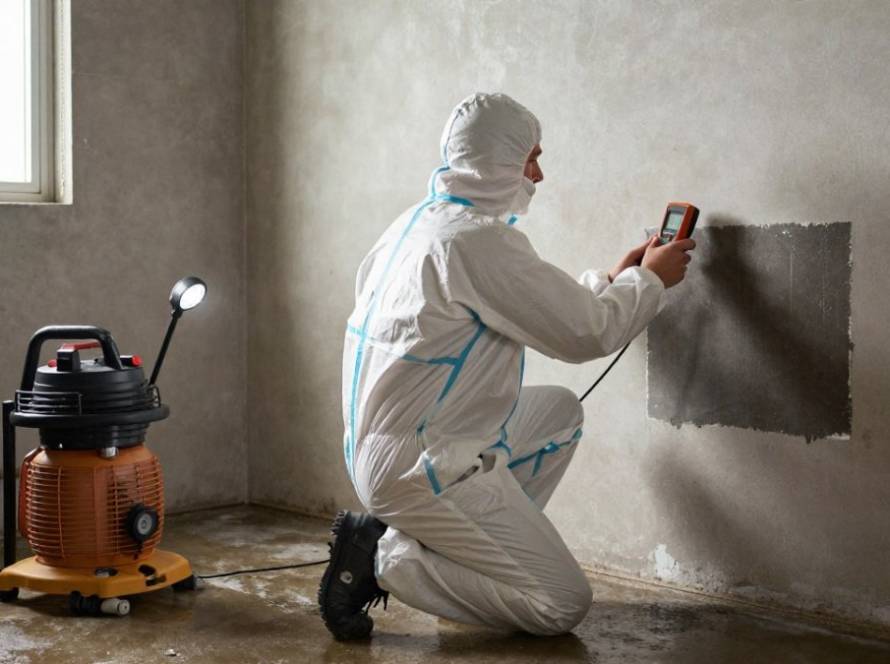
- Will you document the loss for the adjuster with photos, moisture readings, and a written scope?
- Does the estimate include drying, deodorization, and contents cleaning, or are those billed separately?
- What happens if the adjuster’s estimate is lower than yours, and who negotiates the difference?
- Are there change-order procedures if hidden damage is found after demolition starts?
- What is the payment schedule, and will you provide a lien waiver or final invoice at completion?
Watch out: a contractor who asks for the full job total up front, before any work is performed, is a warning sign; progress payments tied to completed phases are the norm.
If you are still working through coverage questions, our guide on whether insurance pays for water restoration explains how adjusters evaluate related damage.
Fire Damage Restoration Timeline: What to Expect Week by Week
Fire damage restoration timeline expectations vary by severity, but most projects follow a predictable sequence. Here is the general shape of a residential restoration project:
| Phase | Typical Timing | What Happens |
|---|---|---|
| Emergency response | Day 1 | Board-up, safety assessment, water extraction |
| Damage assessment | Days 1-3 | Written scope, photos, insurance documentation |
| Water drying | Days 2-7 | Air movers and dehumidifiers running continuously |
| Soot and smoke removal | Week 1-2 | Surface cleaning, contents cleaning, deodorization |
| Structural repairs | Week 2-6 | Framing, drywall, roofing, and systems |
| Reconstruction and final walkthrough | Week 4-10+ | Finishes, paint, final inspection |
Timelines stretch when structural damage is extensive or insurance approval lags. While you wait, keep the power off in wet areas, avoid running HVAC systems that can pull soot through the house, and read our guide on how to stop water damage from spreading fast.
Fire Damage Insurance Claim Assistance and Estimate Comparison
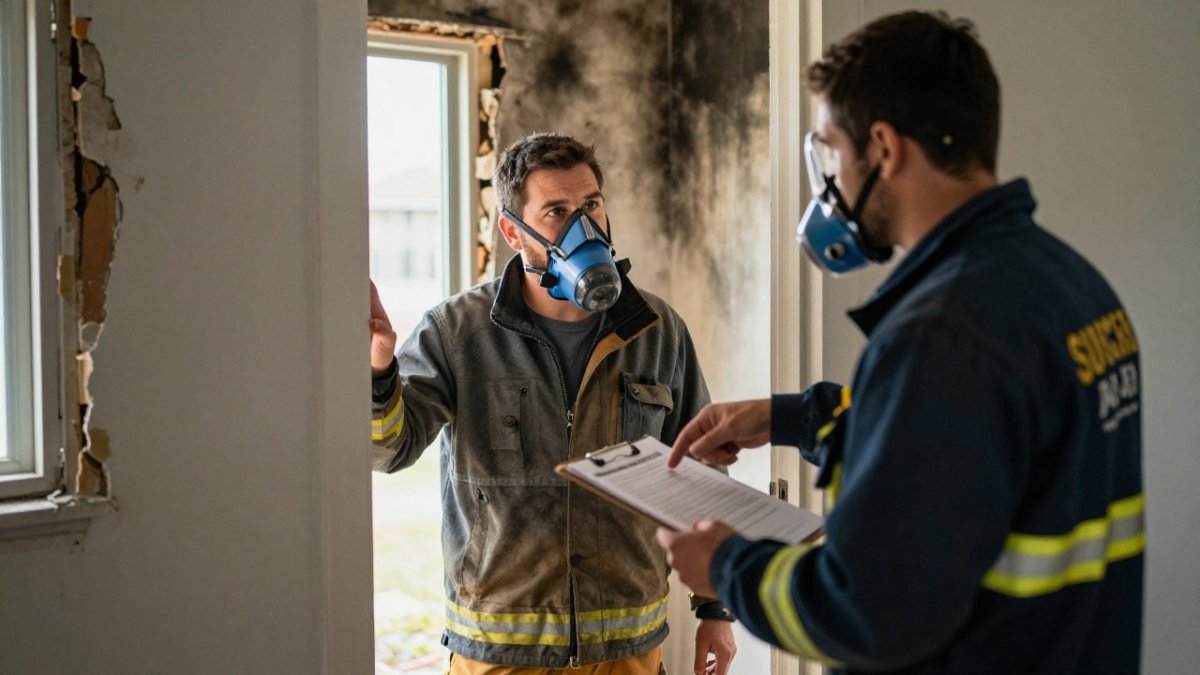
Good restoration companies help with the claim, not just the cleanup. Fire damage insurance claim assistance typically includes documenting the loss with photos and moisture readings, preparing a scope of work an adjuster can review, and communicating directly with your insurer about what the damage requires.
When you compare estimates, compare the scope, not just the total. A lower bid that omits drying equipment or contents cleaning will cost more later. Ask each provider:
- Will you document the loss for the adjuster?
- Does the estimate include drying and deodorization?
- What happens if the adjuster’s estimate is lower than yours?
If you are still working through coverage questions, our guide on whether insurance pays for water restoration explains how adjusters evaluate related damage. Sentinel Restoration works with insurance providers.
National Network or Local Provider: The Trade-Offs That Matter
Big franchise networks bring standardized processes, national call centers, and the ability to pull crews and equipment from other regions during a large event. Local providers bring faster arrival times, crews who know the local housing stock and building codes, and an owner reachable after the job. Neither is automatically better; the right choice depends on your damage severity, timeline, and how much coordination you want to do yourself.
How the Two Models Actually Differ
Capacity during regional events. After a widespread storm or wildfire, national networks can move equipment and crews in from other markets, which matters when local providers are booked out for weeks.
Subcontracting. Many providers use subcontractors for specialty trades such as electrical, HVAC, and roofing. Ask whether employees or subcontractors perform the work, who supervises them, and whether the subcontractors carry their own insurance.
A Decision Framework You Can Use
Score each candidate on the same five criteria:
- Credentials: Active IICRC certification, state licensing, and liability insurance you can verify.
- Response time: A stated window for arriving on site, not a vague promise.
- Scope transparency: A written estimate that separates cleanup, structural repairs, and reconstruction.
- Insurance experience: A documented process for working with adjusters and documenting losses.
- Local presence: A physical address and references from jobs in your area.
Ask each provider the same questions and write the answers down. If a company dodges the credentials question, that tells you more than any review score.
Watch out: a national call center that cannot name the local franchise, the supervisor, or the on-site arrival window before you sign is a sign the job may be handed off without accountability.
Sentinel Restoration uses IICRC-certified employees and contractors and works with insurance providers, so you can compare our plan against other bids on the same criteria.
Health, Safety, and the First 24 Hours After a Fire
Safety comes before cleanup. In the first 24 hours, focus on these steps:
- Stay out of the structure until firefighters declare it safe.
- Keep the power off until an electrician inspects the wiring.
- Wear an N95 mask and gloves if you must enter briefly.
- Do not run the HVAC system; it spreads soot and odor.
- Photograph everything before anything is moved.
- Call your insurer and start the claim.
- Arrange board-up to prevent further damage or theft.
Soot and ash contain fine particles that irritate lungs, and smoke odor lingers in fabrics and ductwork long after the fire is out. Our emergency water damage restoration guide and post-damage checklist cover the immediate actions in detail. When in doubt, call a professional rather than testing the air quality yourself.
Requesting an Assessment from Sentinel Restoration
The best way to choose a fire damage restoration company is to see how it handles the first conversation. Sentinel Restoration is IICRC certified and licensed, and brings decades of industry expertise to each project.
Call us, ask the hard questions, and compare our plan against any other bid.
A fire is one of the most disorienting things a homeowner can face, and the decisions in the first week shape the next year.
Frequently Asked Questions
How long does fire damage restoration take?
Most homes take several weeks to a few months, and the fire damage restoration timeline depends on how far smoke, soot, and water spread. Project length depends on the extent of the damage, so ask any company you consider for a schedule tailored to your property before work begins.
What should I look for when choosing a fire damage restoration company?
Check four things before signing anything. First, fire restoration company credentials: an active state contractor license and IICRC certification you can verify through the issuing body. Second, a stated response time for arriving on site. Third, a written scope of work that separates cleanup from reconstruction so you can see what is included. Fourth, proof of insurance and a willingness to communicate directly with your adjuster. Companies that dodge any of these questions are telling you something.
Does homeowners insurance cover fire damage restoration?
Standard homeowners policies in the U.S. typically cover fire damage to the dwelling, personal property, and additional living expenses while you are displaced. What varies is your deductible, your coverage limits on high-value items, and whether the policy pays replacement cost or actual cash value. Keep every receipt, photograph damage before anything is moved, and do not throw away damaged items until your adjuster has seen them. Ask any restoration contractor you consider how it documents losses for insurance claims.
How do I compare fire restoration estimates fairly?
Line up the scopes, not just the totals. A lower bid often excludes debris removal, contents cleaning, or odor remediation, which then appear as change orders later. Ask each company to itemize labor, materials, equipment, disposal fees, and reconstruction separately. Ask whether the estimate is binding or subject to revision after hidden damage is found. Fire damage restoration cost varies with square footage affected, severity level, and whether reconstruction is needed, so compare like-for-like line items rather than headline prices.