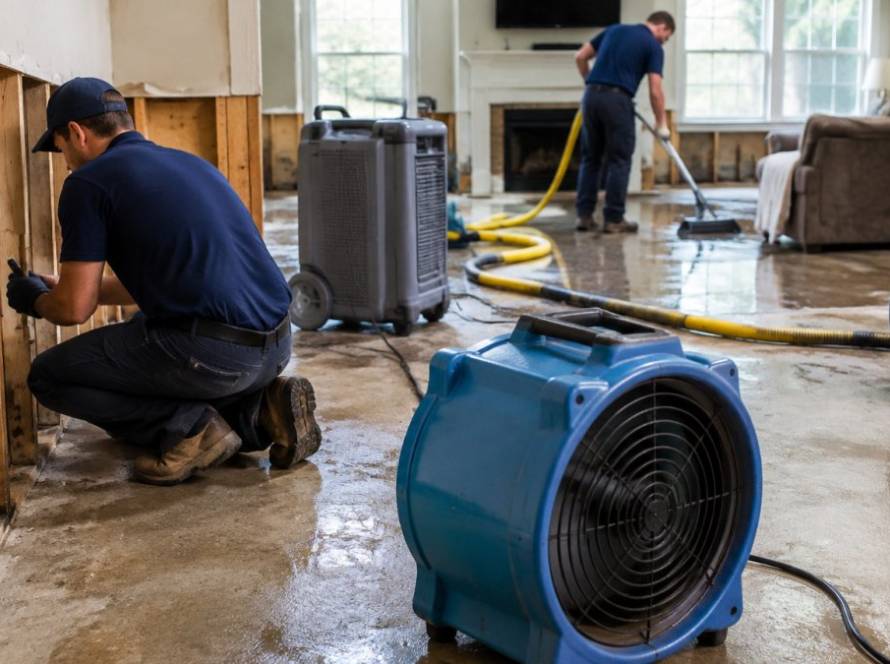
Last Updated: November 21, 2026
Quick Summary
Preventing mold regrowth after professional remediation means fixing the water source and keeping indoor relative humidity below 60%, ideally between 30% and 50%. Remediation removes the visible colony, but mold regrowth returns whenever damp conditions persist, so drying and moisture control matter more than cleaning alone.
- Mold spores are already in nearly every home and only grow when moisture gives them a place to grow.
- Run bathroom and kitchen exhaust fans during and for 20 to 30 minutes after showering or cooking.
- A follow-up inspection should happen within a few days to two weeks after drying is complete.
- Check humidity daily for the first week and inspect the treated area weekly for the first month.
- Staining that does not change over weeks with normal moisture readings is usually residual and cosmetic.
Table of Contents
- Why Mold Returns After Remediation
- How to Control Indoor Humidity to Prevent Mold
- Find and Fix the Moisture Source
- How Long Does Mold Remediation Take and What Comes Next
- How to Clean Mold Without Spreading Spores
- Schedule a Mold Remediation Follow-Up Inspection
- Book Your Post-Remediation Moisture Assessment
- Frequently Asked Questions
Why Mold Returns After Remediation
Mold regrowth after professional remediation almost always traces back to moisture that was never fully removed.
Here is what most guides miss. The EPA’s mold guidance makes this point plainly: the way to control mold is to control moisture.
- A slow leak under a sink or behind a fridge that no one checked
- Wet drywall, carpet, or insulation that looked dry on the surface
- High indoor humidity that never dropped after the job
- A bathroom or kitchen with poor airflow and no working exhaust fan
So the real question after remediation is not “is the mold gone?” It is “is the building dry, and will it stay dry?”
How to Control Indoor Humidity to Prevent Mold
The target is simple to state and easy to check. Keep indoor relative humidity below 60%, and ideally between 30% and 50%, according to EPA moisture control guidance.
Here is how to control indoor humidity to prevent mold, step by step:
- Buy a digital hygrometer and place it in the dampest room, at sitting height, away from exterior walls, direct sun, and supply vents. Read it morning and evening for a week and write the numbers down.
- Run a dehumidifier in basements, crawl spaces, and any room above 55%. Size it to the space: a small console unit suits a closed bedroom, but a damp basement usually needs a larger unit with a continuous drain.
- Fix the source of the damp air first. A dehumidifier fights an open leak forever and loses.
- Empty the dehumidifier or route the hose to a drain so it does not shut off overnight.
- Keep interior doors open so air moves between rooms, and leave closet doors ajar in damp seasons.
- Avoid drying clothes indoors on racks in small rooms without ventilation.
- Run bathroom and kitchen exhaust fans during and for 20-30 minutes after showering or cooking, and confirm the fan moves air (a tissue held to the grille should flutter).
Watch out: a single hygrometer in one room can mislead you. Humidity stratifies, warm air holds more moisture and rises, so a basement corner, a closed closet, and an upstairs bedroom can read very differently on the same afternoon.
How to read the numbers
Relative humidity tells you how saturated the air is at its current temperature, not how much water is in the materials. A room at 55% can still have damp drywall if the wall cavity is cold.
- Air humidity (hygrometer): target 30-50%, investigate anything sustained above 55-60%.
- Material moisture (pin or pinless meter): readings are relative and meter-specific. What matters is comparison, measure a known-dry section of the same material nearby and treat a clearly higher reading as a flag.
- Temperature: cold surfaces condense moisture first. Exterior walls, window frames, and uninsulated rim joists in a basement are the usual first places to show dampness even when room air reads fine.
Consumer meters have limits. Inexpensive pinless meters are affected by surface texture, paint, and pressure, and read only the top inch or so of material.
Area-specific humidity plans
- Basements and crawl spaces: the highest-risk zones. Keep a dehumidifier running through humid months, seal obvious foundation cracks and penetrations, and make sure the crawl space has a vapor barrier over bare soil. A crawl space that smells musty after rain is telling you the ground is feeding moisture upward.
- Attics: ventilation matters more than dehumidification. Check that soffit and ridge vents are open and not blocked by insulation, and look for roof sheathing stains after storms.
- Bathrooms: the exhaust fan is the whole game. Run it every shower, keep the door open afterward, and fix a fan that is noisy but weak.
- Kitchens: range hoods that vent outdoors (not recirculating) remove cooking moisture; a pot of pasta can push a small kitchen well above 60% for an hour.
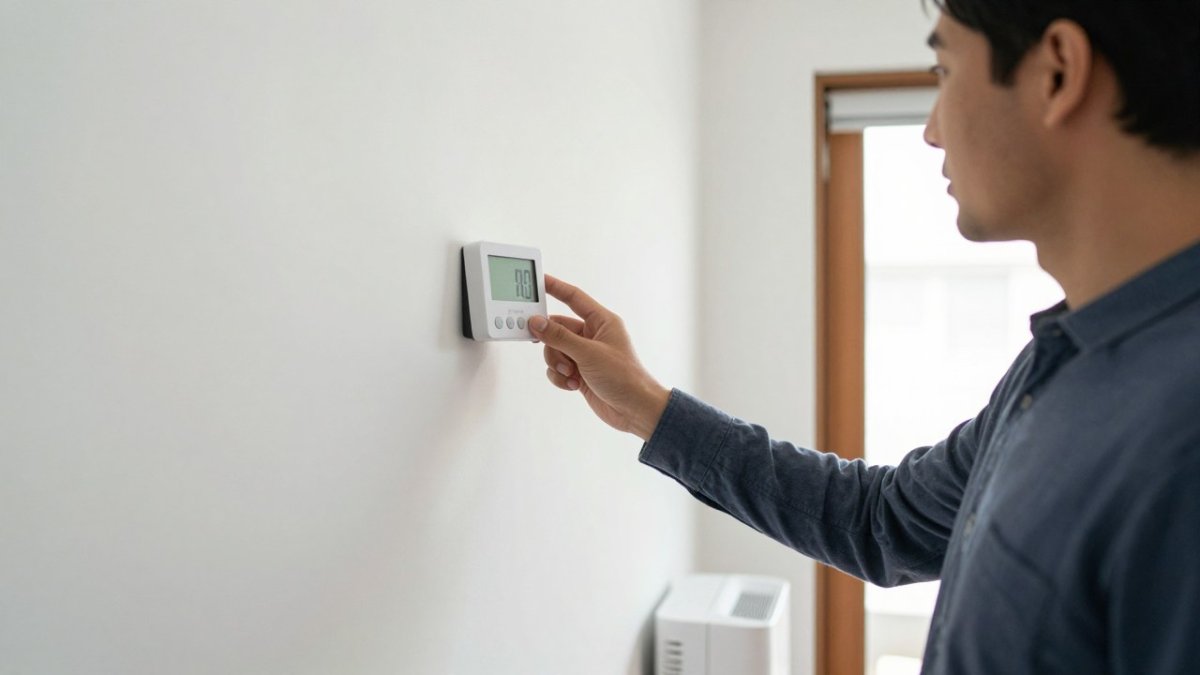
If readings stay high after you have fixed leaks and run dehumidifiers, the next step is a professional moisture assessment. The air is telling you water is still getting in somewhere you cannot see.
Find and Fix the Moisture Source
Every regrowth problem has a water source. Find it, fix it, and the mold has nothing to feed on, the single most important step in preventing mold regrowth after professional remediation.
- Under every sink for a slow plumbing leak
- Around the water heater and washing machine hoses
- The roof and attic after heavy rain, looking for stains and damp sheathing
- Window and door frames for water intrusion
If water is actively spreading, stop it before anything else. Our guide on how to stop water damage from spreading fast walks through the first moves while you track down the leak.
Small fixes you can often do yourself include tightening a supply line, replacing a worn washer, and clearing gutters so water drains away from the foundation.
How Long Does Mold Remediation Take and What Comes Next
How long mold remediation takes depends on how much area is affected and how wet the materials are, and pricing and scheduling depend on the scope of your project.
Remediation timelines depend on the scope of the job, as summarized below:
| Scope | Typical Time | What Drives It |
|---|---|---|
| Small area, one room | 1 day | Limited growth, dry materials |
| Bathroom or kitchen | 1-3 days | Drying time, ventilation fixes |
| Basement or crawl space | 3-7 days | Wet materials, dehumidification |
| Multi-room or structural | 1-2 weeks | Demolition, drying, rebuild |
What comes next matters more than the cleanup itself. Our emergency water damage restoration guide explains the full restoration sequence so you know what follows remediation and why drying cannot be rushed.
A remediation job is not complete when visible mold is gone. Moisture readings should confirm the building is dry.
How to Clean Mold Without Spreading Spores
Cleaning mold the wrong way sends spores into the air and spreads the problem to rooms that were clean. The safe approach is to limit disturbance, protect yourself, and clean only what is safe to clean.
A common mistake is dry-brushing or vacuuming mold with a standard vacuum. That launches spores everywhere. Here is the safer method:
- Wear an N95 mask, gloves, and eye protection.
- Seal the area with plastic sheeting and tape if the growth is larger than a small patch.
- Mist the surface lightly with water before wiping to keep dust down.
- Wipe nonporous surfaces with detergent and water, then dry them fully.
The CDC’s mold cleanup guidance recommends cleaning hard surfaces with soap and water and throwing out absorbent materials that cannot be dried. Our step-by-step guide on what to do after water damage in your home covers cleanup in the right order.
Schedule a Mold Remediation Follow-Up Inspection
A follow-up inspection is how you confirm the job actually worked. It should happen after drying is complete, usually within a few days to two weeks, and it should check moisture readings, not just look for stains. Treat cleanup as the midpoint, not the finish line, the milestone that matters is a documented, dry, and stable building.
What a good follow-up covers
- Moisture meter readings on walls, floors, and framing, compared against dry reference areas
- A visual check of the remediated area and nearby rooms, including closets and the far side of shared walls
- Confirmation that the water source is fixed, not just that the visible mold is gone
- A humidity reading to confirm the space is in range
- A clear answer on what is normal staining versus new growth
Clearance testing and when to ask for it
Clearance separates a cleanup from a verified remediation. In practice it can include a visual inspection by someone other than the crew that did the work, moisture measurements confirming materials are dry, and, on larger or contested jobs, air or surface sampling analyzed by a laboratory.
A common pattern is for the remediation contractor to document the work and a separate assessor to verify it. That separation of roles is worth asking about up front, because it removes any question about whether the same party is grading its own work.
Recurrence versus residual staining
This is where homeowners most often panic unnecessarily. Old water stains and dead spores can stay visible on wood and drywall even after the mold is gone.
- Staining that does not change over weeks, with normal moisture readings, is usually residual and cosmetic.
- Growth that spreads, feels fuzzy, or returns after cleaning points to active moisture and warrants investigation.
- A musty odor that comes and goes with weather often signals a hidden source, crawl space, wall cavity, or HVAC.
- Symptoms that improve away from home and return on arrival are a reason to escalate to a professional assessment, not to keep cleaning.
Watch out: do not assume every dark mark is active mold, and do not assume every clean-looking wall is dry. The only reliable test is a moisture reading compared against a known-dry area of the same material.
What the contractor should document, and what you maintain
After remediation, responsibilities split. The contractor should provide a written scope of what was removed, cleaned, and dried; moisture readings before and after; photos; and any warranty or call-back terms in writing.
Your side of the ledger is ongoing: keep humidity in range, run exhaust fans, fix new leaks promptly, and recheck previously affected areas on a schedule.
At Sentinel Restoration, our IICRC-certified team uses moisture detection tools to verify a space is dry, not just clean. You can schedule a quality inspection to confirm the remediation held and catch a returning moisture problem early.
Book Your Post-Remediation Moisture Assessment
The final step in preventing mold regrowth after professional remediation is a moisture assessment that gives you a clear, documented answer.
- Relative humidity in each affected room
- Hidden moisture in walls, subfloor, and framing
- The condition of the repaired leak or water source
- Ventilation and airflow in bathrooms, kitchens, and basements
If you are ready to schedule one, you can view our pricing and booking details to get started.
Mold coming back after a cleanup is frustrating, and it usually means moisture was missed. Sentinel Restoration can help you confirm the space is dry and stop the cycle.
Frequently Asked Questions
How likely is mold to come back after remediation?
Mold regrowth is likely if the moisture source was not fully corrected. Professional remediation removes visible mold and spores, but if a leak, high humidity, or poor ventilation remains, mold can return within weeks. The key is fixing the water problem first, then monitoring indoor humidity and scheduling a follow-up inspection to confirm the area stays dry.
What should you do after professional mold remediation?
After remediation, keep indoor humidity in a healthy range, run exhaust fans in bathrooms and kitchens, fix any leaks promptly, and inspect previously affected areas monthly for musty odors or discoloration. A follow-up inspection after drying is complete can help confirm the work held. If you notice new signs of mold growth, call a certified professional rather than cleaning it yourself.
How do you keep moisture from causing mold to return?
Control moisture at the source. Repair plumbing and roof leaks immediately, dry wet materials within 24 to 48 hours, use a dehumidifier in basements and crawl spaces, and ventilate bathrooms and kitchens with exhaust fans. Check relative humidity with a hygrometer and keep it between 30% and 50%. Prompt water removal and regular inspection are the most reliable ways to prevent mold regrowth.
When should you call a professional if mold reappears?
Call a professional if mold covers a large area, if you smell a musty odor without visible mold, or if mold returns after you have fixed the moisture source. These signs suggest hidden water intrusion or incomplete remediation. A certified team can verify moisture readings, identify the source, and confirm whether the issue is new growth or residual staining.