Last Updated: November 19, 2026
Quick Summary
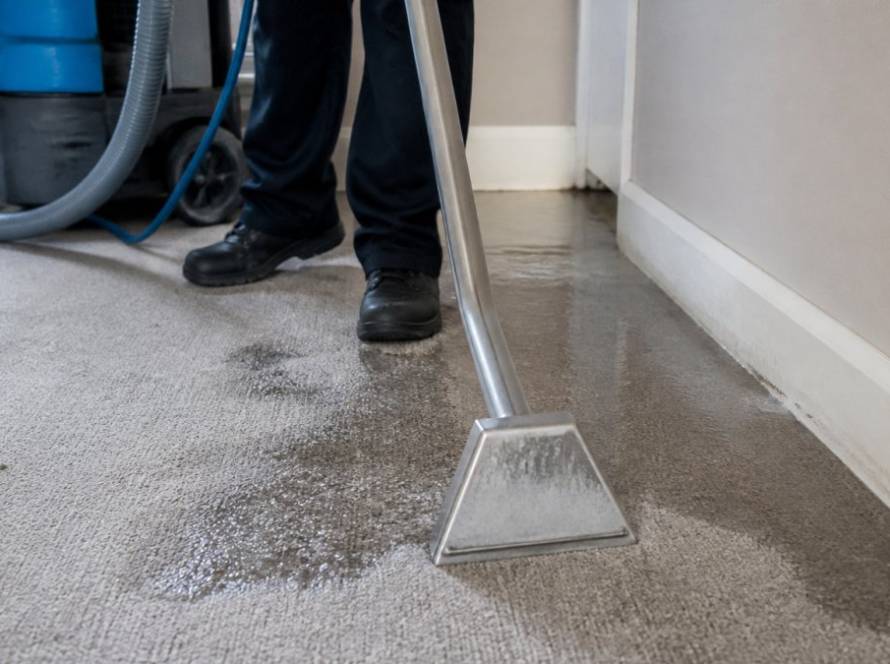
Emergency restoration services for business owners stabilize your property fast: a trained crew arrives, stops the water or secures the building, and starts drying before secondary damage spreads. Every hour of delay adds repair work, not just cleanup work, so mitigation comes first and full remediation follows.
- Mitigation limits damage during the emergency; remediation is the full cleanup and repair that follows.
- Never run a shop vac near standing water that could touch outlets or a live panel; cut power at the breaker first.
- A commercial property disaster recovery plan names who calls the restoration company and where shutoff valves are.
- Ask vendors for a written on-site arrival window and verify IICRC certifications through the public directory.
- A vendor scoring 25 or higher out of 35 on the vetting rubric is a strong commercial partner.
Table of Contents
- What Business Owners Need From Emergency Restoration Services
- Commercial Water Damage Mitigation: Stopping the Damage Before It Spreads
- Building a Commercial Property Disaster Recovery Plan Before You Need It
- Understanding the Cost of Commercial Flood Cleanup
- How to Vet Emergency Restoration Vendors
- Insurance Claims and Financial Recovery for Your Business
- Contact Sentinel Restoration for a Rapid Response Assessment
- Frequently Asked Questions
What Business Owners Need From Emergency Restoration Services
When a pipe bursts above your sales floor, the clock starts working against you. Emergency restoration services for business owners exist to stop that clock: a trained crew arrives, stops the water or secures the building, and starts drying before secondary damage spreads. Every hour of delay adds repair work, not just cleanup work.
Here’s what separates a service that saves your business from one that just bills you:
- Site stabilization first: water extraction, board-up, and power isolation
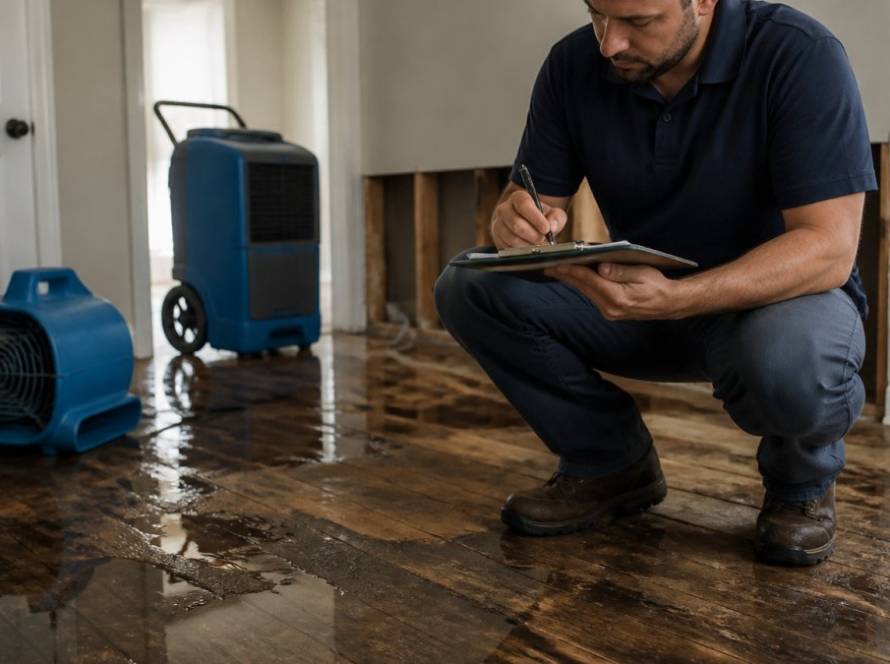
- Documented damage assessment you can hand to your insurer
- IICRC-certified technicians trained in structural drying standards
The distinction that matters most is between mitigation and remediation. Mitigation is the emergency work that limits damage; remediation is the full cleanup and repair.
Commercial Water Damage Mitigation: Stopping the Damage Before It Spreads
Water in a commercial building rarely stays where it started. It wicks up drywall, travels along ceiling joists, and pools under flooring where you can’t see it. Commercial water damage mitigation is the process of stopping that movement and limiting further damage.
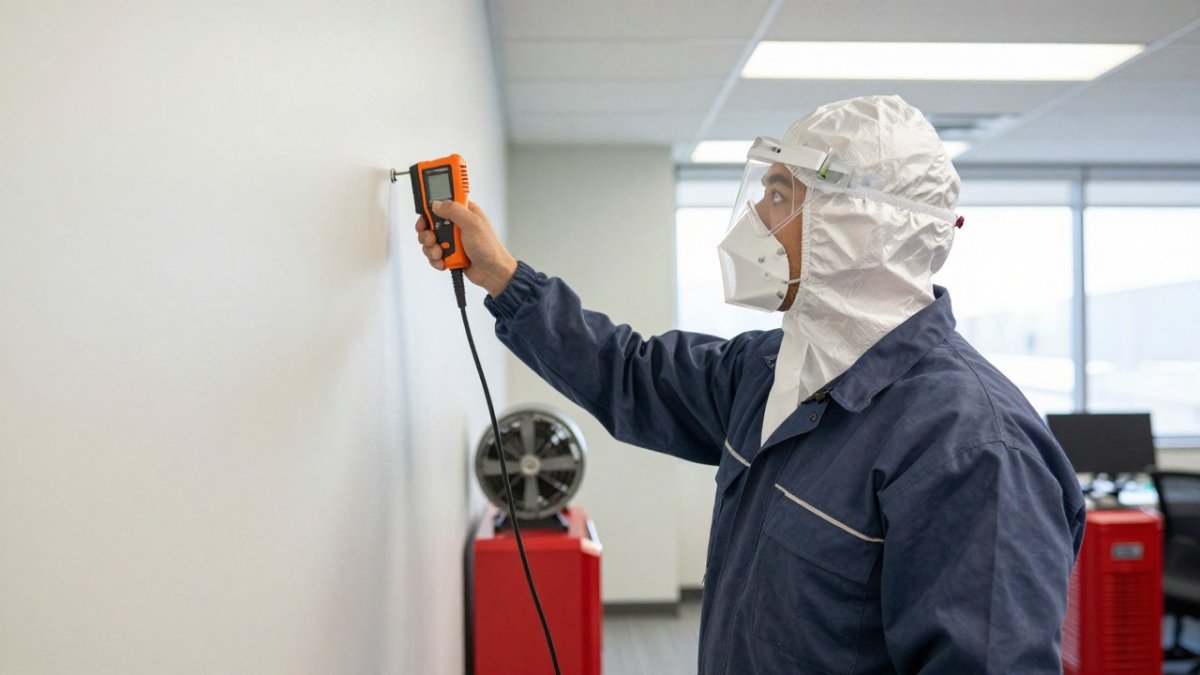
The mistakes we see most often are predictable. A facilities manager mops up, points a fan at the carpet, and calls it handled. Three weeks later the baseboards smell musty and mold has colonized the drywall cavity.
Watch out: never run a shop vac near standing water that could be touching electrical outlets or a live panel. Cut power at the breaker first, or leave it to the crew.
If you want the step-by-step version, our guide on how to stop water damage from spreading fast covers the first hours in detail. For larger buildings, the commercial water damage cleanup guide walks through multi-floor losses.
Building a Commercial Property Disaster Recovery Plan Before You Need It
A commercial property disaster recovery plan is a written document that tells your team exactly what to do in the first hour of a flood, fire, or storm. It names who calls the restoration company, where the shutoff valves are, which inventory gets moved first, and how you’ll reach staff and customers.
Most businesses don’t have one. That gap costs them the first day of recovery, which is the day that matters most.
What belongs in the plan:
- Emergency contacts for your restoration provider, insurer, utility companies, and key staff
- Utility shutoff locations marked on a floor plan
- A priority list of equipment, records, and inventory to protect first
- An alternate work location so operations continue during repairs
- A review date so the plan stays current as your building changes
This is the piece competitors skip. A recovery plan turns a panicked morning into a checklist.
Understanding the Cost of Commercial Flood Cleanup
The cost of commercial flood cleanup depends on several factors: how much water entered, what materials it reached, how long it sat, and whether mold has started. Clean water on a concrete floor is a different job from contaminated water soaked into drywall and insulation. Pricing depends on the scope of the job, so request a written quote from Sentinel Restoration for current pricing. What we can do is show you what drives the invoice and how the decision to wait, or to handle it in-house, changes the total.
What drives the invoice up or down:
- Water category. Clean supply-line water costs less to handle than sewage or storm water, which requires sanitization and hazard cleanup. Category 1 losses are typically the least expensive per square foot; Category 3 losses add protective equipment, disposal, and antimicrobial treatment.
- **
- **
- Contents. Furniture, files, and inventory add pack-out, cleaning, and storage time.
- Mold presence, which shifts the job from drying to mold abatement and adds containment and clearance work.
The financial case for acting fast. Downtime is often a major cost on a commercial flood loss. Every day your doors are closed is revenue you do not recover, payroll you still meet, and customers who try the business down the street.
A common pattern we see: an owner mops up, points a fan at the carpet, and reopens in two days. Three weeks later the baseboards smell musty, mold has colonized the drywall cavity, and the job that would have been a drying project becomes a demolition and abatement project, with the added cost of replacing materials that could have been saved and the added downtime of a second closure. The DIY saving on the front end is usually smaller than the second loss on the back end.
Delayed action has a price, too. Waiting for a “better” bid, waiting for the adjuster, or waiting until Monday all let water wick further into assemblies. Emergency stabilization, extraction, board-up, power isolation, is fine and usually expected before the adjuster arrives. Tearing out walls before documentation is what complicates a claim. The middle path is to stabilize immediately, document thoroughly, and let the scope follow.
How to compare bids without a flat price. Ask each provider for a written scope that lists equipment, labor, materials to be removed, contents handling, and mold contingency separately. Compare scopes line by line, not totals, because a low total often means work was left out. Ask what the scope excludes and what triggers a change order. That comparison tells you more about the final invoice than any single number quoted over the phone.
For a fuller breakdown of line items, see our guide to water damage restoration cost after a leak.
How to Vet Emergency Restoration Vendors
Most business owners pick a restoration contractor the way they pick a plumber after a burst pipe: whoever answers first. That works for a leaky faucet. It does not work for a loss that can close your doors for a week.
Here is a rubric you can use, with a pass/fail threshold for each line.
**1. Verify certifications through the IICRC’s public directory rather than relying on a logo on a website (Certified Firm Verification).
2. Insurance and licensing (pass/fail). Request a certificate of insurance showing general liability and workers’ compensation, and confirm the limits are adequate for a commercial building rather than a single-family home. Ask for the name of the carrier and the policy effective dates, not just a PDF.
3. Response-time guarantee (score 1-5). “24/7” is not a response time. Ask: what is the guaranteed on-site arrival window to this address at 2 a.m. on a Sunday, and what happens if you miss it?
4. Scope and documentation (score 1-5). Will they provide a written scope of work and moisture readings before and after drying, plus daily drying logs and photographs? Organized evidence can help claims move faster.
5. Single-source capability (score 1-5). Do they handle mitigation and reconstruction under one contract, or will you manage a second contractor for rebuild?
6. Contents and specialty handling (score 1-5). Commercial losses involve inventory, files, electronics, and equipment, not just drywall. Ask whether they do pack-out, cleaning, and restoration of contents, and whether they handle hazardous or contaminated water. Score 5 for full contents capability, 1 for structure only.
7. Local capacity and equipment (score 1-5). How many crews can they put on your building, and how much drying equipment do they own versus rent?
Add the scores. A vendor that passes all three pass/fail lines and scores 25 or higher out of 35 is a strong commercial partner. Anything below 18 is a name to keep on a list, not a name to call first.
Watch out: the low bid often excludes reconstruction, contents handling, or mold work, so the cheap quote becomes the expensive project once those get added. Compare scopes line by line, not totals, and make sure each vendor is pricing the same work.
Run this rubric on two or three providers before you have a loss, and keep the scored sheets with your emergency contacts. The ten minutes you spend now is the difference between a panicked call and a plan.
For quick answers on response times and process, our frequently asked questions page covers what most owners ask first.
Here is the rubric, with each line’s pass/fail or scoring rule and what earns a top score.
| Vetting line | How it is scored | What earns the top score |
|---|---|---|
| Certification and training | Pass/fail | IICRC certified in WRT, ASD, FSRT, MRT |
| Insurance and licensing | Pass/fail | Certificate showing liability and workers’ comp |
| Response-time guarantee | Score 1-5 | Written guarantee with a remedy |
| Scope and documentation | Score 1-5 | Written scope, moisture readings, daily drying logs |
| Single-source capability | Score 1-5 | Mitigation and reconstruction under one roof |
| Contents and specialty handling | Score 1-5 | Full contents capability |
| Local capacity and equipment | Score 1-5 | Owned equipment and multiple crews |
Insurance Claims and Financial Recovery for Your Business
Your insurance claim can go more smoothly when the restoration company documents the damage thoroughly. Adjusters approve claims faster when the evidence is organized.
A common mistake is starting demolition before the adjuster sees the damage. Emergency stabilization is fine and usually expected. Tearing out walls before documentation can complicate your claim.
If you’re unsure what your policy covers, our guide on whether insurance pays for water restoration explains how commercial property claims typically work.
Contact Sentinel Restoration for a Rapid Response Assessment
A burst pipe at 6 a.m. doesn’t wait for office hours, and neither should your restoration team. Sentinel Restoration provides emergency restoration for commercial properties with IICRC-certified crews.
If water, fire, or storm damage has hit your property, contact Sentinel Restoration for an assessment.
When damage hits, the first hour decides how much you lose. Sentinel Restoration responds with IICRC-certified technicians, advanced moisture detection to find hidden water, and full-service mitigation through reconstruction, so you deal with one team instead of three. Get started with Sentinel Restoration and get your business back to pre-loss condition.
Frequently Asked Questions
How much do commercial restoration services typically cost?
The cost of commercial flood cleanup depends on the size of the affected area, the category of water involved, and how long the damage has been present. Most commercial restoration providers bill by the hour for labor plus equipment and materials. Request a written scope of work and an itemized estimate before work begins so you can compare bids and submit accurate documentation to your insurer.
What certifications should I look for in an emergency restoration contractor?
Look for IICRC certification in water damage restoration (WRT) and applied structural drying (ASD), plus mold remediation credentials if mold is present. IICRC-certified firms follow established restoration protocols for water extraction, dehumidification, and sanitization. Ask for proof of state licensing, general liability and workers’ compensation insurance, and references from similar commercial projects. Verify the certification directly through the IICRC website rather than relying on a logo on a truck. A contractor who welcomes that verification is more likely to deliver consistent, accountable work.
How quickly should a restoration company respond to a commercial property?
Ask any emergency restoration provider for a guaranteed on-site arrival window in writing. Mold can begin growing on wet materials within 24 to 48 hours, and secondary damage such as warped flooring or compromised drywall escalates quickly. Ask vendors about their 24/7 availability and average response time in writing.
What should be included in a business emergency restoration plan?
A commercial property disaster recovery plan should list emergency contacts for your restoration vendor, utility providers, and insurance agent; identify shut-off locations for water, gas, and electricity; and assign roles for evacuation, communication, and damage documentation. Include an inventory of critical equipment and records stored off-site, a floor plan marking priority areas, and pre-approved spending limits so managers can authorize emergency mitigation without delay. Review and update the plan annually, and keep a digital copy accessible from outside the building.