Quick Summary
A flooded basement cleanup typically costs more when water has sat longer, reached building materials, or is contaminated, so get a written, itemized estimate. Start by stopping the water source safely, avoiding standing water near electrical hazards, and documenting damage for your insurer before removing anything. Professional drying often runs several days and is confirmed with moisture readings.
- Shut off basement power at the breaker only if you stand on dry ground and the panel is dry.
- Do not enter standing water if cords, outlets or appliances are submerged.
- Photograph wide shots, close-ups and water lines before removing any items.
- Ask for an itemized estimate covering extraction, equipment days, drying, demolition and disposal.
- Drying is verified with moisture readings, so your home is not released until materials are dry.
Table of Contents
- What to Do in the First Hours After a Basement Floods
- How Much Does Flooded Basement Cleanup Cost Near Me?
- Basement Water Removal: How Professionals Extract and Dry Standing Water
- Will Homeowners Insurance Cover a Flooded Basement?
- How Long Does Flooded Basement Cleanup Take?
- DIY Cleanup or Professional Restoration: Which Fits Your Flood?
- Booking Your Flooded Basement Assessment With Sentinel Restoration
- Frequently Asked Questions
What to Do in the First Hours After a Basement Floods
Last Updated: November 4, 2026
Flooded basement cleanup near me is the search most homeowners run in a panic, usually with a wet carpet underfoot and a sump pump that has already given up. The first few hours matter more than anything else. This guide explains what to do before a restoration crew arrives, what to photograph for your insurance claim, and when the job has grown past a weekend project.
Start by stopping the water at its source if you can do it safely. Shut off power to the basement at the breaker, but only if you are standing on dry ground and the breaker panel is dry. If water is near outlets or the panel, call your utility company first. Then move valuables, electronics and anything made of paper or fabric to a dry floor upstairs.
Safety Checks Before You Enter the Basement
Before you walk down the stairs, check for hazards. Electrical risk is the most serious. Do not enter standing water if cords, outlets or appliances are submerged, and never touch an electrical device while standing in water.
Look for these warning signs before you go in:
- Visible sparks, buzzing or a burning smell from outlets or the panel
- Sagging ceilings, cracked support beams or a shifting foundation wall
- Gas appliances such as a water heater or furnace sitting in water
- Floodwater that may carry sewage, which often smells foul and looks gray or black
If any of these are present, leave the basement and call a professional. Floodwater from a sewer backup or an outdoor flood can carry bacteria and contaminants, so wear rubber boots, waterproof gloves and eye protection if you must step in (the CDC). Avoid touching the water with bare skin.
Documenting Damage for Your Insurance Claim
Document everything before you remove a single item. Insurers often ask for proof of the condition and value of damaged property, and photos taken immediately are the strongest evidence you can give them.
Take wide shots of each room, then close-ups of damaged materials, water lines on walls and any visible cause such as a cracked pipe or failed sump pump. Keep a written inventory with item names, approximate age, purchase price and the receipt if you have one. Save damaged items until your adjuster has seen them, and keep every invoice from emergency work.
How Much Does Flooded Basement Cleanup Cost Near Me?
Cleanup cost depends on how much water came in, how long it sat, what materials it touched and whether contamination is involved. Pricing depends on the square footage affected, the type of water, the equipment needed to dry the structure and the amount of material that must be removed.
Ask any provider for a written, itemized estimate that lists water extraction, equipment days, drying, demolition and disposal as separate line items. That format makes it easier to compare bids and to see what your insurer is being asked to cover. For current pricing on your specific home, contact Sentinel Restoration directly for a quote. To see how costs break down in more detail, check our water damage restoration cost guide.
Basement Water Removal: How Professionals Extract and Dry Standing Water
Professional extraction starts with a moisture assessment. Technicians use moisture meters and thermal imaging to map where water has traveled, including behind walls and under flooring that looks dry on the surface. This matters because water left inside wall cavities or subfloors is the usual cause of mold growing weeks later.
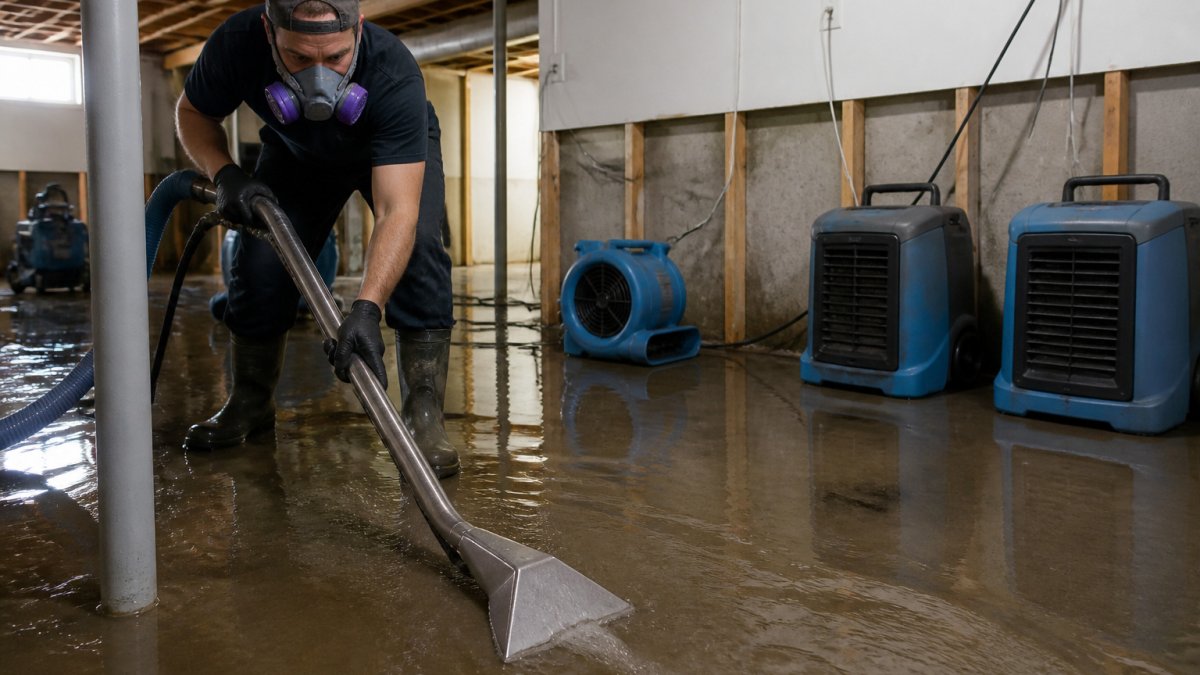
Once the water is mapped, crews remove standing water with truck-mounted or portable extraction units. If you need this done right away, you can book emergency water removal for your flooded basement. Then they bring in air movers aimed at wet surfaces and dehumidifiers to pull moisture out of the air. Drying usually continues for several days and is monitored with readings until materials return to normal moisture levels. Moisture detection technology is used so drying is verified rather than assumed.
Here is how a typical extraction and drying process compares by stage:
| Stage | What Happens | Typical Focus |
|---|---|---|
| Assessment | Moisture mapping and hazard check | Find hidden water |
| Extraction | Standing water removed | Stop the spread |
| Drying | Air movers and dehumidifiers run | Bring materials to normal moisture |
| Verification | Readings confirm dry materials | Prevent later mold growth |
Will Homeowners Insurance Cover a Flooded Basement?
Coverage depends heavily on the cause of the flood. Many standard homeowners policies cover sudden, accidental water damage, such as a burst supply pipe or a failed water heater. Flooding from outside surface water or groundwater is often excluded and may require a separate flood policy. Sewer backup is also frequently an add-on rather than standard coverage.
Read your policy declarations page and ask your agent specifically whether water extraction, drying and mold remediation are included. Report the loss promptly, because most policies require timely notice. Keep all receipts and the documentation described above, and do not throw away damaged items until the adjuster has reviewed them.
How Long Does Flooded Basement Cleanup Take?
A basic extraction and drying job often takes several days, while larger losses with demolition and rebuilding can take weeks. Drying time depends on humidity, the materials affected and how quickly water was removed. Sentinel Restoration confirms completion with moisture readings rather than a fixed timetable, so your home is not released until materials are dry.
DIY Cleanup or Professional Restoration: Which Fits Your Flood?
The decision turns on three factors: how much water came in, what kind of water it is, and whether you can verify the structure is dry afterward. Homeowners often overestimate how dry a basement is after fans run for a weekend.
Start with the water category. Clean water from a burst supply line or a failed water heater is the only category where DIY cleanup is reasonable. Gray water from a washing machine overflow, a dishwasher leak, or a sump pit carries bacteria and requires gloves, boots, and disinfection. Black water from a sewer backup, an outdoor flood, or groundwater carries sewage and pathogens, and the affected porous materials, carpet, padding, drywall, insulation, generally must be removed and disposed of rather than dried in place. If you cannot tell which category you have, treat it as contaminated.
Then judge the volume and the materials. A small, clean-water event confined to a concrete floor and a few removable items may be manageable yourself if you can dry it fully within about 24 to 48 hours. Use fans, a dehumidifier, and open windows if the outside air is dry, and pull wet carpet padding promptly because it rarely dries in place. Call a professional when water has been standing more than a day, when it has reached drywall, insulation, subfloor, or wall cavities, when the water is gray or black, or when the affected area is larger than a single room.
Verify dryness rather than assuming it. A common pattern is a basement that feels dry to the touch while moisture remains inside wall cavities and under flooring, which is the usual cause of mold weeks later. A moisture meter reading taken on drywall, framing, and subfloor is the only reliable check. If you do not own one, a professional moisture assessment is a low-cost way to find out whether your DIY effort actually worked.
Watch out: Never run a wet/dry shop vacuum or any plugged-in equipment while standing in standing water, and do not attempt DIY extraction if the breaker panel or any outlet is wet, call an electrician or your utility first.
If you are unsure, a professional assessment is the cheaper decision. To see what a professional restoration job involves, read our emergency water damage restoration guide for homeowners.
Booking Your Flooded Basement Assessment With Sentinel Restoration
If your basement has taken on water, the fastest way to limit damage is a professional assessment. Sentinel Restoration is IICRC-certified and uses advanced moisture detection to find water you cannot see, then manages extraction, drying and restoration. Contact Sentinel Restoration today to schedule your assessment and get a clear, itemized plan for your flooded basement.
Frequently Asked Questions
How much does it cost to clean up a flooded basement?
Costs depend on how much water got in, how long it sat, whether contents and drywall must be removed, and whether mold is present. Pricing depends on the specifics of each job. Ask for a written, itemized estimate that separates water extraction, drying equipment, contents removal, and debris disposal so you can compare it line by line with your insurance adjuster’s estimate. Current pricing is available from Sentinel Restoration directly.
Who should I call first when my basement floods?
Call a water damage restoration company that offers 24/7 emergency response, then your homeowners insurance provider to report the claim. Before the crew arrives, shut off power to the flooded area if you can do so safely, avoid standing water near electrical outlets or appliances, and photograph the damage. A prompt call shortens the window in which water can soak into drywall, flooring, and framing, which is when most secondary damage and mold growth begin.
Will homeowners insurance cover a flooded basement?
It depends on the cause. Standard homeowners policies generally cover sudden, accidental water damage, such as a burst pipe or a failed water heater. They usually exclude flood damage from rising surface water, which typically requires a separate flood insurance policy, often through the National Flood Insurance Program. Sewer or drain backup and groundwater seepage are commonly excluded unless you added an endorsement. Review your declarations page, document everything, and ask your insurer directly which water sources are covered.
Can I clean up a flooded basement myself?
You can handle small, clean-water events, such as a few inches of water from an appliance leak, if you dry the area within 24 to 48 hours. Floodwater from outside, sewage backup, or any flood lasting longer than that should be handled by professionals, because contamination and hidden moisture inside walls and subfloors are hard to address without moisture meters and industrial drying equipment. Always wear protective gear and document the damage before you remove anything.