Last Updated: November 8, 2026
Quick Summary
Getting your commercial property flood recovery started means securing the site, shutting off utilities where safe, and calling your insurer before you clean anything. Photograph all damage first, then pump out standing water and begin drying within the first two days.
- Never enter a flooded building with standing water near outlets, panels, or downed wires.
- Assign one person to own the first-week checklist so team, insurer, and contractor stay aligned.
- Keep damaged items until the insurance adjuster sees them to protect your payout.
- Reopen only after five clearances: structural, electrical and gas, moisture, sanitation, and code.
- Do not reinstall carpet or ceiling tile until moisture readings confirm the assembly is dry.
Table of Contents
- What to Do in the First 24 Hours After a Commercial Flood
- Your Business Flood Recovery Checklist for the First Week
- Commercial Flood Damage Cleanup: What to Remove, Dry, and Document
- How to File a Commercial Property Flood Insurance Claim
- Building a Business Continuity Plan After a Flood
- When Is It Safe to Reopen? Clear Criteria for Business Reopening
- Schedule a Professional Damage Assessment with Sentinel Restoration
- Frequently Asked Questions
What to Do in the First 24 Hours After a Commercial Flood
When a flood hits your building, the first day decides how much you save. Getting a commercial property operational after a flood starts with one rule: people first, water second.
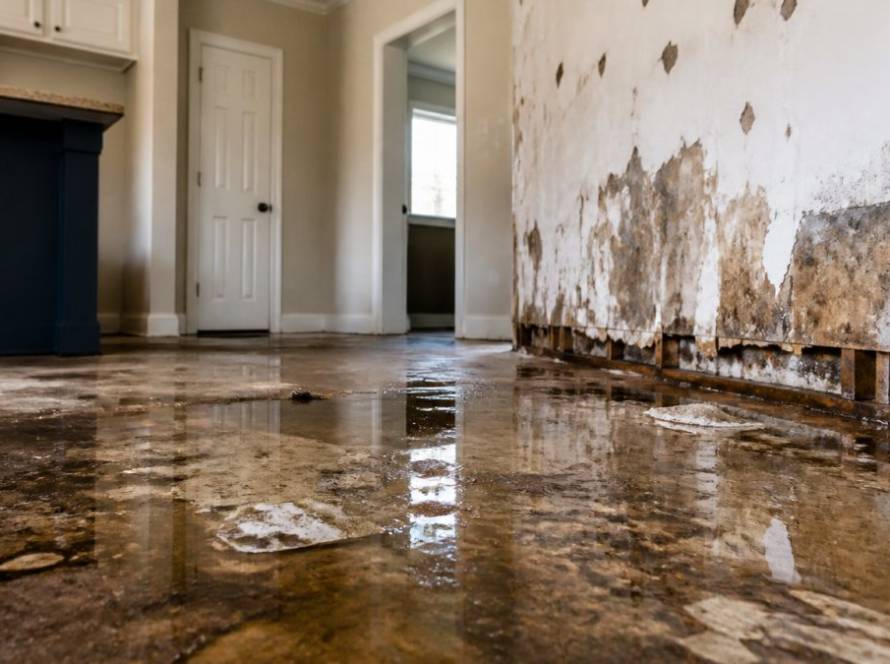
Water soaks into drywall, wicks up wood studs, and feeds mold within a day or two. Every hour spent on the right steps now saves days of repair later.
Assess Immediate Safety Before Entering
Stop at the door. Do not enter a flooded commercial building until you have checked for hazards from outside.
- Standing water near outlets, panels, or downed wires
- The smell of gas or the hiss of a leak
- Sagging ceilings or bowed walls
If you see any of these, stay out and call for help. Structural damage and live electricity can kill.
Shut Off Utilities and Stop the Water Source
Turn off the power at the main breaker, but only if the panel is dry and you can reach it without standing in water. Never touch a wet panel.
Next, stop the water. Close the main valve if a pipe broke. Call the gas company if you smell gas. Once the source is off, the flooding stops getting worse.
Your Business Flood Recovery Checklist for the First Week
A business flood recovery checklist keeps the first week from turning into chaos. Work through it in order, and log what you do each day.
- Day 1: Secure the site, shut off utilities, call your insurer, and start photos.
- Day 2: Remove standing water and begin water extraction.
- Day 3: Start drying and dehumidification. Take moisture readings.
- Day 4: Sort damaged contents and inventory. Keep what can be saved.
- Day 5: Get repair estimates and meet the insurance adjuster.
- Day 6-7: Review the drying progress and plan the phased return.
Assign one person to own this list. A single point of contact keeps the team, the insurer, and the contractor aligned.
Commercial Flood Damage Cleanup: What to Remove, Dry, and Document
Commercial flood damage cleanup comes down to three jobs: pull out what is ruined, dry what can be saved, and document everything. For the full walkthrough, see our commercial water damage cleanup guide. Skip one, and you either lose money or grow mold.
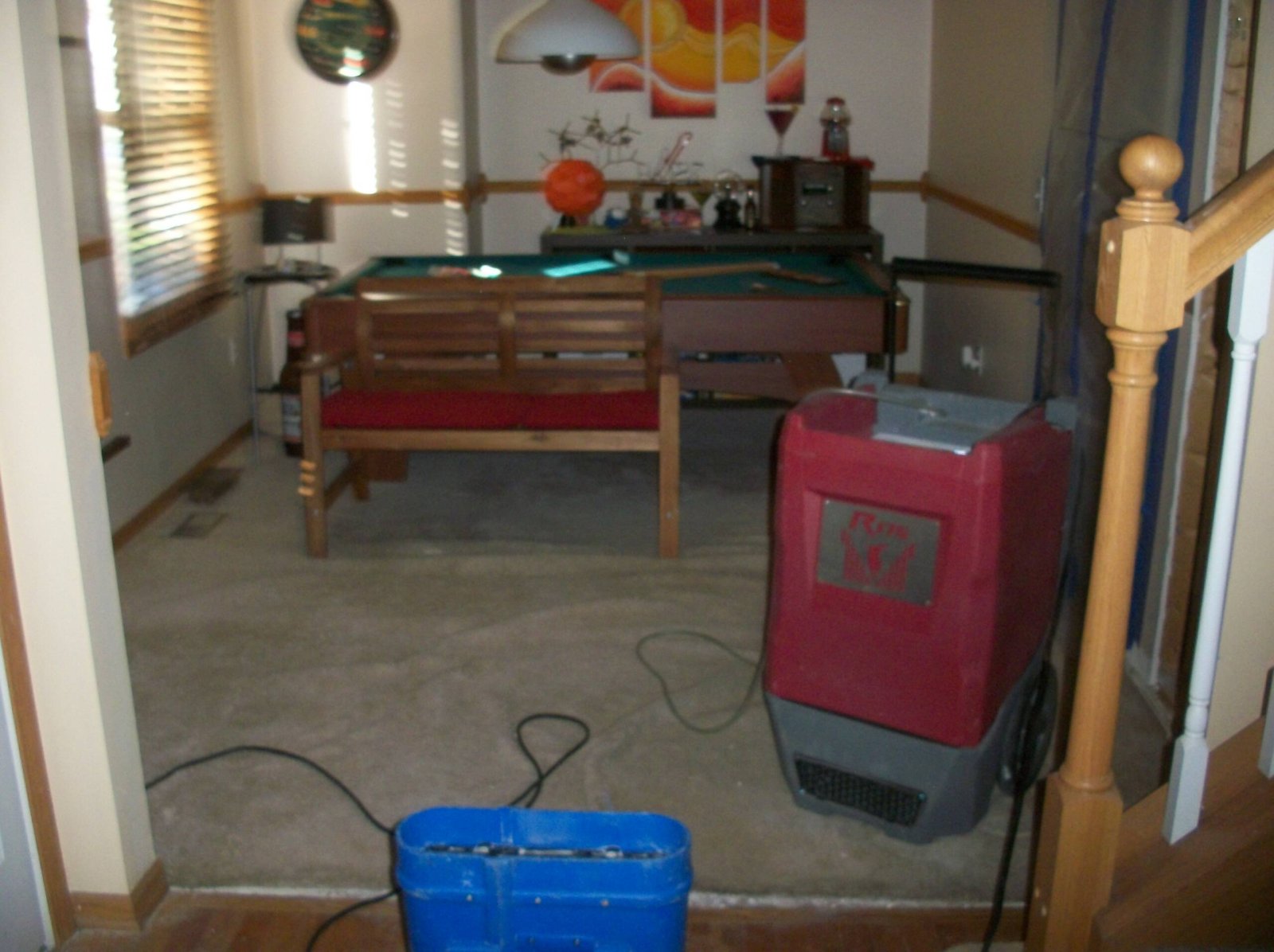
Start with water removal. Pumps and wet vacuums clear standing water fast. Then move to drying and dehumidification.
Here is how to sort the work:
| Item | Action | Why It Matters |
|---|---|---|
| Standing water | Pump out and extract | Stops spread and mold |
| Wet drywall and insulation | Remove below the water line | Traps moisture and grows mold |
| Wood studs and framing | Dry in place with air movers | Saves the structure |
| Porous inventory and contents | Discard if soaked | Cannot be sanitized |
| Electronics and equipment | Power off, document, assess | Shock and corrosion risk |
| Hard surfaces | Clean and disinfect | Removes contamination |
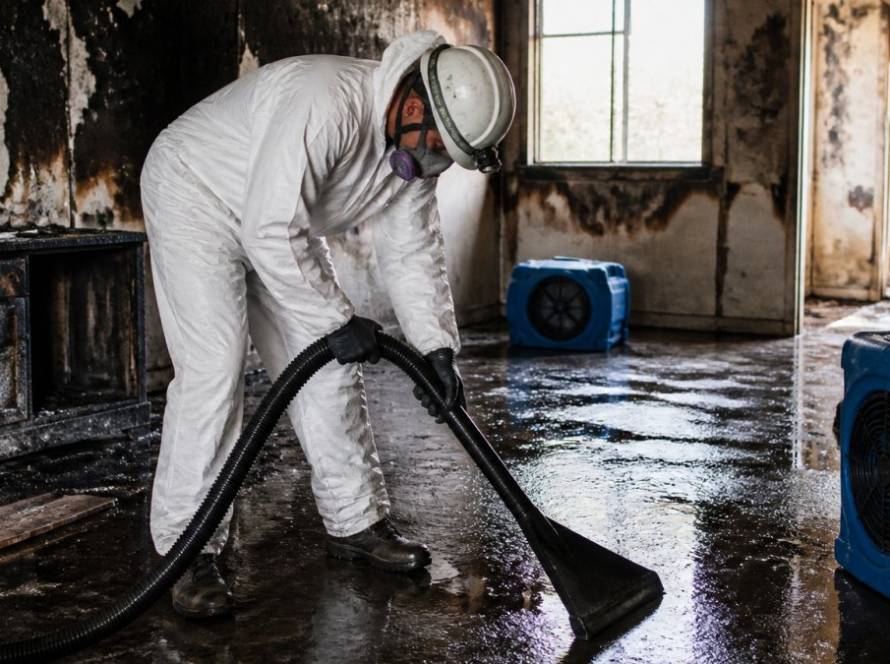
Floodwater is not clean water. It can carry sewage and bacteria, so wear personal protective equipment: gloves, boots, eye protection, and a mask (the CDC).
Take moisture readings on walls and floors as you go. Mold prevention depends on getting materials dry, not just dry to the touch.
Watch out: skipping moisture readings is the most common mistake. A wall that feels dry can still hold water and grow mold weeks later.
How to File a Commercial Property Flood Insurance Claim
A commercial property flood insurance claim goes smoother when you document before you clean. Your insurer wants proof, and photos are your best evidence.
- Call your insurer right away. Report the loss and get a claim number.
- Photograph and video everything. Capture standing water, damaged contents, and each affected room before you move anything.
- Keep a written log. Note dates, times, and what you did.
- Save receipts. Track emergency repairs and any temporary costs.
- Meet the insurance adjuster. Walk the building with them and point out every damaged area.
- Ask about business interruption. Lost income during closure may be covered.
Keep damaged items until the adjuster sees them. Throwing out evidence too soon can shrink your payout. Our guide on whether insurance pays for water restoration explains what to expect.
Building a Business Continuity Plan After a Flood
A business continuity plan after a flood is not a binder on a shelf. It is a phased return-to-operations sequence that tells you what to restore first, what to run from a temporary location, and how to tell employees, tenants, and customers when each milestone is hit.
Build the plan around four phases. Each phase has an owner, a trigger to start, and a milestone that signals it is complete.
Phase 1: Stabilize and Triage (Days 1-3)
The trigger is the flood itself. The goal is to stop further loss and protect the business’s ability to function at all.
- Secure the site and shut off utilities where safe
- Notify the insurer and open the claim
- Photograph and inventory damage before anything moves
A common pattern is discovering in this phase that the phone system, server room, or point-of-sale hardware was in the flooded area. Map those dependencies now, not on day five.
Phase 2: Restore Essential Functions (Days 3-14)
The trigger is a completed damage assessment. The goal is the minimum viable operation, even if the building is not ready.
- Revenue-critical functions, order intake, production, or service delivery that customers pay for
- Compliance-critical functions, payroll, tax filing, regulated records, safety systems
- Support functions, HR, IT, facilities, marketing
For each function, choose one of three paths: run it from a temporary location, run it remotely, or suspend it with a communicated restart date. Write down which path you chose and why, because the insurer may ask about extra expenses and business-interruption losses.
- A pre-negotiated short-term lease or coworking arrangement
- A reciprocal agreement with a similar business in another part of town
- A mobile unit or trailer for retail, service, or command functions
Watch out: extra expenses for temporary premises and equipment are often recoverable under business-interruption coverage, but only if documented as they happen, keep every invoice and lease in the claim file.
Phase 3: Restore the Building and Critical Systems (Weeks 2-8)
The trigger is verified drying and a structural sign-off. The goal is to bring the building back to operational condition in the right order.
- Structural repairs and any shoring
- Electrical, gas, and HVAC rough-in and inspections
- Insulation, drywall, and finishes after moisture is verified
- Flooring, ceilings, and paint
- Reinstall equipment, inventory, and furniture after sanitation clearance
Do not reinstall carpet, ceiling tile, or porous finishes until moisture readings confirm the assembly is dry. Reinstalling early traps moisture and forces a second teardown.
Phase 4: Reopen and Verify (Weeks 8+)
The trigger is the full sign-off sheet from the reopening criteria. The goal is a controlled restart, not a flip of the switch.
- Run a soft opening with a small crew or a limited customer set
- Confirm systems hold under load, HVAC, electrical, POS, phones, network
- Watch indoor humidity for the first two weeks; a spike signals a missed moisture pocket
Communication Milestones
Tell each audience at each phase, not just at the end. Silence during a closure costs customers and morale.
- Employees: status, pay continuity, return-to-work date, and where to report
- Tenants: building access, restoration schedule, rent and lease implications
- Customers: service availability, temporary location, and expected full reopening
A simple pattern that works: one named communications lead, a single status page or hotline, and a scheduled update cadence, daily in Phase 1, weekly after that.
Keep the Plan Current
Review the plan once a year and after any building, staff, lease, or system change. Test the contact list and the temporary-location arrangement at least annually. For budget planning, our breakdown of water damage restoration cost after a leak helps you set realistic reserves, and the reopening criteria above give you the sign-off sheet the plan depends on.
When Is It Safe to Reopen? Clear Criteria for Business Reopening
A commercial building is safe to reopen only when five separate clearances have been signed off: structural, electrical and gas, indoor air quality and moisture, sanitation, and code/occupancy. Cleanup is not the same as operational readiness. A building can look dry and still fail two or three of these checks.
Treat reopening as a sign-off process, not a judgment call. You can use our building issuance service to confirm the property is safe and compliant to occupy. Assign one person to hold the sign-off sheet, and do not unlock the doors until every line is initialed and dated.
1. Structural Clearance
A licensed structural engineer or qualified building official confirms the foundation, load-bearing walls, roof framing, and any suspended ceilings or racking are sound.
- No compromised load-bearing elements
- No active settlement, bowing, or deflection beyond tolerance
- Anchors, braces, and connections inspected where water reached them
Watch out: a building that passed a walk-through on day two can still fail structural review after materials dry and shrink, schedule the structural sign-off after drying is verified, not before.
2. Electrical, Gas, and HVAC Clearance
A licensed electrician inspects the service panel, branch circuits, receptacles, junction boxes, and any submersed equipment before power is restored. Water inside conduit and panels causes corrosion and arcing that may not trip a breaker until it fails under load.
- Air handlers, coils, and ductwork are dry and free of contamination
- Motors and controls that were submerged are replaced, not just dried
- Gas-fired equipment has been leak-tested and the flue is clear
Do not energize a panel that was underwater until an electrician has megged the circuits and signed off. Utility reconnection may also require the utility company’s own inspection.
3. Indoor Air Quality and Moisture Clearance
This is the check most operators skip, and it is the one that causes second closures. A restoration professional takes pin-type or non-invasive moisture readings on framing, drywall, subfloor, and concrete, and confirms readings are within the dry standard for the assembly and the local climate.
- Moisture content readings logged by location and compared to dry standard
- Relative humidity and temperature logged over at least a full drying cycle
- No visible or detectable mold growth in cavities or on surfaces
Most practitioners find that a wall which feels dry to the touch can still read 20 percent or more moisture content in the framing. That is the pocket that grows mold three weeks after reopening.
4. Sanitation Clearance
Floodwater is categorized by contamination level, and the category drives the sanitation standard. Category 1 is clean supply-line water; Category 2 is gray water with some contamination; Category 3 is black water carrying sewage, chemicals, or ground-surface runoff.
For Category 3, porous materials that absorbed the water, drywall, insulation, carpet, upholstered furniture, paper records, are generally removed rather than cleaned. Hard surfaces are cleaned and disinfected with an EPA-registered disinfectant applied per the label.
5. Code and Occupancy Clearance
The local building department, fire marshal, or health authority may require its own inspection before occupancy resumes, depending on the occupancy type and the scope of work. Pull the permit history and confirm:
Industry-Specific Add-Ons
- Food service: kitchen equipment, exhaust hoods, grease traps, and walk-in coolers need commercial cleaning and, in many jurisdictions, a health inspection before service resumes.
- Healthcare and dental: regulated medical equipment, sterilization units, and medication storage require manufacturer or biomedical clearance, plus infection-control review.
- Warehouses and industrial: racking must be inspected by a qualified person after any impact or water exposure; damaged uprights are replaced, not straightened.
Keep the completed sign-off sheet with your insurance file. It is the document that proves you reopened responsibly if a tenant, employee, or insurer later questions the decision.
Schedule a Professional Damage Assessment with Sentinel Restoration
Flood recovery is a lot to carry alone, and the stakes are high. One missed moisture pocket can mean mold and a second shutdown.
At Sentinel Restoration, our IICRC-certified team brings decades of industry experience to every job.
Our goal is to restore your property to its pre-loss condition. If you are in the first hours of a flood, our guide on how to stop water damage from spreading gives you steps to take right now.
Your building can be dry, safe, and open again. The sooner you act, the faster that happens.
Frequently Asked Questions
How long does it take to restore a commercial property after flooding?
Timelines vary with the size of the building, how long water sat, and whether contamination is present. A small office with clean water might dry in three to five days, while a warehouse with floodwater and mold can take weeks. Moisture readings should be taken as drying progresses until materials meet dry standards. Plan for at least a week of active drying before you can think about reopening, and build that into your business continuity plan after a flood.
What should I document for a commercial property flood insurance claim?
Photograph and video every room before moving anything. Capture standing water levels, damaged equipment serial numbers, inventory lists, and receipts for emergency repairs. Keep a dated log of all communication with your insurer and adjuster. Document lost business income with sales records from the same period last year. Store copies off-site or in the cloud.
When is it safe to turn the power back on after a commercial building floods?
Only after a licensed electrician has inspected the panel, wiring, and any submerged outlets or equipment. Water and electricity are a lethal combination, and energizing a wet system can cause shocks or fires. If your building has gas, have the utility company relight pilots and check for leaks. Do not flip breakers yourself, even if the building looks dry. A professional assessment is the only reliable green light for restoring power.
How long after a flood can mold start growing?
Mold can begin within 24 to 48 hours of water exposure, especially in warm, humid conditions. Porous materials like drywall, carpet, and ceiling tiles are prime targets. If floodwater contained sewage or chemicals, mold risk rises further. Commercial flood damage cleanup should include moisture readings and antimicrobial treatment to slow growth. If you smell a musty odor or see discoloration, call a mold remediation specialist. Waiting a week to dry a building often turns a cleanup into a demolition job.